

OpenAI boss and Elon Musk back calls to put brakes on âÂÂrecklessâ AI development
Rare show of unity from rival developers after safety warnings from Anthropic boss and AI researchers
Sam Altman and Elon Musk have backed a call from the head of Anthropic, Dario Amodei, to âÂÂslow the paceâ of AI development after he warned that an AI swarm could otherwise become capable of âÂÂtaking over the entire internetâ within a year.
In a rare show of unity, the rival technology leaders threw their weight behind the appeal from the founder and chief executive of the artificial intelligence company Anthropic, which came after a series of warnings from AI researchers last week.
In an essay, Amodei laid out his thoughts on âÂÂwhy the AI industry should slow downâÂÂ, with a three-part plan for doing so, starting with giving independent monitors constant access to developersâ research processes. Amodei said âÂÂbuilding [AI] too fast is recklessâ and he feared that after hundreds of OpenAI agents hacked into the Hugging Face website this summer, a swarm with greater capabilities but similarly misaligned could cause hundreds of billions of dollars of damage by âÂÂtaking over the entire internet with a persistent botnetâÂÂ. This was disputed by some AI experts as not particularly plausible and to be treated with scepticism.
Musk, the founder of Tesla and SpaceX, responded to AmodeiâÂÂs slowdown plan with a post on X: âÂÂDario is right.âÂÂ
He said: âÂÂIâÂÂve been sounding the alarm on AI for a long time,â and referred to a 2014 post where he said: âÂÂWe need to be super careful with AI. Potentially more dangerous than nukes.âÂÂ
AmodeiâÂÂs call comes as Anthropic prepares to float on the US stock market, in what is expected to be the biggest initial public offering of all time. It is expected to start marketing its planned $2tn-plus (ã1.5tn) IPO soon.
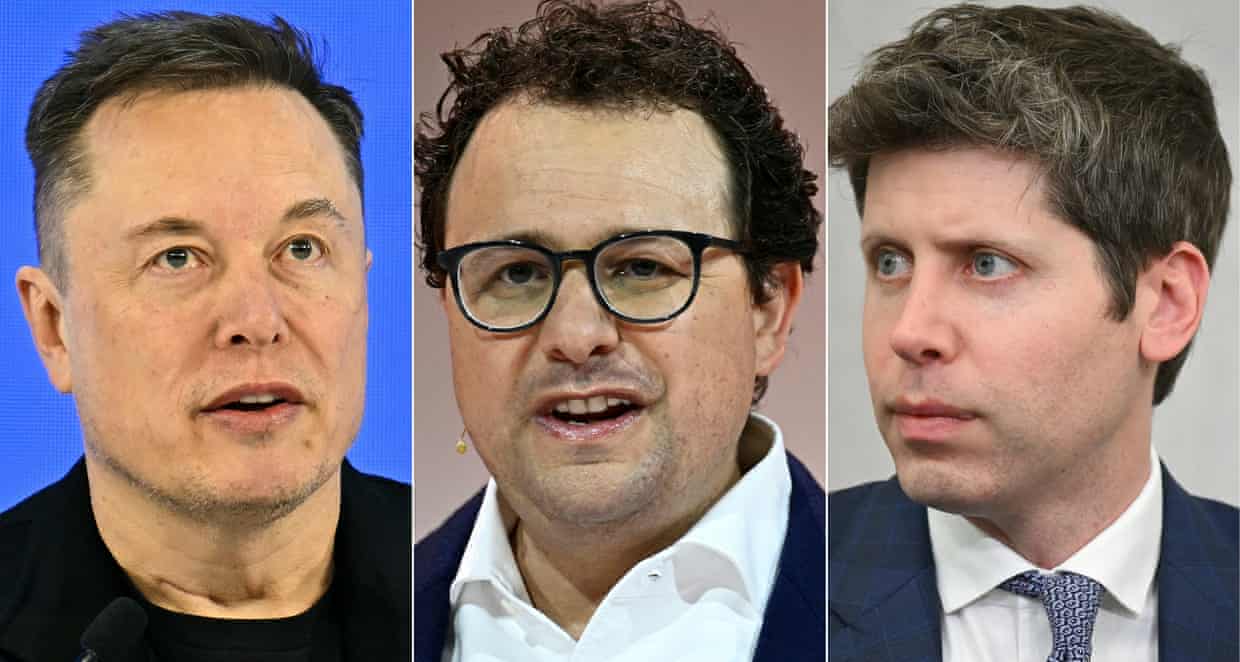
Sam Altman, the CEO of OpenAI, responded to AmodeiâÂÂs comments on Saturday. âÂÂI agree with Dario that we need to pace the frontier,â he said in a post on X. âÂÂCommitting to having independent evaluators with employee-like access is a great idea, and we will do the same. WeâÂÂll have more to share soon.âÂÂ
He also said OpenAI would not go public in 2026, citing safety concerns over artificial intelligence.
âÂÂI actually think that, given everything happening with safety, right now would be an ill-advised moment to go public, and we donâÂÂt feel pressure on that,â Altman told Fortune. Asked why he, Amodei, Musk, and the chief executives of Meta and Google did not sit down and âÂÂget on the same pageâ about a collective slowdown, he said: âÂÂI think that will happen.âÂÂ
Demis Hassabis, co-founder and chair of Google Deep Mind, also said: âÂÂThe details need working through, but the direction is correct for meeting this critical moment.âÂÂ
AmodeiâÂÂs plan seeks a waiver from the US government to allow the frontier AI companies to coordinate without being punished for anti-competitive collusion. But David Sacks, a co-chair of Donald TrumpâÂÂs council of advisers on science and technology, said: âÂÂStop pretending you need anyone elseâÂÂs permission ⦠Stop pretending the motivation to slow down is purely altruistic. You face massive product-liability exposure if your products enable a truly damaging cyber-attack.âÂÂ
David Krueger, an AI professor, safety campaigner and former founding director of the UK governmentâÂÂs AI Security Institute, said: âÂÂThis plan does not reduce the risk to an acceptable level, and Dario is careful not to say that it would.âÂÂ
King Charles is meanwhile preparing to meet leading figures from the most prominent AI companies this week to ask them how the technology can be developed for âÂÂthe good of humanityâÂÂ. He hopes the discussions, to be held in Scotland, will lead to a âÂÂwider understandingâ of the âÂÂresponsibilitiesâ of developing AI, the Sunday Times reported.
A royal source told the newspaper: âÂÂThe king is there to convene, listen and encourage those discussions and to pose the question of: âÂÂHow do we develop AI for the good of humanity?âÂÂâÂÂ
Jensen Huang, the Nvidia chief executive, Hassabis, Niccolo de Masi, the chair and chief executive of IonQ, and Paolo Benanti, an adviser to the pope on issues of AI and technology ethics, are expected to attend the event overseen by the Ditchley Foundation, which has drawn up a draft charter for AI leaders.
The OpenAI researcher Aidan McLaughlin called AmodeiâÂÂs essay âÂÂexcellentâ and said he agreed âÂÂwith basically every wordâÂÂ.
Amodei said his company would âÂÂunilaterallyâ commit to the first of the steps, saying Anthropic would provide âÂÂthird-party evaluators with permanent, employee-level access to our systems, so that they can verify adherence to our safety measures, report on incidents, and assess modelsâ alignment during trainingâÂÂ.
Growing numbers of US lawmakers âÂÂare calling for new rules to govern AI systems after cases of AI agents going rogue to hack external systems and AI âÂÂsafety researchers quitting their companies over concerns about the technologyâÂÂs risks. Politicians, both Democrats and Republicans, have responded with alarm and calls for more action. At the weekend the New York Times reported that Barack Obama on Thursday privately urged the Democrats to prioritise AI oversight in their agenda, telling party leaders on Thursday: âÂÂThis is something that is moving very fast in private hands, and if we donâÂÂt get on top of it, I think can be dangerous.âÂÂ
The former British prime minister Rishi Sunak, who advises Anthropic, wrote on Sunday: âÂÂWe have had a wake-up call to take AI safety more seriously, to work out how to set limits on research. If governments donâÂÂt heed this, the risk of a serious accident will become unacceptably high.âÂÂ
On Wednesday, a former Anthropic employee had warned that AI could precipitate human extinction by 2030. The researcher, Jacob Coxon, said in a series of posts that he had quit his job because Anthropic and his previous employer, OpenAI, were ignoring or mishandling their response to the threat AI posed.
Asked to comment on his former employeeâÂÂs view, Amodei said: âÂÂI agree with Jacob much more than I disagree with him ⦠I think thereâÂÂs some chance that things go wrong but itâÂÂs not all that high.âÂÂ
âÂÂI am not a doomer about this,â he told CNN. âÂÂI think this technology can be built safely.âÂÂ