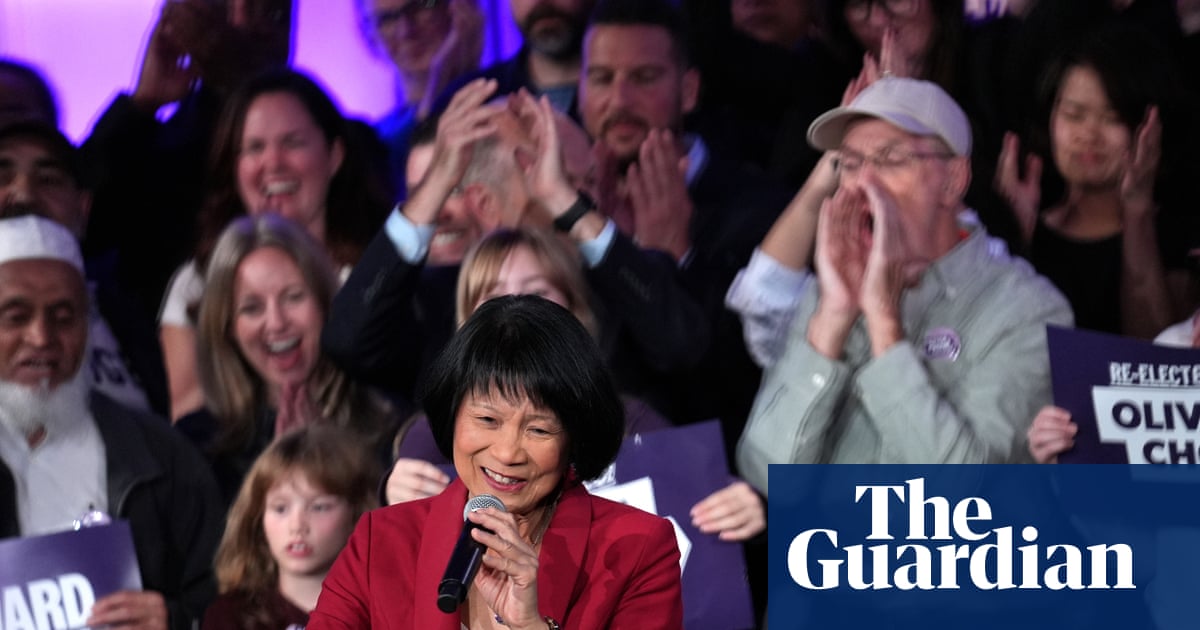

Olivia Chow elected as Toronto mayor for second term in victory for progressives
Tightly fought election saw record turnout as incumbent mayor ran against her rival Brad Bradford
The mayor of Toronto, Olivia Chow, promised more rental housing, free school lunches and reduce fares for frequent transit riders after she was elected to a decisive second term as mayor in a wave of support for progressives councillors.
The tightly fought election saw record turnout but Chow ultimately turned in a dominant 13 percentage point win over her rival, Brad Bradford, receiving 54% of the vote compared to BradfordâÂÂs 41%. Many had been expecting a far closer race, given weeks of polling that suggested a dead heat between the pair who presented differing visions for CanadaâÂÂs largest city.
Chow bet that voters would accept her policies to confront a mounting affordability crisis that has engulfed major cities around the world. Her win also signals voters see that progressive urban politics can resist cost-of-living backlash that has toppled over governments.
On Monday night, Chow thanked her supporters and Bradford.
âÂÂI know we share a love for Toronto and a belief in its future,â she told a jubilant crowd. âÂÂWe can disagree on how we get there, or what it looks like, but I do not doubt we both want what is best for our city.âÂÂ
Chow, 69, has long been a fixture of the cityâÂÂs politics. She previously served as a school board trustee, city councillor and federal member of parliament. Her total of more than 532,000 votes nearly doubles what she received in 2023.
Bradford, a former city councillor and urban planner, spent much of the campaign focusing on what he said was ChowâÂÂs failure to stem the rising cost of living and to address crime. He told residents crime was so bad in Toronto that he slept with a baseball bat next to his bed.
While auto theft and high-value property crime have risen, most other categories â including homicides, firearms related violence and assault â have all dropped significantly in recent years.
Bradford said more police were needed, and pledged to cut taxes and city spending.
In a city that has experienced antisemitic vandalism and shootings at Jewish schools, Bradford aimed to ally himself with TorontoâÂÂs Jewish community, and said that ChowâÂÂs decision not to attend a debate on antisemitism meant she wouldnâÂÂt be an effective voice to combat hate. For her part, Chow increased the size of the police departmentâÂÂs hate crimes unit and pushed a âÂÂbubble zoneâ bylaw that barred protest within 50 meters of places of worship, schools, childcare centers other vulnerable institutions.
In his concession speech, the 40-year-old took a conciliatory tone. âÂÂI want her to succeed. And my supporters and the nearly 400,000 people that cast a vote for us tonight, they want her to succeed too,â he said. âÂÂWe all love this city. We know it can be better.âÂÂ
Bradford also acknowledged the daunting odds against his candidacy: no incumbent mayor who has sought re-election in CanadaâÂÂs largest city has ever lost.
Chow also benefited from her apparent ability to manage a fraught political relationship with the Ontario government and its premier, Doug Ford. When she was first elected in 2023, Ford said she would be an âÂÂunmitigated disasterâ for the city. While Ford did not endorse her in this election, he told reporters the pair had a âÂÂphenomenal relationshipâ and said people should âÂÂread between the linesâ when it comes to his preferred candidate. However, the two are likely to spar in a fierce battle over the cityâÂÂs bike lanes.
Like other major urban centers, Toronto remains locked in a battle over affordability, an issue that is expected to remain a challenge for the incoming council, where a large number of progressive candidates both returned and won for the first time, including Diana McNally Chan, a well-known advocate for unhoused people, who will be the first renter to sit on city council.