NYC built a monument to Khalil Gibran and Little Syria. Why was there global uproar?
Lebanese officials were furious, claiming the city erased GibranâÂÂs identity. Yet there was a time when Arab immigrants in the US thought âÂÂwe were all SyriansâÂÂ

On the morning of 30 April, in the shadow of the financial districtâÂÂs skyscrapers, a gold cloth slid off a bright yellow sculpture of painted stainless steel, 7ft (2 metres) tall, that spells an Arabic word: âÂÂal QalamâÂÂ, the pen.
The monument, Al Qalam: Poets in the Park, stands in Elizabeth H Berger Plaza and honors the writers of the vanished neighborhood that New Yorkers once called Little Syria: an Arabic-speaking immigrant community that ran along Washington Street, blocks from where the World Trade Center would later rise. The monument was the first commemorative artwork unveiled under Mayor Zohran Mamdani. Little Syria produced one of the most famous poets ever to live in New York: Kahlil Gibran, author of The Prophet, a book of poetic prose that has never gone out of print. The monument honors the Pen League, the circle of writers Gibran led in Little Syria in the early 20th century.
Its designer, the French Moroccan artist Sara Ouhaddou, wept as she addressed the crowd. Discovering the story of this community, she said, had made her âÂÂtruly aware of my position in the world as the child of immigrationâÂÂ.
âÂÂThousands of people are going to see Arabic every day of their lives, and itâÂÂs in perpetuity. ItâÂÂs for ever,â the historian Dr Linda Jacobs, who led the Washington Street Historical Society through the projectâÂÂs final years, told me.

In the weeks that followed, the piece settled into the anonymity that is the fate of most public art, with tourists pausing to gawk on their way to the Statue of Liberty. That would have been the end of the story, until the government of Lebanon found out about the small parks department sign beside the artwork.
Lebanese diplomats, politicians and cultural leaders were incensed at what they read on the sign. Henri Zoghaib, director of the Philip A Salem academy for Lebanese heritage at the Lebanese American University, called the monument âÂÂwrong in timeâÂÂ. The Gibran National Committee, which runs the poetâÂÂs museum in Bsharri, Lebanon, his birthplace, issued a formal objection. Two Lebanese ministries complained through diplomatic channels, and in May, LebanonâÂÂs foreign minister, Youssef Rajji, announced that he had directed his ambassador in Washington and his consul general in New York to contact âÂÂthe relevant authorities, with the aim of correcting the textâÂÂ.
What was the problem? As Beirut saw it, Gibran and most of his fellow honorees should not have been labeled Syrian. They were born in Mount Lebanon. To call them Syrian â as the sign did in six places â was to erase their Lebanese identity.
This might seem like a petty fight over a sign, but the circumstances are not abstract. Lebanon has been battered in recent years â economically collapsed, politically paralyzed, under Israeli bombardment and its south occupied. Two weeks before the unveiling, an Israeli airstrike razed the shrine of Shamoun al-Safa at Shamaa in Tyre, a holy site. A nation in that condition holds hardest to the things that prove it exists, and no one is more indispensable to LebanonâÂÂs cultural identity than Gibran. Why else, under bombardment and occupation, would a foreign ministry spend its diplomatic capital on a park sign an ocean away?
The problem for the dignitaries demanding the change is that Gibran never thought of himself as Lebanese. Though he was born in Mount Lebanon, he has always called himself Syrian.
This could not be more explicit. In January 1929, for example, 200 guests in evening dress filled a ballroom at the Hotel McAlpin in New York to honor GibranâÂÂs 25 years of work. The communityâÂÂs English-language magazine, The Syrian World, ran the story under the headline: âÂÂSyrians Show Pride in Writer Who Has Brought Honor to RaceâÂÂ.
The paperwork tells the same story. When he first landed at Ellis Island in 1895, traveling under his motherâÂÂs name, he was recorded as âÂÂJubran RhaméâÂÂ, nationality: Syrian. In 1902 he returned as âÂÂGibran K GibranâÂÂ, Syrian again in 1910 as âÂÂKahlel GebianâÂÂ, nationality: âÂÂTurkey, SyrianâÂÂ. Never once Lebanese, because Lebanon, as a state, did not yet exist.
From 1861, Mount Lebanon was an autonomous Ottoman district with its own Christian governor. It was a province of an empire, not a nation, and it lost even that autonomy in 1915. Beirut, Tripoli, Sidon and Tyre were never a part of it: they belonged to the Ottoman province of Syria, and from 1888 to a Beirut province carved from it.
Lebanon was assembled only on 1 September 1920, decades after GibranâÂÂs generation had relocated in Manhattan.
Historian Hani Bawardi â who has spent decades interviewing the children of the first wave of Arab immigrants to America and served on the committee for the Pen League monument â said that he heard âÂÂover and over and overâ from the sons and daughters of the very first immigrants whose histories he archived: we were all Syrians. Though today they would be considered Lebanese, Syrian, Jordanian, Israeli or Palestinian, then they were all children of Bilad al-Sham, greater Syria.
Many of the writers in this monument spent their lives dedicated to unifying this community. They did so through creating a newspaper and literature publishing universe, on a few streets of downtown Manhattan.
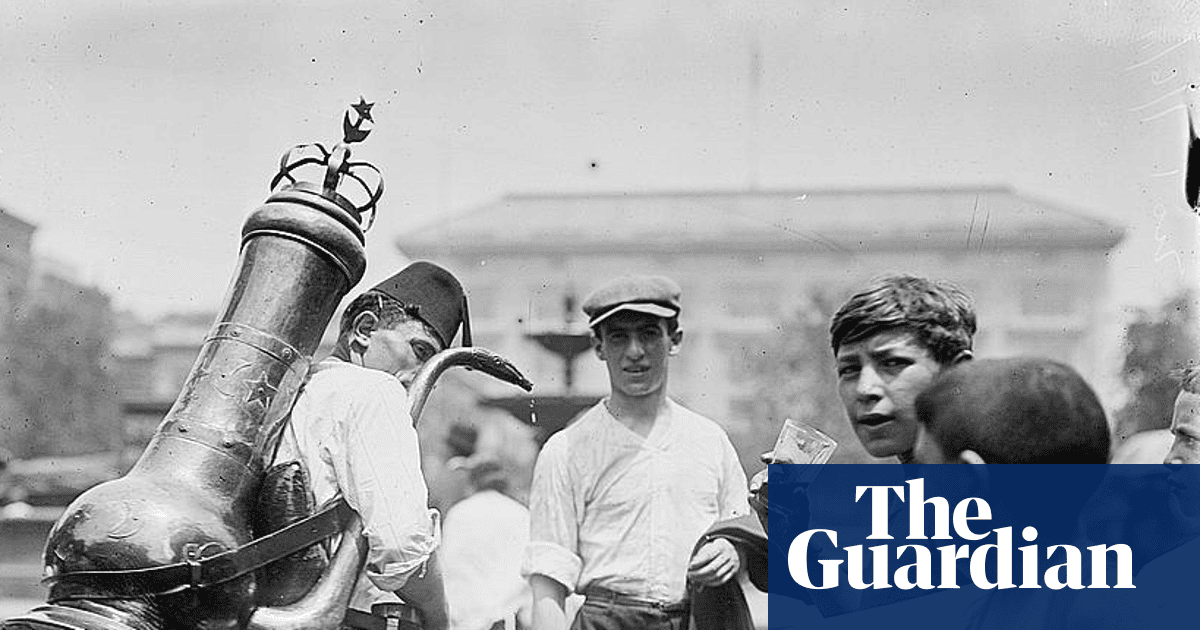
Roughly 95,000 Arabic-speaking immigrants came to the United States between 1880 and 1924, and New York was their âÂÂMother ColonyâÂÂ. The neighborhood that would become Little Syria grew at ManhattanâÂÂs south-western corner, along Washington Street. Its arrivals were escaping conscription, sectarian pressure and economic ruin after the collapse of Mount LebanonâÂÂs silk industry. They were overwhelmingly Christian: Maronites, Melkites and Orthodox.

They took what work they could. Men and women alike peddled goods through the city and beyond, and Washington Street workshops later turned out most of the cotton kimonos American women wore in the early 20th century. Jacobsâ own grandmother rolled cigarettes, taking one of the only jobs available to women.
And as the community stayed, grew and became more affluent, one of its first acts was to write home. In April 1892 the brothers Najib and Ibrahim Arbeely founded Kawkab America, the first Arabic newspaper in the United States. Over the following decades the working-class colony became a temple of the written word, its presses sending dozens of newspapers across the diaspora to Egypt, Brazil, and back to the Levant.
âÂÂI still have the stamps that my grandfather used to send his newspapers out,â said Bob Madey, one of the monumentâÂÂs earliest advocates. His grandfather was Elia Abu Madi, featured in the monument, who founded the journal As-Samir and is one of the most beloved poets in the modern Arabic canon.
This literature of emigration was called the Mahjar, and New York was its western epicenter; it was one of the earliest literary movements from any willing immigrants to the United States from non-European countries.
Karen Zraick, a New York Times reporter and great-granddaughter of Little Syria writer and publisher Antoine Zraick, wrote to me that writers like her ancestor discussed âÂÂwestern colonialism, nationalism and the re-emergence of a shared Arab identity after centuries of Ottoman subjugationâÂÂ. Antoine Zraick edited a vehemently anti-Ottoman satirical magazine, JurÃÂb al-Kurdë, from New York. On a visit home to Mount Lebanon in 1915, he and his brother were arrested by Ottoman officials and executed for what they had published.

Many of these diasporic New York newspapers and journals of literature dreamed of what the future held for greater Syria. The historian Stacy Fahrenthold has described the Mahjar press as âÂÂa place of semiotic contestâÂÂ, where activists became âÂÂSyrianâ or âÂÂLebaneseâ by fighting in print for the right to speak for the community. During the first world war, Gibran and Rihani helped lead New YorkâÂÂs Committee for the Liberation of Syria and Lebanon. On the other side stood Lebanese nationalists such as Naoum Mokarzel, publisher of the longest-running Arabic-language daily, Al-Hoda, who championed a French-protected Lebanon. âÂÂHe was an agent for the French,â said Bawardi.
Yet even those born in what is now Lebanon would describe themselves as Syrian. In 1926, six years after Greater Lebanon was proclaimed, NaoumâÂÂs brother, Salloum, founded an English-language magazine for the American-born generation called the Syrian World. In its first issue, Gibran published Message to Young Americans of Syrian Origin. To be a good American of Syrian origin, Gibran wrote, is to say: âÂÂI am the descendant of a people that builded Damascus, and Biblus, and Tyre and Sidon, and Antioch, and now I am here to build with you, and with a will.âÂÂ
Little Syria, meanwhile, was disappearing. The 1924 Immigration Act capped each nationalityâÂÂs annual arrivals at 2% of its foreign-born population in the 1890 census, and SyriaâÂÂs quota was set at 100 people per year. A migration that had carried 95,000 people to America all but stopped, and the gates would not reopen until 1965.

The colony was thinning. As soon as families could afford to, they moved to Brooklyn, first along Atlantic Avenue and later to Bay Ridge. âÂÂThereâÂÂs this idea that Robert Moses came in and put in the tunnel and just expelled everybody,â said Jacobs about the cityâÂÂs master builder and his Brooklyn-Battery tunnel. âÂÂThatâÂÂs not totally the case.â The historical society holds the tunnelâÂÂs eviction notices; she counted perhaps 10 Syrian names on them. They had gone already.
As the place emptied, the name changed. Paula Hajar, now the historical societyâÂÂs interim president, watched it happen in her own Boston childhood. In 1958, Syria merged with NasserâÂÂs Egypt to form the United Arab Republic, and in American eyes turned radical, Soviet-adjacent and suspect. âÂÂIn the early 60s Lebanon was seen as a beautiful little country, a vacation destination, capitalist and pro-west,â Hajar said. âÂÂThere was a pall over Syria and a bright light over Lebanon.â It was safer to switch. âÂÂWhen I was quite small, I was Syrian,â she said, âÂÂbut by middle school, in the early 60s, I was identifying as Lebanese.âÂÂ
Only three buildings of the old Little Syria survive on lower Washington Street, among them St GeorgeâÂÂs Syrian Catholic church, landmarked in 2009 as what the cityâÂÂs preservation commission calls the most vivid reminder âÂÂof the time when Washington Street was the Main Street of Syrian AmericaâÂÂ.
With the homes paved over and the name fading, the history faded too. âÂÂNo one â any of the Lebanese people IâÂÂve ever met, or Syrians â has known about the Manhattan colony,â Even her grandmother, who lived at 2 Washington Street from 1897, âÂÂnever, ever mentioned ManhattanâÂÂ. And she understood why. âÂÂIt was embarrassing, or not good memories. They were poor. They lived in these tenements, seven, eight people to a room. I think none of them wanted to remember that.âÂÂ

A century after Arabs first made their home on Washington Street, catastrophe arrived. On 11 September 2001, the twin towers fell blocks from where the colonyâÂÂs tenements had stood, and in the âÂÂwar on terrorâ that followed, the US began treating their descendants as suspects. The NYPD spent years surveilling the cityâÂÂs Muslim communities, including the mosque of Asad Dandia, now the Brooklyn borough historian. In 2013, Dandia and others sued the department, alleging unconstitutional religious profiling â the city settled.
And still, the community came back. More than 300,000 New York state residents now claim Arab ancestry. The city has a mayor who told supporters on election night, âÂÂAs we say on Steinway, ana minkum, wa ilaykumâ (âÂÂI am from you, and with youâÂÂ), and who is married to Syrian American artist Rama Duwaji.
In August a New York magazine cover story declared the city âÂÂHabibi CityâÂÂ, heralding a Swana (south-west Asian and north Africa) renaissance. A century after Little SyriaâÂÂs editors argued Ottoman politics in Arabic publications, reading series filled Brooklyn back yards; the Yemeni cafes of Atlantic Avenue and Steinway Street play the role Little SyriaâÂÂs coffeehouses once did. Last winter the New York Public Library gave this history its first exhibition: Niyà « Yà «rk: Middle Eastern and North African Lives in the City, curated by Hiba Abid, the libraryâÂÂs curator of Middle Eastern and Islamic studies.
âÂÂThereâÂÂs a sense of community that comes with a lot of the cultures involved in this renaissance,â said Madey. âÂÂI think itâÂÂs transformative, breaking down barriers between ethnic and nationalist sentiments ⦠ItâÂÂs a long time coming.âÂÂ
The renaissance has arrived as the federal government ends the protected status Syrians have held in the US since 2012 and detains green-card holders for their politics. âÂÂThe Syrian community was in New York City 60 years before Donald TrumpâÂÂs mother became a naturalized American citizen,â said Dandia. âÂÂAnd the Trump administration is now revoking the status of a community that has been here for two generations before he was born.âÂÂ
No one embodies this whiplash of identity like Mahmoud Khalil, the Columbia protest leader whose detention made him, for a season, the USâÂÂs most famous green-card holder. Khalil was born to Palestinian parents in a refugee camp in Syria, and holds Algerian citizenship through his motherâÂÂs ancestry. He calls himself Palestinian, and almost everyone, friend and enemy alike, identifies him as so. His son, born in New York while his father sat in a Louisiana detention center, is by the plain arithmetic of birthplace a young American of Syrian origin: the literal addressee of GibranâÂÂs letter.
If KhalilâÂÂs chosen identity is honored even by the government persecuting him, why should GibranâÂÂs identity be overruled by the two modern states that claim him? This monument, which cost $1.6m â $1.4m of it from the arts non-profit the Mellon Foundation â was supposed to honor him and to make Little Syria something to be proud of. So how did they settle the dispute over whether it was Syrian at all?
When the monument went up in late April, its sign, drafted by Jacobs and edited by Parks, described âÂÂimmigrants from Greater Syria, which encompassed modern-day Lebanon, Syria, and historic PalestineâÂÂ, in a neighborhood âÂÂknown as âÂÂthe Syrian quarterâ or âÂÂLittle SyriaâÂÂâÂÂ, home to âÂÂabout 1,200 SyriansâÂÂ. Within weeks, LebanonâÂÂs foreign minister announced on X that his ministryâÂÂs efforts had gotten the sign taken down, and that its replacement would reaffirm the writersâ Lebanese identity. By July, a new sign took its place.
Set the two side by side and the edit is surgical: âÂÂ1,200 Syriansâ became âÂÂ1,200 immigrantsâÂÂ. âÂÂA Syrian schoolâ became âÂÂa schoolâÂÂ. The excerpts in the mosaics, once âÂÂthe works of Syrian writersâÂÂ, are now the works of âÂÂthose writersâÂÂ. The poets, once âÂÂrespected members of the communityâÂÂ, now merely âÂÂperformedâÂÂ. The word âÂÂSyrianâ has been removed six times; apart from the neighborhoodâÂÂs own name, it no longer appears.

Jonathan Kuhn, the parks departmentâÂÂs director of arts and antiquities, saw the change as routine. âÂÂTheyâÂÂre not permanent signs, theyâÂÂre temporary signs, and they can be modified over time,â he said. Others among the monumentâÂÂs original stewards were outraged. In July, Madey and the historian Todd Fine, a co-founder of the historical society, took their case to the community board. âÂÂThis is not the way we normally do public history,â Fine said. Yet he sympathized with the Lebanese outcry. âÂÂThe fact that a government, in the middle of a war in their country, took the time to intervene on this ⦠shows that itâÂÂs worthy of serious thought.â But he believed the revisions went too far.
For Madey, whose grandfatherâÂÂs verse is on the benches, the new sign âÂÂis an erasure of the writers and what they wrote aboutâÂÂ, of âÂÂhow they stood on the colonialist project, and how they saw themselvesâÂÂ. Yet GibranâÂÂs call is still being heard. It was heard by Bob Madey, turning up at the community board to fight for his grandfatherâÂÂs legacy. It was heard by Paula Hajar, who was Syrian as a small girl and Lebanese by middle school without moving an inch. It was heard by Linda Jacobs, who saw this monument through its completion, wrote its first sign and accepted its second.
Jacobs, for her part, would rather the fight not eclipse the achievement. âÂÂThe history of the first Arabic-speaking community in the United States is finally being recognized and memorialized, in large part because of the beautiful monument in Elizabeth Berger Park,â she wrote in an email in October. âÂÂWe as Arabs should be so proud of that accomplishment.âÂÂ