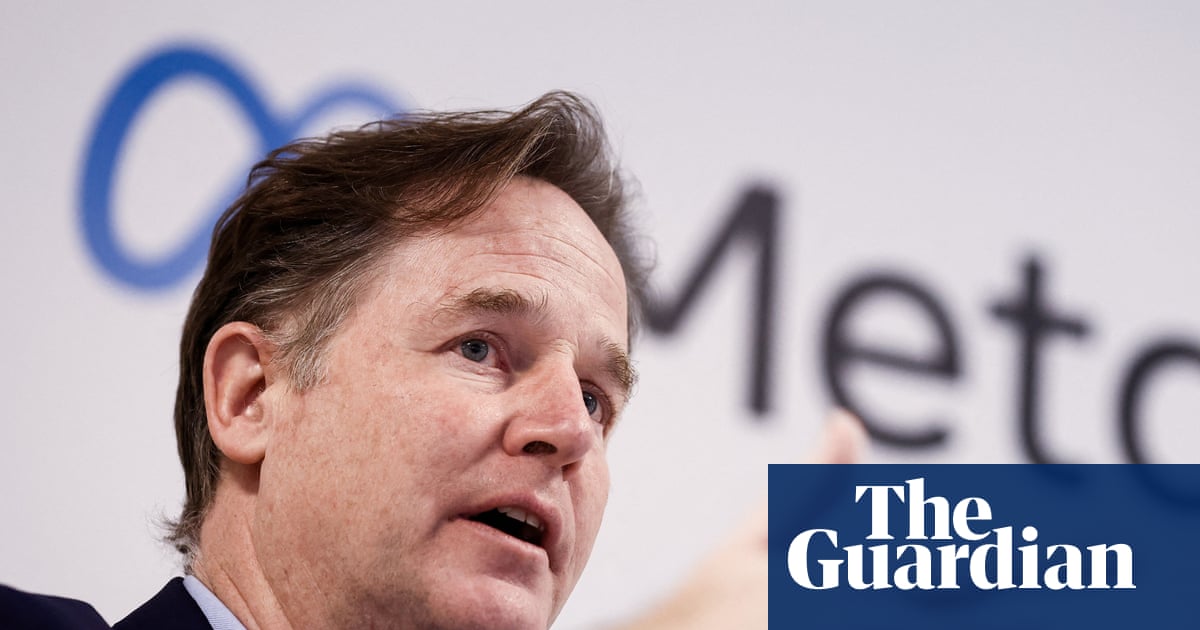

Nick Clegg plays down fears âÂÂgodlikeâ AI could exterminate humanity
Former deputy PM now involved in tech industry says many within the sector are âÂÂwinding themselves up into a latherâÂÂ
Nick Clegg has dismissed fears over AIâÂÂs âÂÂgodlike power to exterminate humanityâÂÂ, calling it a sign that tech bosses are âÂÂbreathing their own fumesâÂÂ.
The former UK deputy prime minister said that tech bosses should focus on addressing known âÂÂspecific threatsâ such as cybersecurity, bio-weapons and emotional dependence rather than the âÂÂslightly hand-wavy view that this technology is unavoidably going to develop some godlike power which is going to turn on us and exterminate humanityâÂÂ.
Speaking to BBC Radio 4âÂÂs Today programme, he said: âÂÂI think it is perhaps accidentally self-serving, because it sort of implies that we can only be made safe by having everything controlled, in effect, by an oligopoly of a small number of companies, and I think it slightly paralyses the political debate.âÂÂ
Clegg, who was formerly the president of global affairs at Meta and owns more than 917,000 shares in Nscale, a UK-based datacentre, and is a cofounder of AI startup AMI Labs, said he spent âÂÂa huge amount of timeâ with people in the tech industry.
âÂÂThey donâÂÂt agree amongst themselves at all. Of course, we hear the most apocalyptic voices,â he said, noting that one person who runs an AI lab said the current discourse was âÂÂtotally sillyâÂÂ.
âÂÂThere is a culture in Silicon Valley â itâÂÂs an odd place for those who havenâÂÂt been there. It is in many ways the centre of the universe, or at least claiming to shape it. ItâÂÂs also an oddly parochial place. ItâÂÂs a strange sort of culture where the engineers can get quite close to the technology and start slightly breathing their own fumes as they wind themselves up into a lather about these things,â he added.
Asked about the autonomous hack conducted by a group of OpenAI agents on a major real-world company, Hugging Face, Clegg said there was a case for âÂÂtramlines and greater transparencyâÂÂ.
However, he said this would be unlikely to happen under a Trump administration given its competitiveness on AI. He also suspected ChinaâÂÂs cooperation would be limited, since the development of AI technologies was viewed as a âÂÂnational missionâ after the country was âÂÂcheated out of the Industrial RevolutionâÂÂ.
He added: âÂÂI think thereâÂÂs a great potential for the big three techno democracies in the world â India, Europe and the US â to collaborate more.âÂÂ
Asked whether the British prime minister, Andy Burnham, could take a lead on such efforts, Clegg noted the UK was not a world leader on AI: âÂÂWe need to be realistic about what influence we can and cannot exert.âÂÂ
Clegg also disagreed with other proposed remedies, such as introducing a âÂÂkill switchâÂÂ, which he said would be unworkable; or only producing closed models, where source code is not made public, which he said were no safer than open source models according to the evidence.
Instead, he suggested: âÂÂThere is a lot that can be done both voluntarily and through regulation, to enforce far greater transparency on the way in which these models are concocted and how they operate.âÂÂ