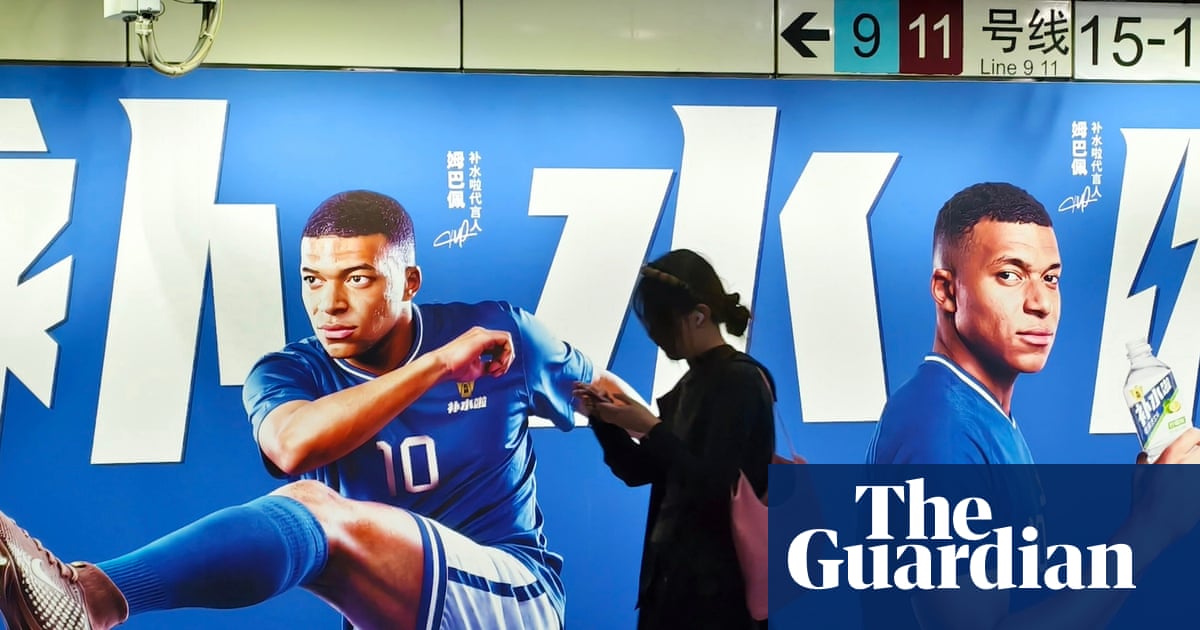
Real Madrid forward was dropped by brands for comments Chinese media generally steered clear of outlining
ItâÂÂs been a bad start to the week for the France forward Kylian Mbappé. He missed out on joining the elite roster of Ballon dâÂÂOr winners, and instead became the latest high-profile addition to a far less illustrious list â that of foreign brands and individuals charged with âÂÂhurting the feelings of the Chinese peopleâÂÂ.
The saga began when a video of the Real Madrid player making light of a meme involving him and ChinaâÂÂs former leader Mao Zedong began spreading.
Within hours Mbappé found himself condemned online, before being unceremoniously dropped by brands, then held responsible for state television suspending the entire top Spanish league from its schedule. On Tuesday Mbappé apologised â âÂÂMy comment was ill-judged, and I now understand that it hurt many people in China â as did La Liga, which released a statement saying it âÂÂdeeply regrets the offence that Kylian MbappéâÂÂs recent comments have caused among Chinese fansâÂÂ.
Foreign brands from Mercedes to Versace and celebrities from John Cena to Katy Perry have previously been sent to the sin bin for crossing ChinaâÂÂs political lines on Tibet, Hong Kong and Taiwan.
MbappéâÂÂs case shows how sensitive MaoâÂÂs legacy remains in China 50 years after his death â to the extent that most Chinese coverage of the affair does not even mention what the footballer said.
In the video, Mbappé references a meme of himself and âÂÂa guy ⦠I think he was a Chinese dictatorâÂÂ, after which a composite image of MbappéâÂÂs face on MaoâÂÂs body pops up. (Mbappé has been nicknamed âÂÂthe dictatorâ since his time at Paris Saint-Germain, a joke referring to his perceived influence at the club.)
The football app Dongqiudi was among the first to release a statement condemning his âÂÂinappropriate remarksâÂÂ, but said: âÂÂBecause his comments were offensive to China and the Chinese people, we cannot translate them.âÂÂ
Chinese media have reported on reactions such as the brand desertions, and the China Football AssociationâÂÂs lodging of a âÂÂstern protestâ with Real Madrid â who on Wednesday apologised âÂÂto the Chinese people for any offence causedâ â but have generally steered clear of outlining MbappéâÂÂs precise offence.
The topic was still trending on Chinese social media on Wednesday morning, with one hashtag relating to the superstarâÂÂs apology boasting more than 600m views.
Some posts asked variations on a simple question: âÂÂWhat did he actually say?âÂÂ

âÂÂMany netizens without a VPN are still left in the dark about why all the talk about boycotting Mbappé is actually happening,â said Manya Koetse, editor of the Eye on Digital China newsletter, on X.
Still, many expressed anger at what was characterised as disrespect for, as well as a misunderstanding of, ChinaâÂÂs history.
âÂÂFor the majority of the [Chinese] people, Mao was and is still not seen as negatively as it is believed in the west,â said Mobo Gao, professor of Chinese studies at Adelaide University.
Mao was the founding leader of modern China, but his legacy includes radical policies such as the Great Leap Forward, an industrialisation policy blamed for a famine that killed as many as 30 million people by some estimates.
The ruling Communist party (CCP) maintains Mao was a revolutionary hero, though after his death it acknowledged another extreme policy, the violent Cultural Revolution, was a âÂÂgrave mistakeâÂÂ.
âÂÂThere has been intense tension between Mao hatred and Mao support among the Chinese themselves,â said Gao. âÂÂThis tension is even more keenly felt since the economy has slowed.âÂÂ
Some scholars have pointed to a resurgence of interest in Mao among younger Chinese, with a yearning for a time they regard as more idealistic and egalitarian â something the CCP is keen to keep in check.
Jennifer Pan, professor of communication at Stanford University, said the difficulty of doing independent social science surveys over the past decade meant âÂÂour understanding of what Chinese people actually think is weakâÂÂ.
âÂÂSocial media doesnâÂÂt fill that gap,â she said. âÂÂItâÂÂs noisy, unrepresentative, and censored. What we see is that companies, platforms, broadcasters and the foreign ministry moved together quickly. Did this follow public anger, or did this produce public anger? Either is possible, and we canâÂÂt tell which came firs.âÂÂ
Whichever way round, the financial cost for Mbappé is the same. His face is a common sight on Chinese buses, in subways and in online ads, and his commercial deals could be worth âÂÂas much as $30m (ã22.6m) per yearâÂÂ, estimated Mark Dreyer, author of Sporting Superpower, a book about ChinaâÂÂs ambitions in the sector.
However, âÂÂas soon as someone else has decided youâÂÂve crossed the line, itâÂÂs a race to who can cut ties quickest, who can be the most patrioticâÂÂ, he said. âÂÂThen you have to kiss the ring â there really is no other way if you want to stay in the market.âÂÂ
MbappéâÂÂs and La LigaâÂÂs swift apologies suggest they are trying to avoid a fate like the NBA, whose lucrative pre-season matches were shut out of China for six years after the Houston Rocketsâ then general manager, Daryl Morey, voiced support for Hong Kong pro-democracy protests in 2019.
La Liga may have better luck, with the state broadcaster CCTV saying it would listen to what Mbappé had to say, and âÂÂmore importantlyâ watch what he does.
On Wednesday a foreign ministry spokesperson, Guo Jiakun, said: âÂÂWe take seriously the apology the individual concerned has made.âÂÂ
Dreyer said: âÂÂIt doesnâÂÂt sound like itâÂÂs an instant: âÂÂAll is forgiven.â But it sounds like theyâÂÂre going to be a little bit more, for want of a better word, reasonable.âÂÂ