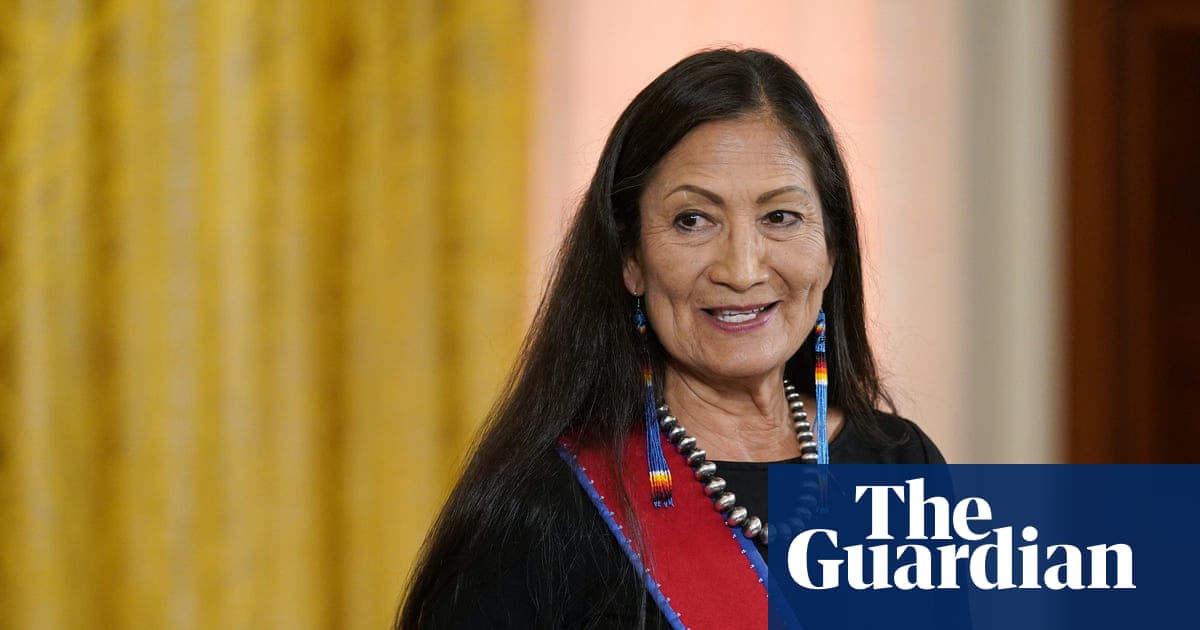

âÂÂIt takes a lot of workâÂÂ: Deb Haaland puts addiction struggles at center of New Mexico governor bid
First Native American woman to serve as US cabinet secretary candid about history with alcohol as she seeks to tackle billowing public health crisis
âÂÂIt clouds your mind,â recalls Deb Haaland, the trailblazing US cabinet secretary now running to be New MexicoâÂÂs next governor. âÂÂThey say that, after the first drink, you lose your judgment.âÂÂ
Haaland developed a drinking problem after leaving high school and was twice arrested for driving under the influence. But in her 20s she decided to get sober, a battle that required personal commitment and critical external support. She went on to become a member of Congress, one of the first two Native American women ever elected to the House, and then to become the first Native American to serve as a US cabinet secretary.
Now Haaland is writing her next chapter. The Democrat is taking the unusual step of putting her own 35 years of sobriety and her past struggles with alcoholism at the center of her campaign for governor in NovemberâÂÂs midterm elections.
In a statewide six-figure broadcast and digital ad buy launching ahead of the election, Haaland links her intimate experience with addiction directly to the public health crisis ravaging local communities.
âÂÂI guess IâÂÂm like so many New Mexicans,â she told the Guardian by phone on Monday. âÂÂI started abusing alcohol at a young age and I was very fortunate that, at the age of 23, I recognised that I wanted to live a sober life and so I went on that journey and worked on myself for quite a while. ItâÂÂs a lot of hard work to pay attention to yourself. I recognised there were so many things in my life that I needed to change.âÂÂ
She added: âÂÂI was fortunate to have the help of an inpatient treatment programme way back then, and so that helped me to get sober initially, but it takes a lot of work even after your head clears. I went to meetings and therapy and all of those things. I found the help that I needed and thankfully IâÂÂve been sober for 35 years now.âÂÂ
Haaland, a member of the Pueblo of Laguna tribe who grew up in a military family, served in Congress from 2019 to 2021 then as interior secretary in Joe BidenâÂÂs cabinet from 2021 to 2025. She is now taking on Republican Gregg Hull, the former mayor of Rio Rancho, in the election for governor of New Mexico.
In a political era where personal vulnerability is often weaponised, her campaign is betting that voters in The Land of Enchantment â where the deadly fentanyl crisis has touched families in every corner of the state â will appreciate her candid treatment of a subject once regarded as taboo.
âÂÂI look at this as a public health issue,â she emphasised. âÂÂI look at this as not somebody with a moral failing but essentially a victim of this terrible disease. We want to make sure that this is looked at as a public health issue, that we move some behavioural health dollars to this area so that people can get the help they need.âÂÂ
She notes that the pervasive stigma surrounding substance use disorder frequently prevents families from seeking life-saving care. âÂÂFor a lot of folks itâÂÂs hard not to feel remorse and shame and all of those things,â Haaland said.
But attitudes are changing. âÂÂThis fentanyl crisis in our state affects even our smallest rural communities here in New Mexico. ItâÂÂs hitting us in the face. People are dying from this drug, and so I feel like any shame or remorse that anyone might feel about a family member in facing this type of substance use disorder, we would put that aside and say we want people to find the help they need.âÂÂ
The campaignâÂÂs political ad brings these human stories into sharp focus. The spot features Jorge, a local father who announces on screen: âÂÂI am one year and one month sober.â Jorge tells viewers that while addiction leaves individuals feeling isolated, âÂÂthereâÂÂs a community of people that understand completely.âÂÂ
The commercial also features David, a behavioural health psychologist, who highlights HaalandâÂÂs plan to force insurance providers to cover comprehensive treatment and crack down on drug trafficking networks. Jorge closes: âÂÂWith Deb, I have hope.âÂÂ

Haaland frames her recovery experience as the foundation for reforming New MexicoâÂÂs fractured health infrastructure. She offers sharp criticism of former Republican governor Susana Martinez, whose administration dismantled local treatment networks through unproven fraud allegations against providers.
Haaland said: âÂÂShe essentially destroyed our behavioural health system. She accused a lot of behavioural health professionals of fraud and so many of them went out of business and it took years for the attorney general to clear them all of any wrongdoing. ItâÂÂs easy to demolish something; itâÂÂs difficult to build something back, so weâÂÂre still building back from that and I feel committed to helping people live better lives.âÂÂ
She proposes a structural redesign to prevent addiction being funneled into the criminal justice system. Haaland proposes creating a state office of community safety that would deploy behavioural health specialists to non-criminal emergency calls on street corners, allowing police officers to focus their resources on violent crime and drug traffickers.
âÂÂA lot of these issues with substance use are not criminal in nature and so my office of community safety would ensure that we can help law enforcement to focus on crime. Drug traffickers are part of crime and then we can focus on the people who are suffering.âÂÂ
HaalandâÂÂs campaign trail stops have included visits to extended residential care facilities such as Grand Summit, in Albuquerque, which provides long-term housing, job assistance and financial support for recovering residents.
During a recent stop, Haaland invited programme residents to walk across the street and cast their ballots alongside her. âÂÂThey felt empowered and they felt like they were part of something larger than themselves,â she reflected.
HaalandâÂÂs focus on community health coincides with looming federal challenges. She raised alarm over impending Medicaid rollbacks under the Trump administration, scheduled to begin on 1 January, that could strip addiction treatment coverage from vulnerable state residents. In response, New Mexico has established a Medicaid trust fund intended to provide longer-term support for the programme.
She also voiced opposition to aggressive federal enforcement actions in New Mexico, calling recent ICE raids âÂÂuntenable,â âÂÂcruel,â and âÂÂruthlessâÂÂ, referencing an incident where an individual was detained in front of his 11-year-old child outside a medical clinic. âÂÂThey wear masks, they donâÂÂt identify themselves.âÂÂ
Haaland also linked voter discontent to economic pressures such as tariffs and rising fuel costs, which hit rural New Mexicans commuting up to 100 miles round-trip for work.
âÂÂI canâÂÂt say why people are coming out to vote and why people want to build this momentum in New Mexico for Democrats,â she said, âÂÂbut itâÂÂs happening.âÂÂ