
âÂÂItâÂÂs just straight bigotryâÂÂ: Trump leads wave of Islamophobic rhetoric as midterms loom
As Muslims win historic victories, experts describe rise in anti-Islamic sentiment that rivals post-9/11 climate
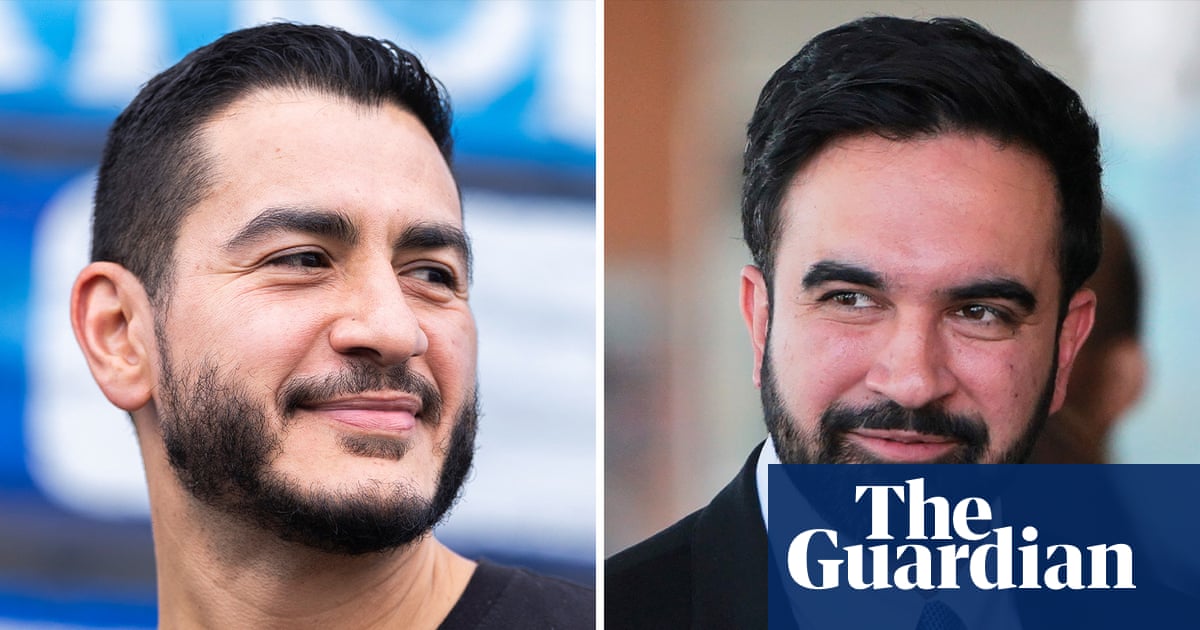
Within hours of Abdul El-SayedâÂÂs victory in MichiganâÂÂs Democratic US Senate primary, Republican senator Tommy Tuberville of Alabama declared that the party had âÂÂjust voted to send a TERRORISTâ to Washington.
El-Sayed â or âÂÂAbdulrahman Mohamed El-SayedâÂÂ, as Tuberville called him on X â was a âÂÂRADICAL ISLAMISTâ who would âÂÂdo everything he can to destroy AmericaâÂÂ, he claimed.
It was the opening shot in what researchers who track anti-Muslim sentiment describe as the most concentrated wave of Islamophobic rhetoric in US electoral politics since the 9/11 attacks, arriving at the exact moment Muslim candidates are winning office in unprecedented numbers.
âÂÂItâÂÂs probably the worst of what weâÂÂve seen,â said Saher Selod, director of research at the non-partisan Institute for Social Policy and Understanding (ISPU), which has tracked anti-Muslim sentiment nationally for a decade. âÂÂWeâÂÂre certainly seeing in 2025 and 2026, ahead of these midterms, really very Islamophobic ads â more so than what we saw after 9/11.âÂÂ
ISPUâÂÂs 2025 Islamophobia Index, a 100-point scale built using common anti-Muslim stereotypes, rose from 25 in 2022 to 33 among the general public in 2025, with the sharpest increases among white and Hispanic Americans.
The Pew Research Center found in a survey this spring that 51% of US adults now say Islam is more likely than other religions to encourage violence, up from just 25% six months after the 2001 attacks.
The partisan gap on that question has widened sharply. Back in 2022 32% of likely Republican voters and 23% of Democrats in 2002 said Islam was more likely than other religions to encourage violence, according to the Pew survey. Today, 76% of Republicans say the same, and 29% of Democrats.
Anti-Muslim hate crimes reported to the FBI, which spiked to 481 in 2001 from 28 the year before, have never returned to pre-2001 levels, according to PewâÂÂs research. The ISPU separately found that 63% of Muslims reported experiencing religious discrimination in the past year, the highest share of any faith group it measures.
Set against that backdrop is a wave of Muslim electoral success. There are four Muslim members of US Congress, with a fifth likely on the way, compared with zero in 2001. Ghazala Hashmi became VirginiaâÂÂs first Muslim woman elected to statewide office this year, as lieutenant governor. Zohran Mamdani was inaugurated as New YorkâÂÂs first Muslim mayor in January 2025, and El-SayedâÂÂs primary win put him on track to potentially become the first Muslim ever elected to the US Senate.
The reaction to El-SayedâÂÂs victory showed how quickly the rhetoric escalates. The Center for the Study of Organized Hate found Islamophobic posts naming El-Sayed rose by nearly 1,900% in the week after his win, from an average of 155 to more than 3,000 a day.
The attacks are also coming from the very top of the Republican party. Donald Trump infamously called in 2015 for a âÂÂtotal and complete shutdownâ on Muslims entering the US when he was running for president, and attempted to enact one via executive order in early 2017. After years of legal wrangling, the supreme court did allow Trump to implement a limited version of his travel restrictions for majority Muslim countries.
This year, Trump called El-Sayed a âÂÂjihadistâ from the Oval Office, and separately claimed â without naming anyone â that âÂÂjihadistsâ were being elected to office âÂÂall over the placeâÂÂ. Vice-president JD Vance, meanwhile, called El-Sayed âÂÂvery, very evilâ at a Michigan rally and, separately, invoked his own late grandfather to attack comments El-Sayed made in 2022 defending a legal challenge to an Oklahoma anti-Sharia ballot measure.
The attacks go beyond one candidate, however. Senator Ted Cruz told Fox News that El-Sayed and Mamdani were âÂÂIslamistsâ who âÂÂwant Sharia lawâ and âÂÂhate Jews, they hate Christians, they hate capitalism, they hate AmericaâÂÂ. Representative Nancy Mace posted that âÂÂevery single Muslim holding public office in America is a trojan horse, and a threat to both national security and our republicâÂÂ, and followed up by writing that Islam âÂÂmust be removed from civil society in the USâÂÂ. In March, Representative Randy Fine of Florida wrote on X, âÂÂWe need more Islamophobia, not less. Fear of Islam is rational,â while Representative Andy Ogles of Tennessee posted that âÂÂMuslims donâÂÂt belong in American societyâÂÂ.
Republican leadership has been mostly silent.
For Mobashra Tazamal, associate director of Georgetown UniversityâÂÂs Bridge Initiative, which studies Islamophobia globally, the shift is shockingly noticeable. âÂÂIt is almost as if the veil has been lifted,â she said. âÂÂIt is so bigoted, and itâÂÂs so crude, and there is no red line. ItâÂÂs just straight bigotry.âÂÂ
The rhetoric has also extended beyond individual candidates into policy fights.
In Texas, Governor Greg Abbott has spent much of the summer campaigning against what he calls the imposition of Islamic law, ordering a review of state grants to two major airports and referring both to federal regulators over privately funded wudu stations, ritual washing facilities Muslims use before prayer, which he called illegal religious favoritism. Abbott has separately fought a proposed mosque-anchored housing development outside Dallas.
Nationally, the Center for the Study of Organized Hate documented a coordinated campaign among 89 elected officials over 13 months, including 1,111 social media posts and eight bills, tied to a âÂÂSharia Free America Caucusâ that has grown to 65 members.
The anti-Sharia campaigns are not new: close to two dozen states passed largely symbolic anti-Sharia laws in the early 2010s. âÂÂThis isnâÂÂt an issue. ItâÂÂs not something thatâÂÂs real,â said Tazamal. âÂÂItâÂÂs constructed, and then these politicians claim to be tackling this constructed problem that they create.âÂÂ
The picture is complicated, though. Researchers caution against treating every attack on El-Sayed or Mamdani as bigotry.
El-Sayed drew criticism â including from Vance â after he responded to a March attack on a suburban Detroit synagogue by saying âÂÂhurt people hurt peopleâÂÂ, noting that relatives of the attacker in Lebanon had recently been killed in an Israeli airstrike. El-Sayed eventually apologized, and said the remarks may have been misconstrued. He has also faced scrutiny over his public association with the hyper-popular leftwing streamer Hasan Piker, who mainstream Democrats and Republicans have attacked for past comments minimizing the 11 September attacks.
Mamdani has faced sustained criticism, including from rivals in his own mayoral race, over his refusal to unequivocally condemn the phrase âÂÂglobalize the intifadaâÂÂ, a phrase Jewish groups say amounts to a call for violence against Jews, but one that he has never personally used. Mamdani subsequently said he would discourage the term after a rabbi told him it evokes memories of bus bombings and restaurant attacks for many Jewish New Yorkers.
The controversy among Jewish organizations, rival campaigns and national Democrats, was not, in the end, disqualifying in the eyes of voters who ultimately decided the race.
The devastation in Gaza, mass settler violence in the West Bank and the suppression of pro-Palestine speech in the US has brought an additional dimension to this discourse. US opinion on Israel has soured immensely in recent years, especially among Democrats, and criticism of Israeli policy by the likes of El-Sayed and Mamdani is cited by those describing Muslim politicians âÂÂjihadistsâÂÂ. Mahmoud Khalil, Rümeysa ÃÂztürk and other Muslim residents in the US were among the first swept up for pro-Palestinian campus advocacy, even though most of the students protesting were not Muslim.

That pattern, criticism aimed at religious identity rather than positions or votes, is consistent with what researchers have documented since well before this election cycle. And the point, Selod and Tazamal say, is whether that criticism is being used as cover for a broader claim â that Muslim identity itself, not any specific position on issue or another, is disqualifying from US public life.
âÂÂWith Abdul El-Sayed, weâÂÂre seeing these kinds of intense Islamophobic attacks against him, as opposed to attacking his platform or critiquing his policies,â Selod said. âÂÂItâÂÂs a playbook. TheyâÂÂre going to attack him for his religious identity to see if this will help pull voters away from him.âÂÂ
That playbook resurfaced this week in New York, where Mamdani attended the ceremony marking FridayâÂÂs 25th anniversary of 9/11 at Ground Zero, as his predecessors have every year. A petition with more than 100,000 signatures, riddled with attacks, unashamedly asked him not to.
Rudy Giuliani, mayor of New York City at the time of the attacks, who is now closely aligned to Trump, claimed from thin air that Mamdani âÂÂdoesnâÂÂt agree that September 11 was an Islamic terrorist attackâÂÂ, and that his attendance âÂÂoffendsâ him, adding even more venom against Muslims generally: âÂÂThey have every desire to take us over ⦠they want to dominate us. Mamdani is a clear supporter of that.âÂÂ
Giuliani offered no evidence for either claim.
Cheri Sparacio, one of the petitionâÂÂs organizers, whose husband died in the attacks, has said her objection is âÂÂnot about the mayorâÂÂs background or faith, but his public actionsâÂÂ. Mamdani attended anyway, and on Friday morning, Mamdani and Giuliani shook hands at the ceremony.
Yet the current moment cannot be separated from the infrastructure built after 9/11, Selod said. âÂÂAll of the surveillance programs that were put into place, your no-fly list, ICE â these are a product of 9/11,â she said. âÂÂWe didnâÂÂt have Immigration and Customs Enforcement. We didnâÂÂt have the TSA, the Transportation Security Administration. These were all put into place to protect the nation against threats of terrorism.âÂÂ
That architecture has since been extended well past its original target, Selod argued, pointing to the Boston Regional Intelligence Center, a post-9/11 âÂÂfusion centerâ built to detect terrorist plots. Local reporting and ACLU of Massachusetts records show the center has also been used to monitor Black Lives Matter demonstrators.
âÂÂItâÂÂs expanding beyond a Muslim population to target others,â she said. âÂÂMuslims are one to two percent of the US population. My hope is when people start to see how itâÂÂs expanding beyond that population, maybe theyâÂÂll start really critiquing these programs.âÂÂ
ISPU polling suggests the sentiment tracks politics rather than faith. Americans who identify as somewhat or very conservative are 13 percentage points more likely than others to endorse anti-Muslim stereotypes, the ISPU found, while religiosity shows no correlation.
Tazamal ties the current spike partly to political calculation. âÂÂPolling for Trump is low, and the GOP is the sitting party, and they havenâÂÂt delivered on their promises,â she said. âÂÂSo instead of focusing on institutional failures and policies they havenâÂÂt been able to put into place, theyâÂÂre stirring up hate and bigotry towards a certain group, which is a routine tactic that they do.âÂÂ
Caleb Elfenbein, a Grinnell College professor who has mapped Islamophobic rhetoric for years, sees a small, organized network reactivating on a predictable schedule. âÂÂIt really looks, and feels, like a very cynical effort to take advantage of a general sense of fear that can be activated at any given time,â he said.
Whether it works for a GOP that polling indicates is likely to face heavy losses in NovemberâÂÂs midterm elections is the open question hanging over this campaign.
Republicans are simultaneously contending with an unpopular war with Iran and rising costs that have squeezed their approval ratings.
Whatever happens, amid growing political mobilization among Muslim Americans and other groups, Tazamal does not expect the party to abandon this effort, or the Islamophobic rhetoric at the center of it.
âÂÂI donâÂÂt think the GOP is going to do away with it,â she said.