
Wexford, Ireland â They cross the ocean floor between continents, carrying nearly all our data, from messages and calls to trillions of dollars in financial transactions each day.
Subsea cables underpin global communications and power economies, but they are also increasingly seen as vulnerable to sabotage.
Recommended Stories
list of 4 items- list 1 of 4âÂÂBlock, blunt, breakâÂÂ: WhatâÂÂs in NATOâÂÂs new Russia war plan?
- list 2 of 4UK jailing of Indian sailor over Russia sanctions sets off âÂÂperfect stormâÂÂ
- list 3 of 4What is northern EuropeâÂÂs new drone and warship plan to counter Russia?
- list 4 of 4How the Middle East conflict is threatening data centres, internet cables
About 75 percent of transatlantic subsea cables pass through or near Irish waters, according to the Irish government, connecting North America with Europe â giving the small European Union member outsized strategic importance.
Ireland is also a major hub for United States tech multinationals, including Google, Microsoft and Meta, with a growing concentration of data centres supporting the digital economy.
But increased activity by Russian vessels near undersea infrastructure in recent years has raised concerns that cables around Ireland could become targets of interference.
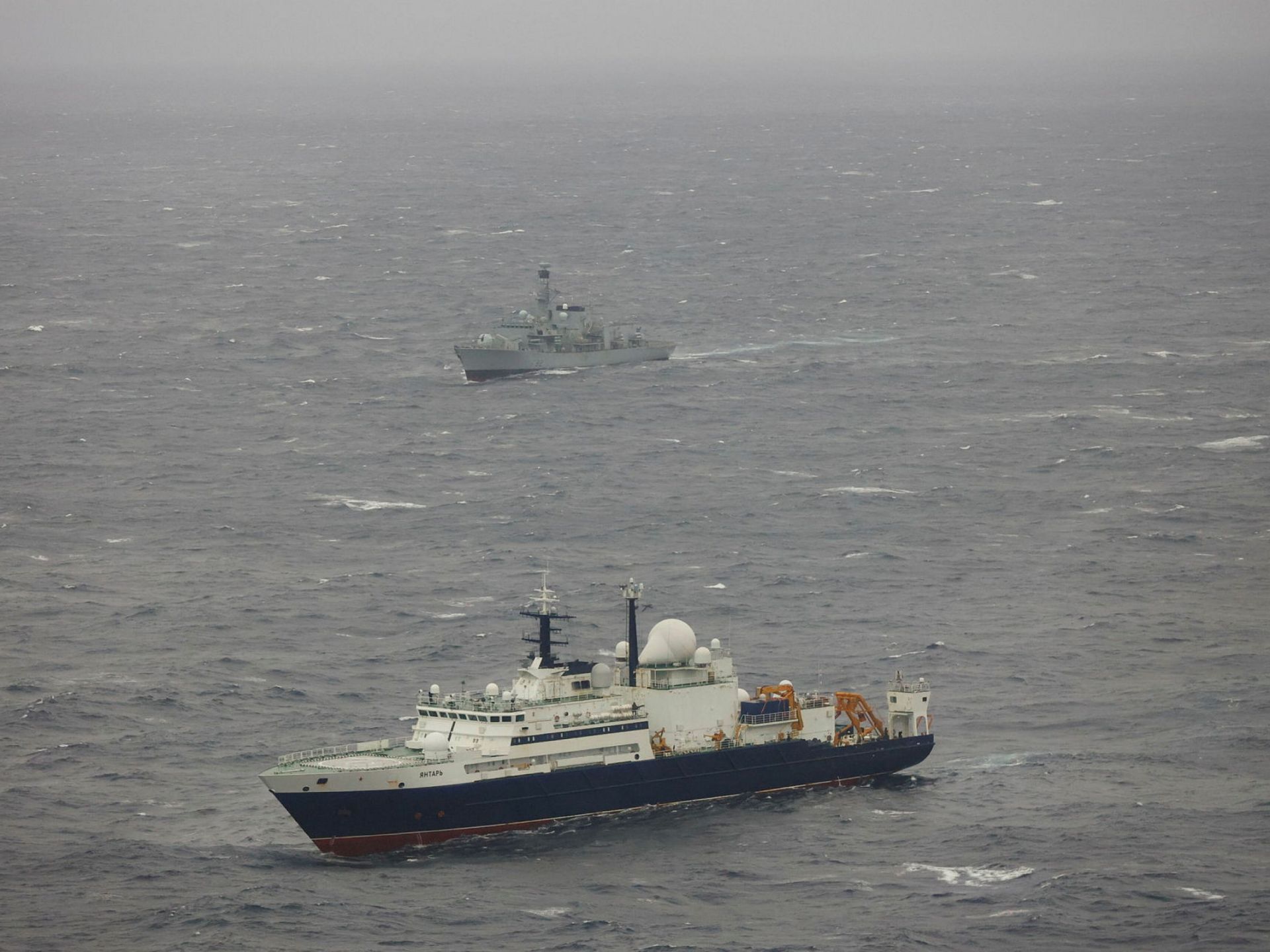
In November 2024, the Russian ship Yantar, officially an oceanographic research vessel but described by the United Kingdom Ministry of Defence as a spy ship, was monitored near undersea infrastructure in the Irish Sea before being escorted out of IrelandâÂÂs exclusive economic zone by the Irish Navy.
Two months later, the UKâÂÂs Defence Ministry said the vessel had been âÂÂcaught loitering over critical undersea infrastructure in UK waters.âÂÂ
In late 2025, the British government accused Yantar of directing lasers at Royal Air Force (RAF) pilots monitoring its movements in the North Sea.
âÂÂIreland is absolutely EuropeâÂÂs weakest link when it comes to defenceâÂÂ
Ireland has limited capability to monitor its waters â it has the lowest defence spending as a share of gross domestic product (GDP) in the EU, and its navy has no submarines. It is militarily neutral and not part of NATO.
Irish senator Tom Clonan, a strong supporter of Irish neutrality, argued that it should not be a barrier to boosting defence.
âÂÂBecause of the end of the violence and the conflict in Ireland, and with the ceasefires and the peace agreement, weâÂÂve had a peace dividend. So for the last 30 years, successive governments have really taken their foot off the accelerator when it comes to defence and security. And then, more broadly, Europe has enjoyed a peace dividend after the fall of the Berlin Wall,â he told Al Jazeera.
âÂÂSo as a consequence of those two things, Ireland is absolutely EuropeâÂÂs weakest link when it comes to defence in the air, maritime, ground and cyber domains,â he added.
The Irish government recently boosted its naval powers, allowing the navy to board and inspect suspicious vessels.

Ensuring defence against âÂÂemerging threats in our waters, particularly from vessels linked to the Russian shadow fleetâ is a priority, Defence Minister Helen McEntee said in March, referring to theàageing, often uninsured tankers used to transport Russian oil and circumvent Western sanctions.
Their presence in Irish waters has raised concerns about both accidental damage and deliberate interference with undersea infrastructure. Moscow disputes the term âÂÂshadow fleetâ as a political fabrication.
âÂÂRecent events in the Baltic Sea and the activities of RussiaâÂÂs shadow fleet have highlighted the importance of ensuring that we have the legal framework necessary to respond to evolving threats,â McEntee continued.
In December 2024, a tanker suspected of belonging to RussiaâÂÂs shadow fleet was investigated after power and telecoms cables were damaged in the Gulf of Finland.
A year later, in December 2025, a cargo ship sailing from St Petersburg under the flag of St Vincent and the Grenadines damaged telecommunications cables between Finland and Estonia. A Finnish court convicted its Russian captain and Azerbaijani boatswain of aggravated sabotage, according to the Reuters news agency. Both denied wrongdoing, and the conviction can be appealed.
For Daniel Mulhall, IrelandâÂÂs former ambassador to the US, that much of the worldâÂÂs digital infrastructure passes through Irish waters means the country can no longer assume that its geographical position offers protection.
âÂÂItâÂÂs the fact that there are 850 US multinationals that have operations in Ireland. Many of them have big data centres to manage their data in our country,â he told Al Jazeera. âÂÂWe are an integral part of the Western digital economy. And therefore, any sort of cyber threat to that economy is going to be potentially aimed at Ireland, or at least we could be victims of it, even if weâÂÂre not the prime target. So I think the world has become a far more complex place. And I think Irish people are waking up to that fact.âÂÂ
Mulhall argued that protecting the cables will require international cooperation.
âÂÂI donâÂÂt think anyone can guarantee that those cables will be safe, least of all Ireland. But I think with collective effort, we can make reasonable preparations to strengthen our ability to protect those cables from malign actors that might wish to interfere with them,â he added.
âÂÂTheyâÂÂre the bloodstream of our economy. And if that bloodstream is interfered with, the economy will have serious trouble.âÂÂ