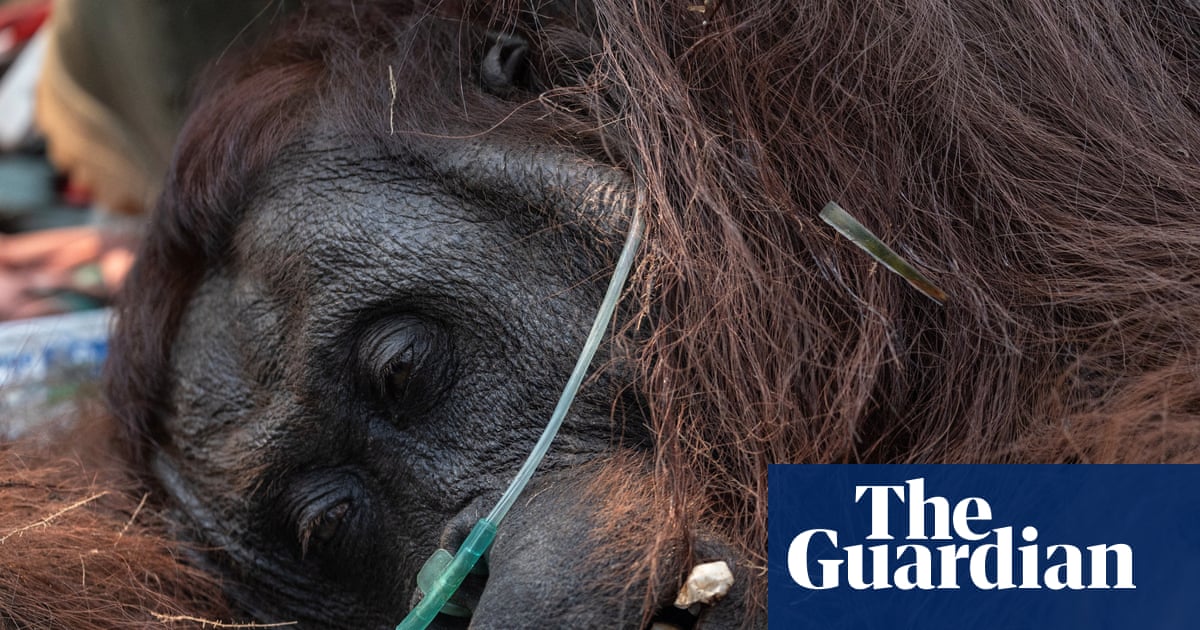

Indonesian wildfires threaten leading orangutan research site in Borneo
Critically endangered Bornean orangutans flee forests as staff at Cabang Panti work round the clock to stave off blaze
Wildfires in Indonesia are sweeping through a critical research site for Bornean orangutans and are now threatening a celebrated research camp, home to one of the worldâÂÂs longest-running studies of wild apes.
In the past few days, the fires have burned within 200 metres of Rangkong research station, a satellite of Cabang Panti research station, which lies about four miles north in Gunung Palung national park.
Hundreds of Bornean orangutans (Pongo pygmaeus), one of three orangutan species, live in the direct vicinity of the research stations, with more than 2,500 thought to inhabit the park, many areas of which are now on fire. All three orangutan species are considered critically endangered.
âÂÂOrangutans are fleeing from these forests. ItâÂÂs just horrible,â said Prof Cheryl Knott, a biological anthropologist at Boston University who has been leading scientific research on orangutans at Cabang Panti for 32 years.
In most cases, the fires were intentionally set to clear land, as is done every year on the island. But an extremely strong El Niño â a warming of sea-surface temperatures in the equatorial Pacific Ocean that disrupts global weather patterns â has fuelled exceptionally hot and dry conditions across the country, with fires easily escaping control as a result. In West Kalimantan province, some areas have gone months with little to no rainfall.
Scientists at Cabang Panti have collected decadesâ worth of data on wild orangutans and their life histories, following some of the same individuals from birth to grandmotherhood. Research carried out at the site has helped to establish the orangutan reproduction cycle, finding that the apes only give birth once every eight years â the longest cycle of any mammal. âÂÂThe long-term nature of this database and the detailed nature of the database is unparalleled,â Knott said.
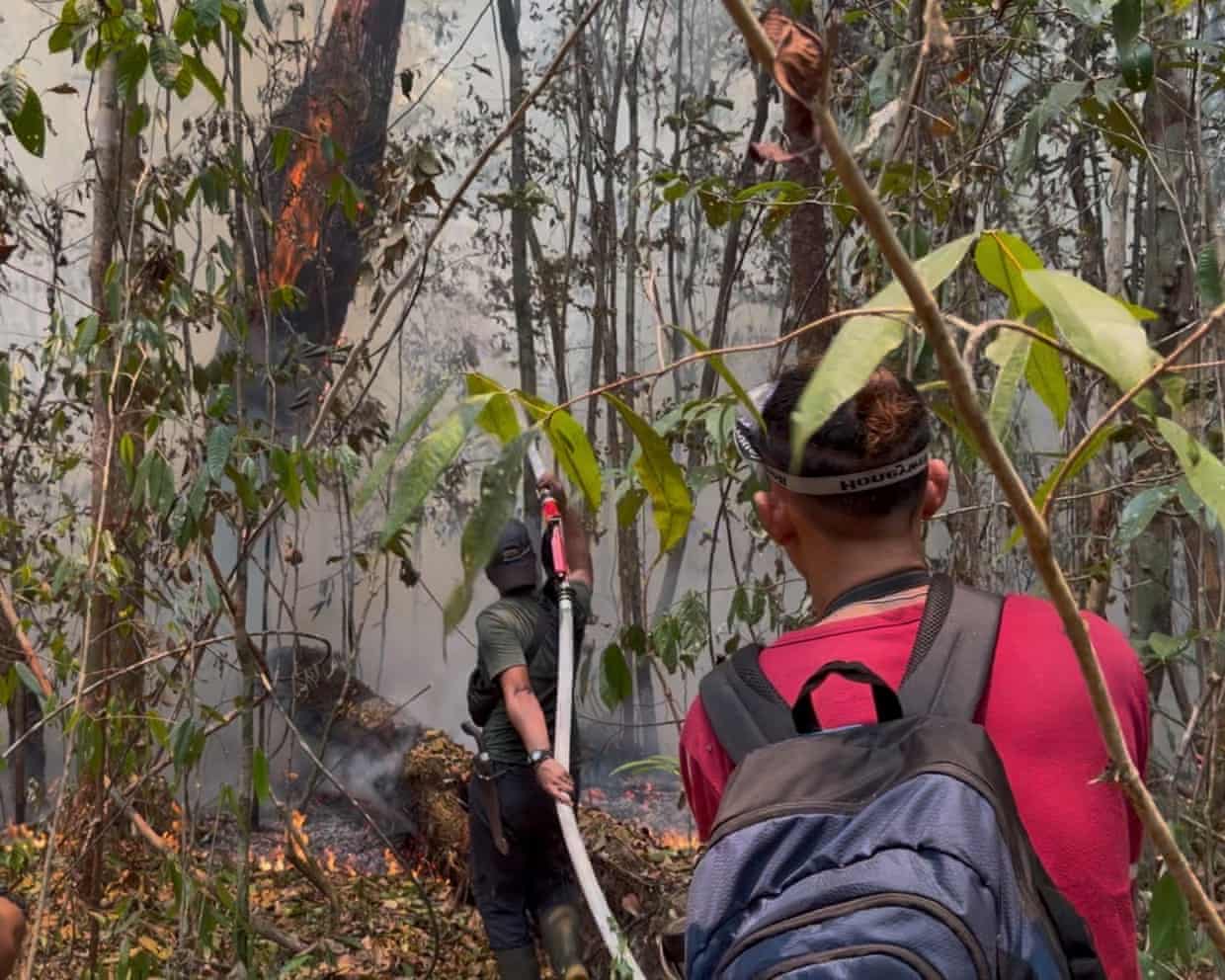
But the fires threaten to undo such continuous observations. At the rate the flames are moving, without intervention or large firebreaks, the fires will reach Cabang Panti in 20 daysâ time, scientists said.
âÂÂ[Cabang Panti] protects what has been, until now, one of the only truly ecologically intact tracts of lowland tropical rainforest in Borneo,â said Prof Andrew Marshall, an anthropologist at the University of Michigan who ran an orangutan research project at the site from 2000 to 2020. âÂÂWithout long-term, continuously collected field data, we cannot understand how tropical ecosystems are adapting to or suffering from global climate shifts.âÂÂ
In a desperate effort to save Rangkong research station, a team of more than 40 people â mostly field assistants, staff and local villagers â are fighting day and night to stave off the encroaching inferno. Recently, they constructed a firebreak and an improvised sprinkler system using a punctured hose line around the station to saturate the surrounding peat.
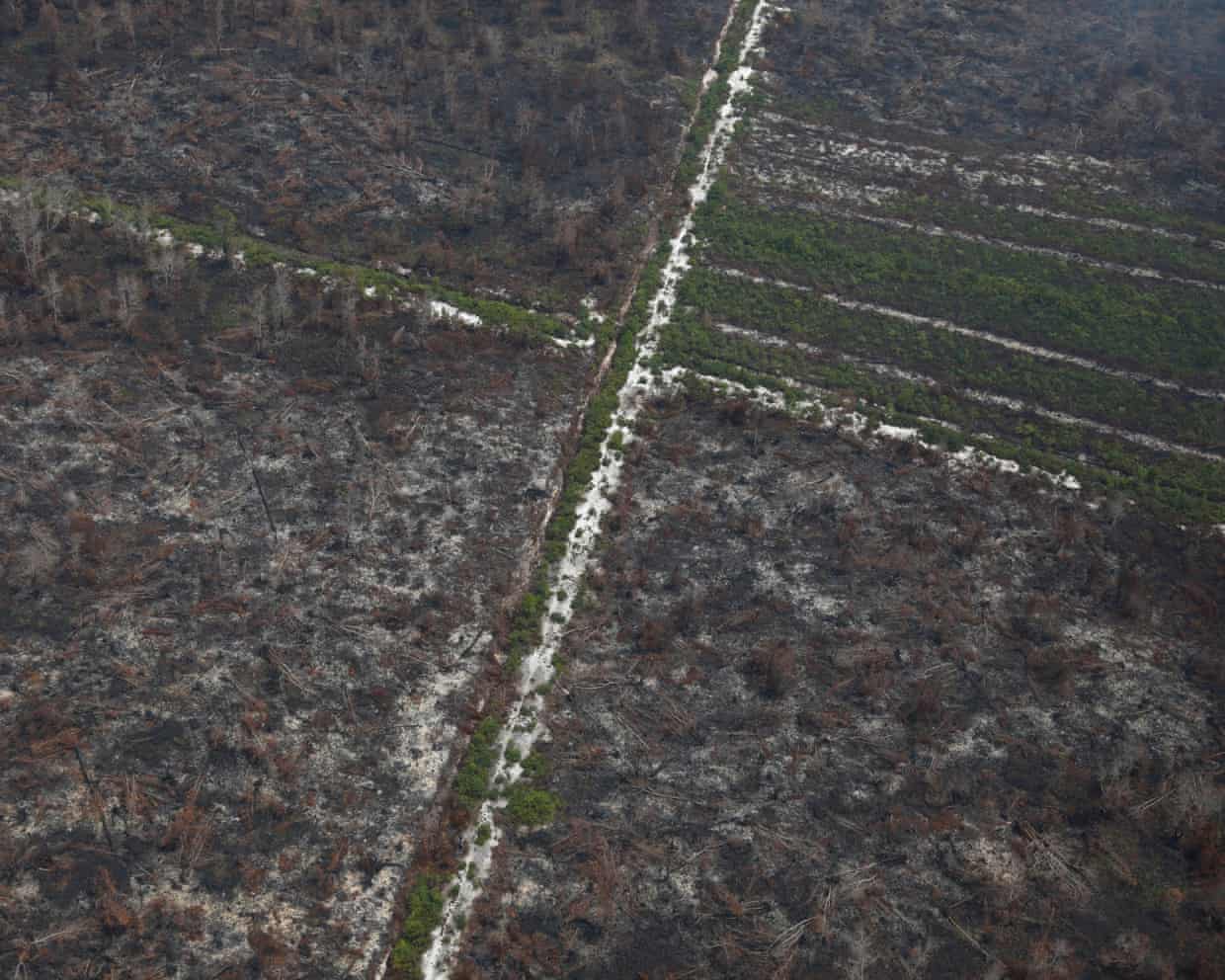
Once fire reaches a peat swamp, it can smoulder underground for months â even after surface flames have been extinguished. Keeping the peat wet is therefore a key defence.
âÂÂThe issue has surpassed any local organisationâÂÂs capacity,â said Caitlin OâÂÂConnell, deputy director of the Gunung Palung orangutan conservation programme. âÂÂWe need large-scale water bombing and skilled firefighters.âÂÂ
Even if they manage to save the research station, it may be for nothing if the orangutans lose their home.
âÂÂThe orangutans need the forest,â Knott said. âÂÂIf all we have left is the building, what are we studying if the orangutans are all gone, and the food they have is all gone? They canâÂÂt survive without that forest.âÂÂ
As solitary animals, orangutans require large ranges and live at low population densities. âÂÂYou canâÂÂt just shove them all together in what remains of the forest,â Knott said.

Those leading the on-the-ground fire response have already witnessed the impact on the apes. âÂÂFive orangutans from our long-term study population were observed fleeing the fire, some only metres from the flames,â said Wahyu Susanto, research director for Yayasan Palung, an Indonesian NGO that protects Bornean orangutans. âÂÂThese are individuals that we have followed and studied for years.âÂÂ
Indonesian meteorologists predict an intense fire season persisting through October as climate forecasts point to a strengthening El Niño.
âÂÂThe hotspots are everywhere,â OâÂÂConnell said. âÂÂI donâÂÂt think itâÂÂs hyperbolic to say that what we thought couldnâÂÂt burn could actually completely disappear if weâÂÂre looking at these dry conditions going on for months.âÂÂ
Find more age of extinction coverage here, and follow the biodiversity reporters Rebecca Ratcliffe, Phoebe Weston and Patrick Greenfield in the Guardian app for more nature coverage.