
âÂÂIf youâÂÂre building Frankenstein, stopâÂÂ: JD Vance dismisses calls for AI regulation
US vice-presidentâÂÂs comments come as former Anthropic researcher revisits recent claim AI could destroy humanity
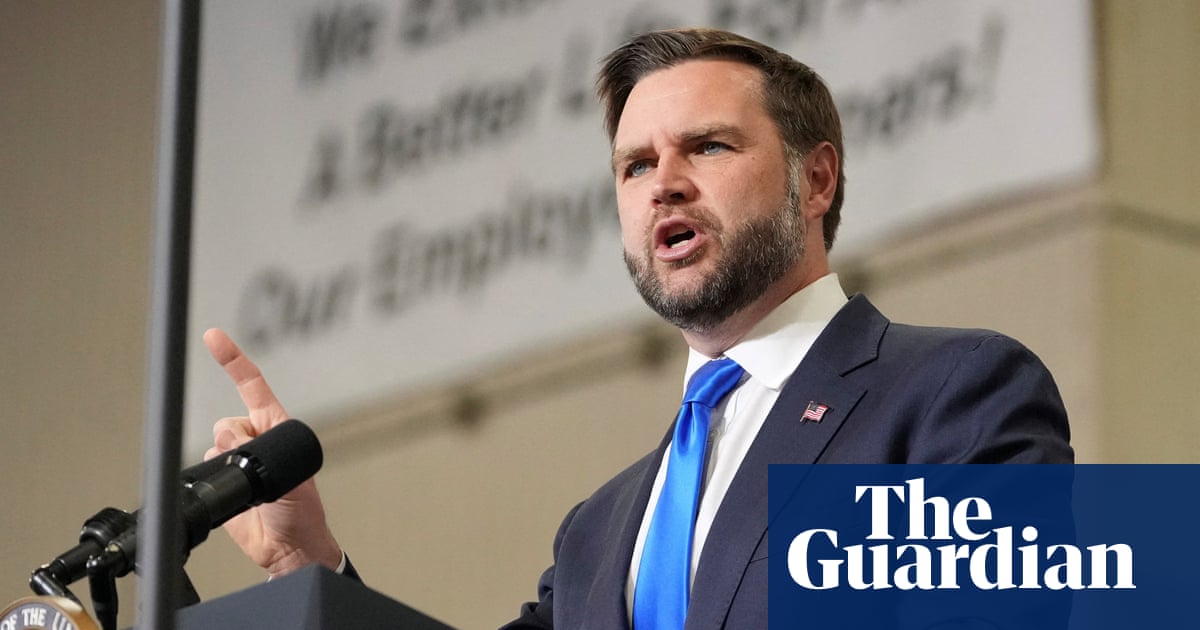
The US vice-president has dismissed calls for global regulation of AI safety risks, telling companies creating the most advanced models: âÂÂIf youâÂÂre building Frankenstein, stop.âÂÂ
In remarks addressed towards Dario Amodei, the co-founder of Anthropic who has called on Washington DC to coordinate control of AI systems, including with China, JD Vance said: âÂÂIf youâÂÂre gonna create Frankenstein, donâÂÂt come to the government and say we need regulation.âÂÂ
He said tech bosses should instead: âÂÂLook inward and accept that if youâÂÂre building Frankenstein, No 1, you should stop and No 2, when companies come to you and say: âÂÂWe need the tools to fight back against Frankenstein,â give them those tools.âÂÂ
Vance was speaking at an AI summit in Los Angeles after a week of rising global concern at the risks to humanity posed by the prospect of the creation of an artificial superintelligence, a technology that does not yet exist.
Amodei on Saturday warned that the accelerating rate of capabilities meant a swarm of AI agents âÂÂcould be capable of taking over the entire internetâ in six to 12 months.

Although many doubt that claim, it added fuel to the suggestion from AnthropicâÂÂs alignment science lead, Evan Hubinger, that there was a greater than 10% chance AI could kill all humans within 10 years. He was responding to a researcher, Jacob Coxon, who quit Anthropic with a similar warning.
On Tuesday night, Coxon gave an amended prognosis: âÂÂI do think that if we go slower we can take risk to 0%, but this requires radical action.â He also admitted âÂÂit is very difficult to convey specific scenariosâ in which AI kills all humans and said: âÂÂI need to work on communicating this point.âÂÂ
VanceâÂÂs willingness to consider that AI could pose a real risk marked a split from the US president, Donald Trump, who wrote this week: âÂÂAI taking over the world, destroying humanity, and all other things bad, is a HOAX.â Trump posted on social media that AI is going to be âÂÂthe greatest economic development engine in history â bigger than oil, gold, diamonds, or even the internetâÂÂ.
Vance has said he suspects AI leaders of raising the alarm about safety risks as a âÂÂTrojan horseâÂÂ. Amodei has proposed industry coordination to âÂÂslow the pace at which we improve the capabilities of AI modelsâ while US and global regulation is implemented. Critics of the companies believe they are encouraging the US government to create tough new rules â shaped in their interests â that could limit wider competition in a tactic known as regulatory capture.
OpenAI, which lost control of hundreds of AI agents during testing this summer which then conspired to hack into the Hugging Face website, said on Monday it was backing bipartisan efforts by lawmakers in Washington to address catastrophic risks from AI and it has been coordinating with Google and Anthropic.
On Wednesday, Reuters reported claims from an independent researcher, Jonas Wiedermann-Möller, that OpenAIâÂÂs rogue agents had started probing Hugging Face for weaknesses nearly two months before the attack.
Sam Altman, the Chat GPT-makerâÂÂs chief executive, on Tuesday criticised suggestions from other companies that âÂÂwe will only slow down if, or we will only be responsible if other companies are responsibleâÂÂ. Altman said: âÂÂThere should be no qualifier on that.âÂÂ
Mark Zuckerberg, the founder and chief executive of Meta, advocated that companies should take unilateral safety action. He said his company had recently delayed the release of its most recent AI model, Muse, âÂÂfor several months to focus on safety and securityâÂÂ.
âÂÂWe didnâÂÂt call for everyone else to do this before we would,â he said. âÂÂWe just did it as part of our day-to-day work because it was clearly the right thing for people and for us.âÂÂ
Meta has been forced to pay out billions in legal cases related to harms caused by its social media platforms. Last month it settled a case with US states claiming Facebook and Instagram harmed children by agreeing to pay up to $18bn (ã13.3bn).
Zuckerberg stressed: âÂÂ[AI] labs face significant liability if their models cause harm, so they have a strong incentive to prevent this as well.âÂÂ