
Hundreds gather in Mississippi to protest Republican redistricting: âÂÂThis fight is familiar territoryâÂÂ
Dozens of residents testify to legislatureâÂÂs redistricting committee in heated hearing, the last of eight
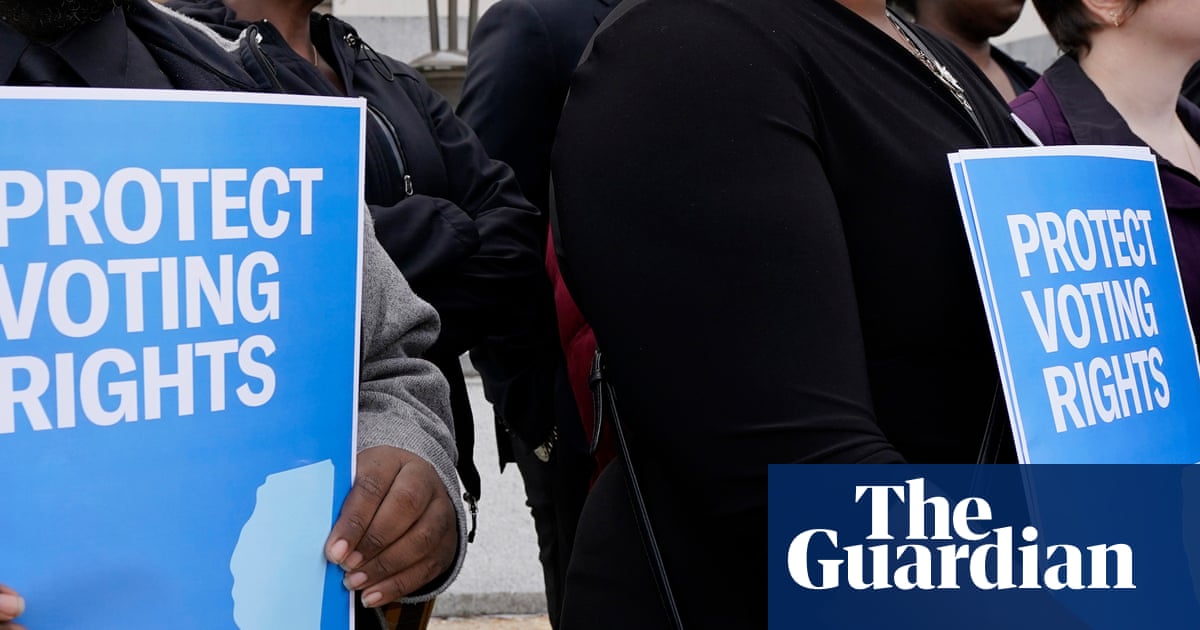
Hundreds of people gathered across from the Mississippi state capitol building on Thursday evening to rally against the aggressive Republican efforts to draw maps that favor their own party.
Shortly after the US supreme courtâÂÂs decision in Louisiana v Callais, which severely weakened section 2 of the Voting Rights Act, Tate Reeves, the Mississippi governor, moved in lockstep with other Republican governors and lawmakers to call for a special session to redraw maps. However, before that special session could occur, Reeves canceled it and wrote on X that he expected âÂÂlawmakers to redraw congressional lines BETWEEN NOW and 2027 elections!âÂÂ
In August, members of the Mississippi legislatureâÂÂs joint redistricting committee began a tour of eight redistricting hearings across the state. The last of those hearings took place Thursday evening in Jackson, the stateâÂÂs capitol.
âÂÂThis fight is familiar territory for all of us. The giants of the civil rights movement didnâÂÂt fight so that we could sit this fight out. They fought so we could stand exactly where weâÂÂre standing right now and finish what they started,â Safia Malin, policy director at One Voice, a civic organization, told the crowd before the hearing.
Malin was one of several speakers who reminded the people gathered of the history and fight for voting rights in the state, from the 1890 constitution, which disenfranchised Black voters and ushered in an era of Jim Crow, to the 1964 efforts of the Mississippi Freedom Democratic party and the work of Medgar Evers, Fannie Lou Hamer and others.
Following the rally, those gathered marched to the capitol holding signs, their chants of âÂÂLeave our maps aloneâ and âÂÂWhose maps? Our mapsâ echoing through the capitol building.
An hour before the hearing was scheduled to begin, the room was full, with some people leaning against the walls. Others sat in an overflow section outside and watched the proceedings on television screens.
Prior to the proceedings, house Democratic leader Robert Johnson, who is Black, encouraged audience members to ensure that they made the historical record.
âÂÂThis is testimony,â said Johnson, one of several Democratic lawmakers who showed up to observe or speak at the proceedings. âÂÂAnd at some point it may be evidence. So letâÂÂs make sure weâÂÂre heard.âÂÂ
The committee, handpicked by legislative leaders, is primarily made up of white men. It consists of 16 Republicans, all of whom but one are white, and four Democrats, all of whom are Black. The committee did not answer questions, provide information about how the redistricting process would look on their end or explain how citizensâ testimony would affect their decision.
And in a room full of dozens of Black men and women, six of the first 10 speakers were white. The first Black woman called to give her testimony was the 15th person to speak. Overall, 67 people spoke. Each person was given two minutes to speak. The proceedings lasted just under two hours.
State auditor Shad White, who is considering a gubernatorial run, created controversy almost as soon as he began his comments.
âÂÂThe delta deserves better leadership than Bennie Thompson. It just does,â White said, as members of the audience booed. Bennie Thompson, who is Black, is MississippiâÂÂs lone congressional Democrat. White, Reeves and other Republicans in the state have openly targeted Thompson and his district.
Through continued boos, White said that there was a âÂÂsilent majorityâ of people who âÂÂwant better representation for the Mississippi deltaâÂÂ, and not someone who is âÂÂfocused on running the January 6th committeeâÂÂ.
Jesse Otto Smith, who was born and raised in Mississippi, said that the stakes of the redistricting hearing were personal.
âÂÂIâÂÂm 76 years old. My father was born in 1926 â he couldnâÂÂt vote. My grandfather was born in 1891 â he couldnâÂÂt vote. ThatâÂÂs why IâÂÂm here. My great-grandfather was born as an enslaved man, considered less than a human, in 1861 â he couldnâÂÂt vote. He was a piece of property,â he said. âÂÂThatâÂÂs why I am here. My mother graduated from Rust College, grew up in Starkville, but couldnâÂÂt go to school at Mississippi State, paid taxes without representation.âÂÂ
Walter Boone, who is white, called the redistricting efforts âÂÂMississippi plan 2.0âÂÂ.
âÂÂThe original Mississippi plan culminated in our 1890 constitution, and we cannot ignore that history. IâÂÂm not a scholar or trained historian, and even I know that Mississippi has been here before,â he said. âÂÂOur first reconstruction ended in much the same way, through a culmination of redistricting and fraud. Our Black elected representatives were stripped of their offices, and Black constituents did not see another person represent them that looked like them for 75 years.âÂÂ
Lauren Wilson, a sophomore at Tougaloo College from Tupelo, spoke in opposition to redistricting. She asked why the committee held hearings about redistricting, but not for Medicaid expansion or any of the myriad issues in the state.
âÂÂIf IâÂÂve learned one thing from history, if IâÂÂve learned one thing from the Lord, if IâÂÂve learned one thing from my educators and my pastors, IâÂÂve learned no matter who holds the position, the people hold the power,â she said. âÂÂThe pharaoh had the position, but Moses had the power. Woodrow Wilson had the position, but Ida B Wells had the power. Lyndon B Johnson had the position, but Martin Luther King had the power.
âÂÂWe stand today before the committee who has to make a decision on redrawing the lines that seek to disenfranchise the people. So I want you to know that even though tonight you have the position, we hold the power.âÂÂ
The full legislature is expected to convene in a special session later this year to redraw the state legislative maps. While those maps would not affect NovemberâÂÂs midterm elections, lawmakers will likely target ThompsonâÂÂs seat before he is up for re-election in 2028.