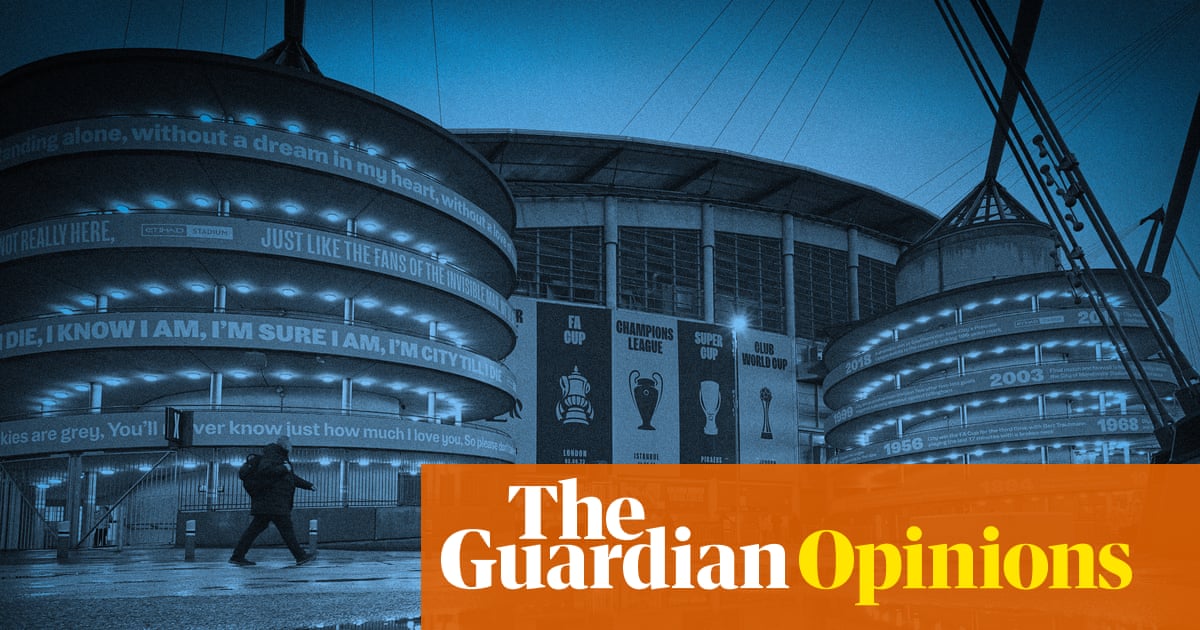
How do sports fans end up as aggressive defenders of a nation stateâÂÂs regime?

The Manchester City case is one example of how fandom has warped beyond previous boundaries in online spaces
A video of Liam Gallagher playing in a 1996 charity football match resurfaced on social media recently. Dressed in Manchester City blue and a bucket hat, in truth he appears to be in a fug of cigarettes and alcohol. But then, out of nowhere, he hits a shot into the top corner. Since last week, though, the Oasis singer has preferred to defend the honour of his club with his studs up.
As the fallout from the biggest scandal in British football history headed into a second week, Gallagher was asked what he made of rival fans wanting City to lose all their trophies after being found guilty of all the serious charges against them. âÂÂThere all NEUROTIC little GIMPS,â came the reply on social media. It was one of dozens of sweary, punchy, and often amusing responses, all built on a solitary article of faith: that City will somehow find a way to wriggle free.
But Gallagher is hardly standing alone. Over at Bluemoon, the biggest City forum, the tone has been just as defiant â albeit with a sprinkle of gallows humour. âÂÂHave we been blamed for the Titanic hitting the iceberg yet?â asked one user. âÂÂManchester City shot JFK,â wrote another. âÂÂThis isnâÂÂt just a fight between the PL & City. ItâÂÂs a fight for the heart, soul & future of football,â reckoned a third.
Staggeringly, the forum now has over 192,000 posts since the initial charges against City, dating back to 2023. Naturally the Premier League, jealous rivals and the media all come under heavy fire. Yet there remains a curious reluctance among fans to accept wrongdoing â or to criticise the clubâÂÂs owners.
How might we explain that? I am not sure it is down to pure tribalism, or a determination among City fans to wait for the clubâÂÂs appeal to play out. ItâÂÂs more complicated, and more interesting, than that.
Let us try to get into the head of the most vociferous City fan since last Tuesday. For decades they were in UnitedâÂÂs shadow, then everything changed. Their city did too, given how much Abu Dhabi United Group pumped into it. You can forgive them, then, for not wanting to believe that it was all built on sand during the legal process.
But now? Now there is no excuse. So what might explain the reluctance to accept what the independent commission report lays out in great detail? According to the Irish academic Colm Kearns, one reason is because the United Arab Emirates has not only brought unprecedented success and forged emotional bonds with City fans âÂÂbut have also co-opted elements of the clubâÂÂs fanbase as aggressive defenders of their regimeâÂÂ.
In 2023 Kearns and his colleagues analysed huge numbers of posts from City fans, going back years, and found that some of them would not only âÂÂoverlook ethical violations by the Group, but decry and â in some cases â attack the GroupâÂÂs critics.âÂÂ
In other words the clubâÂÂs owners had successfully leveraged the tribal loyalty of City fans into being Manchurian Candidates â or, rather, Manchesterism Candidates.
Kearns tells me that some sports journalists had even self-censored because of the impact of online abuse from City fans. âÂÂWe had people talking about how fans would go online and try to find their troll through their personal social feeds, and it sent that on to their editor to get them in trouble,â he says.
There is another massive factor here: social media, and the way we now consume sport and communicate with other fans. Thirty years ago, most City fans would live near Manchester and see fans from other clubs at work and in the pub. Nowadays, they can dwell in an online space made up entirely of people who support their own club.

âÂÂI think it makes fans perhaps more tribally myopic than they would have been before and less likely to look outside of their own clubâÂÂs perspective,â says Kearns.
Academics also talk of âÂÂsports fandom circlesâÂÂ, in which supporters across the globe increasingly mobilise and fiercely defend athletes or their teams. That phenomenon, which came out of east Asia with popular culture and music, leads supporters to be laser-focused on their own tribe. But it hardly encourages lighthearted banter, common ground, or compromise.
In CityâÂÂs case, Kearns suspects that some fans are putting the club above the wider game, citing a Reddit post that said: âÂÂI am a City fan first and a football fan second.â Although, as he concedes, it is impossible to know how many online posters do not live in Manchester, or go to games, and therefore feel the need to prove their bona fide credentials by sticking up for the club at all costs.
Either way, where we could go next is interesting. If you were a far-right tech billionaire, why wouldnâÂÂt you want to buy a successful sports team â especially if you knew there was an army of potential defenders of your reputation among your new fanbase?
Over the weekend I went through the fan forums of other clubs to see what their supporters made of the guilty verdict against City. The overwhelming majority welcomed it, of course, even if some questioned whether City would really get properly punished for their crimes, given the relationship with Abu Dhabi and the British government.
âÂÂOnce you lose faith that the rules apply equally, football becomes something else,â one wrote. âÂÂEvery title, every match, carries a question mark. I feel cheated. IâÂÂm one of the victims. And for that, I hate Manchester City.âÂÂ
Some will agree with that sentiment. Others will raise their eyebrows. I do wonder, though, would that poster feel the same way if the boot was on the other foot, and their club was in the line of fire?