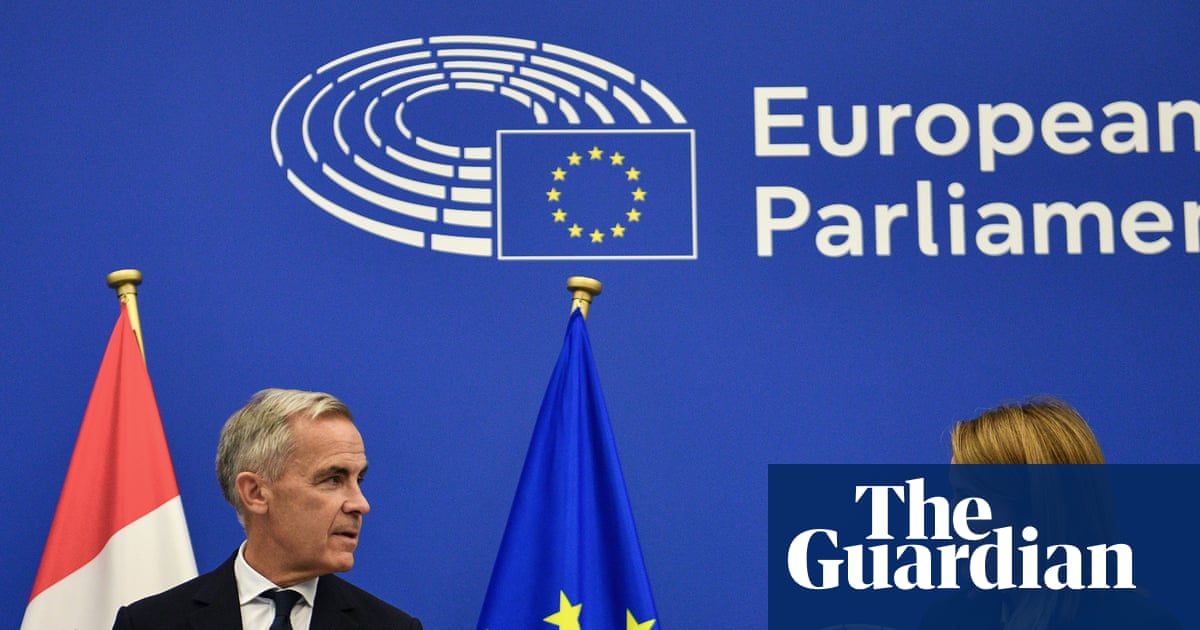

EU backs away from offer to Canada to start âÂÂassociate memberâ talks
Watered-down version of statement to be issued at end of Montreal summit instead offers âÂÂever closer associationâÂÂ
The EU has backed away from its offer to Canada to start talks on becoming an âÂÂassociate memberâ after disagreements between members states just as an EU-Canada summit was set to begin in Montreal.
A draft of a joint statement to be issued after the end of the summit, which runs Thursday and Friday, showed a watered-down version offering âÂÂan ever closer association of Canada to the EU, short of full membership itselfâÂÂ.
The issue was triggered after the European Commission president, Ursula von der Leyen, surprised nearly everyone by announcing in last monthâÂÂs state of the union address that the EU would consider âÂÂassociate membershipâ for Canada.
The declaration had been hailed as a landmark in EU history, offering a non-EU country such close ties to the bloc, which has not allowed any state membership since Croatia joined in 2013.
It was also seen as a sign that the call by CanadaâÂÂs prime minister, Mark Carney, at the Davos summit in January for âÂÂmiddle powersâ to work together was paying off.
But instead of announcing a work programme on developing âÂÂassociate membershipâÂÂ, the draft communique, seen by the Guardian, states the two sides would âÂÂwork to define by the 2027 EU-Canada summit the concept of an ever closer association of Canada to the EU, short of full membership itself, to reflect, through this even closer association, our common endeavour and cooperation towards our shared goals of prosperity, economic security and strategic autonomyâÂÂ.
Associate membership had been mooted, and rejected, previously for countries such as Ukraine.
Von der LeyenâÂÂs declaration caught EU capitals by surprise and led to pushback politically and legally. Given âÂÂassociate statusâ has no definition, diplomats wondered about such issues as whether Canada could join the European Council, legislative bodies or decision-making processes without a vote.
At a meeting on Monday, ambassadors in the EU raised concerns about the dramatic offer, but vowed to make efforts to seek a diplomatic path to rescinding the offer of âÂÂassociateâ membership without embarrassing Von der Leyen. It is understood that Italy suggested âÂÂassociate membership as proposed by the commissionâÂÂ, with the definition to be thrashed out later by member states.
Germany walked back further, suggesting the wording âÂÂan ever closer association of Canadaâ to the EU.
âÂÂNobody was consulted about associate membership apart from [Von der LeyenâÂÂs] closest staff, it would seem. Many member states, including Germany, were not happy. This is all about fixing the plane while it is flying,â said one diplomat.
Germany had argued that âÂÂassociate membershipâ should be reserved as an interim step for prospective candidate countries, such as Ukraine or Montenegro, noting that the status has no formal grounding in current EU treaties.
Donald Trump, the US president, previously called the EUâÂÂs proposal to make Canada an associate member âÂÂlaughableâÂÂ, and said if he âÂÂinterpreted the move as a âÂÂhostile actâ the US might stop trading with Europe âÂÂon many thingsâÂÂ.
Carney told reporters on Tuesday that the summit this week was the launch of further formal negotiations that will take place another year.
âÂÂThe good news is it doesnâÂÂt matter about â specific names or nomenclature,â Carney said. âÂÂWhat matters is the difference it will âÂÂmake to the lives âÂÂof Canadians.âÂÂ
A previous draft statement âÂÂhad included at least two references to Canada as an âÂÂassociate memberâÂÂ, âÂÂincluding an acknowledgment that âÂÂdefining the âÂÂterm would take âÂÂanother year.