
Egyptian journalist faces terrorism charges after entire newsroom detained
Calls for release of six Matsadaash staff after one is charged, while whereabouts of other five remain unknown
An Egyptian journalist has been charged with joining a terrorist group, days after an entire newsroom was detained in what rights groups have said is a crackdown on press freedoms.
Last week, authorities arrested six journalists from the independent fact-checking and investigative platform Matsadaash â literally meaning âÂÂdonâÂÂt believeâ â accusing them in a statement of being unlicensed and publishing false news on behalf of the outlawed Muslim Brotherhood.
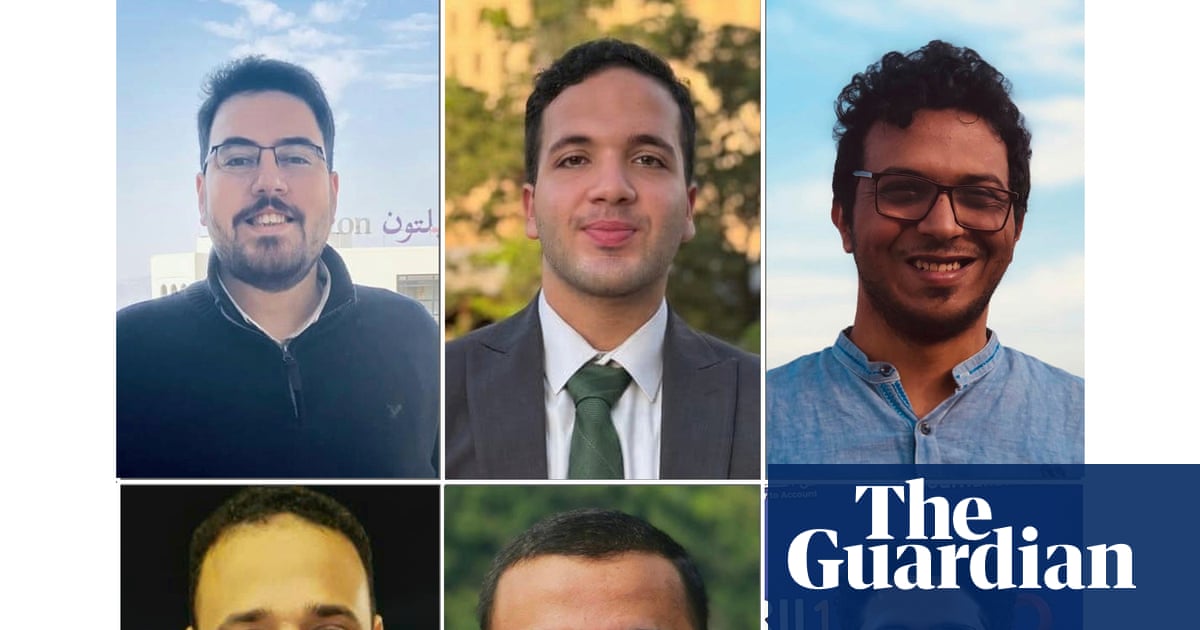
The outletâÂÂs six journalists, Abdallah Qadri, Mohamed Ashraf, Mohamed Adel, Islam Barakat, Mohamed Mahmoud and Omar Helal, were arrested by security forces over the course of two days.
On Sunday, Egyptian authorities charged Ashraf with joining a terrorist group and spreading false news, according to a statement by the Egyptian Initiative for Personal Rights, a NGO. The charges came after an interrogation that lasted from 10pm to 8am and focused exclusively on material published by Matsadaash, the rights group said.
Ashraf was to be held for 15 days, pending investigation, while the whereabouts of the other five journalists were still unknown.

Abdelrahman Mansour, the co-founder of the platform, denied having any association with the Muslim Brotherhood, a transnational movement that was designated a terrorist organisation by Egypt in 2013 after the former president Mohamed Morsi, a senior Brotherhood figure, was ousted in a coup. Mansour called the arrests âÂÂone of the gravest attacks on journalism in EgyptâÂÂs modern historyâÂÂ.
âÂÂMy colleagues were doing what journalists should do: asking difficult questions, uncovering facts, and reporting on issues that affect peopleâÂÂs lives. They deserve recognition for their work. Instead, their homes were raided, and all six were taken away,â he said. âÂÂThe government must answer this question: why have you arrested six journalists? What have they done beyond doing their jobs?âÂÂ
The Guardian contacted the Egyptian State Information Service for a comment but did not receive a reply by the time of publishing.
Dozens of journalists staged a sit-in outside the Egyptian Journalists Syndicate (EJS) in Cairo on Saturday, demanding the release of the Matsadaash staff. Members said they would keep the sit-in open ended until the journalists were released, and the EJS said it would convene an emergency meeting on Monday.
The EJS had filed a request with the ministry of interior and public prosecutor for the release of the journalists, as well as for information on their whereabouts.
More than 80 rights groups, including Human Rights Watch and the Committee to Protect Journalists, condemned the arrests as a violation of freedoms, and demanded the immediate release of the Matsadaash staff.
The arrests came little over a week after the US government waived its human rights conditions on $320m (ã242m) in military aid to Egypt, citing CairoâÂÂs âÂÂhelpful roleâ to US national security after the US-Iran war.
The US gives about $1.3bn in aid to Egypt annually, but a portion is contingent upon the Egyptian government meeting certain human rights and democracy-related requirements. The US has withheld portions of aid several times since the 2013 coup owing to EgyptâÂÂs poor human rights record, but has largely kept funds flowing.
This year, Washington waived the human rights requirement in total, as doing so was âÂÂessential for the US-Egypt relationship and US national security prioritiesâÂÂ, according to a state department memo revealed by Reuters.
While saying that he was unsure whether the arrests were linked to the recent waiver, Mansour said: âÂÂThe use of the national security waiver on human rights conditions by the US by many years, a willingness by other states to look the other way on EgyptâÂÂs human rights record ⦠certainly enables violations like this to occur more easily.âÂÂ
Cairo has for years faced criticism for its human rights abuses, with the rights monitor Freedom House saying Egyptian security forces âÂÂengage in human rights abuses and extrajudicial killing with impunityâÂÂ.
Since the Egyptian president Abdel Fatah al-Sisi took power in the coup that ousted Morsi, civil liberties have been curbed and domestic political opposition has been violently crushed.
Egypt ranks 169th out of 180 countries on the Reporters Without Borders Press freedom index. Freedom of the press is tightly restricted in the country and independent platforms such as Matsadaash are rare. About 26 journalists are held in Egyptian prisons, according to the EJS.