
Ed Miliband meets IranâÂÂs foreign minister as Tehran gives US ultimatum on strait of Hormuz
Senior Iranian officials say Washington has four to five days to respond to its conditions for reopening the strait
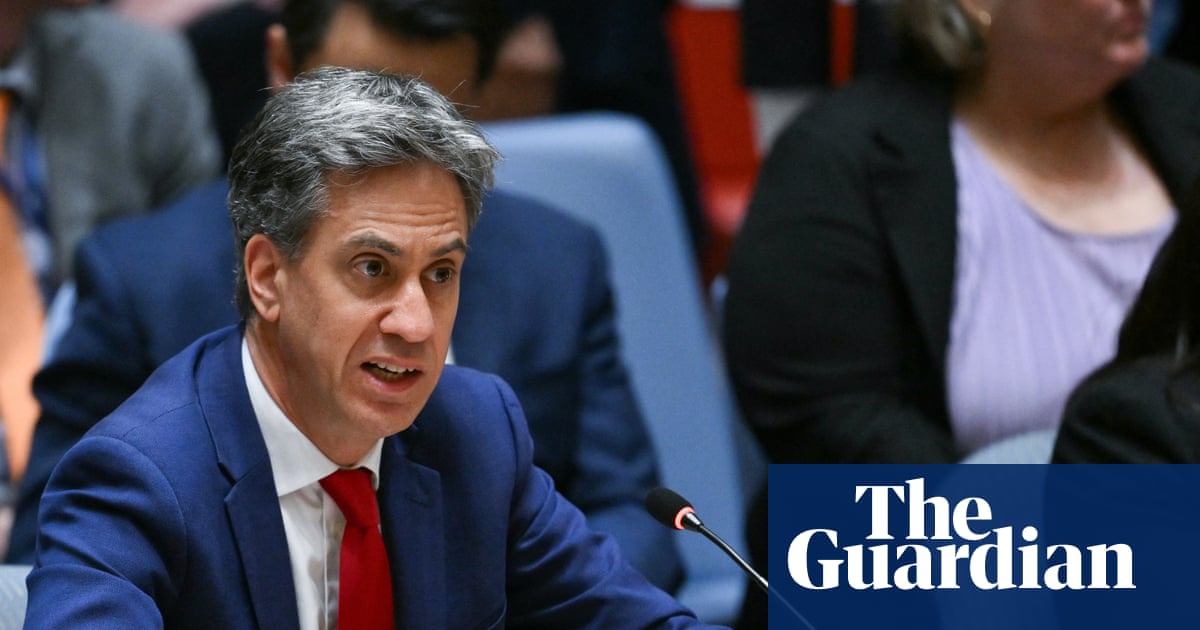
The UK foreign secretary, Ed Miliband, has met his Iranian counterpart, Abbas Araghchi, for the first time in New York amid warnings from senior Iranian security officials that the US has four to five days to respond to its conditions for reopening the strait of Hormuz.
The previously unknown apparent deadline was specified by Mohsen Rezaei, the secretary of the supreme national security council, in a TV interview on Wednesday evening, and it is unclear what action Tehran will take if the US does not respond to IranâÂÂs preconditions for reopening the vital waterway.
A faction inside Iran is arguing that Tehran should seek to escalate the conflict with a vulnerable US president, rather than let the crisis drift in its current deadlock. Brent crude was trading at about $107 (ã81) a barrel on Thursday.
Araghchi and the USâÂÂs special envoy Steve Witkoff met earlier this week on the sidelines of the general assembly to discuss IranâÂÂs terms for reopening the strait and the speed at which that may happen, as well as the time the US had been given to respond.
Rezaei, a recently promoted hardliner, said IranâÂÂs president, Masoud Pezeshkian, and Araghchi had flown to New York to convey IranâÂÂs internally agreed terms, not to negotiate new ones. âÂÂThere has been no discussion whatsoever that these conditions should change, that a new condition should be removed or added,â he said.
The big change appears to be that Tehran now insists Washington act first. âÂÂTalk is enough. Negotiations are enough. Now we must act,â Rezaei said.
He warned that if the US did âÂÂnot fulfil the conditions, we will neither open the strait of Hormuz nor is there any negotiation on the tableâÂÂ.

Rezaei said the seven conditions must be implemented âÂÂcompletely and all at onceâÂÂ, adding that the US had been given âÂÂfour or five daysâ to do so. After that, he said, Iran would determine its âÂÂnext stepâÂÂ, without specifying what that would entail.
The meeting between Miliband and Araghchi, one of an exhaustive round of bilaterals undertaken by the Iranian foreign minister, is the first meeting between UK and Iranian ministers for a year and the first exchange since the UK in July proscribed the Islamic Revolutionary Guards Corps (IRGC) as a terrorist organisation, a move that has worsened the already sour relations between the two countries.
Miliband made clear that the UK was committed to freedom of navigation in the strait and wanted a diplomatic solution, also stressing support for Saudi Arabia, a UK ally in Yemen.
He warned Iran about its behaviour in the UK, including threats to Jewish communities, and called for the UK to be given consular access to the British couple sentenced to 10 yearsâ imprisonment in Tehran.
Overall, European diplomats have not sensed a US-Iran breakthrough in New York.
The US secretary of state, Marco Rubio, also said it would be wrong to characterise the Witkoff talks with Iran as a major breakthrough. It is understood that Araghchi, speaking largely through a Qatari mediator, set out to him the seven preconditions to be met before it is willing to reopen the strait, including the lifting of US sanctions and an end to war on all fronts, a reference to Israeli military activity in south Lebanon.
Some IRGC officers have also linked the strait of Hormuz issue to the closure of the Bab al-Mandab strait, the narrow waterway close to the south-west of Yemen now under control of Iranian-backed Houthis.
Maj Gen Rahim Safavi, a senior Iranian military figure, said: âÂÂIf the Americans start a new war, a new front centred on the Red Sea and the Bab al-Mandab strait may open before their eyes. Are they ready to enter the battle on this front? This is a question that they should pay more attention to.âÂÂ
Domestically, PezeshkianâÂÂs defiant message to the UN general assembly on Wednesday was deemed a success overall in that it balanced a refusal to bend the knee to âÂÂthe US bullyâ with a willingness to seek diplomatic talks.
He also proposed a new security architecture for the future in partnership with Gulf states, including those it has been bombarding in an effort to dislodge the US from its military bases.
Maj Gen Ahmad Vahidi, commander-in-chief of the IRGC, praised PezeshkianâÂÂs speech, saying: âÂÂWe are not afraid of war. It is the loud and firm call of the Iranian nation â a call that resonated from the United Nations podium, through the words of the esteemed president, and reached the ears of the world.âÂÂ