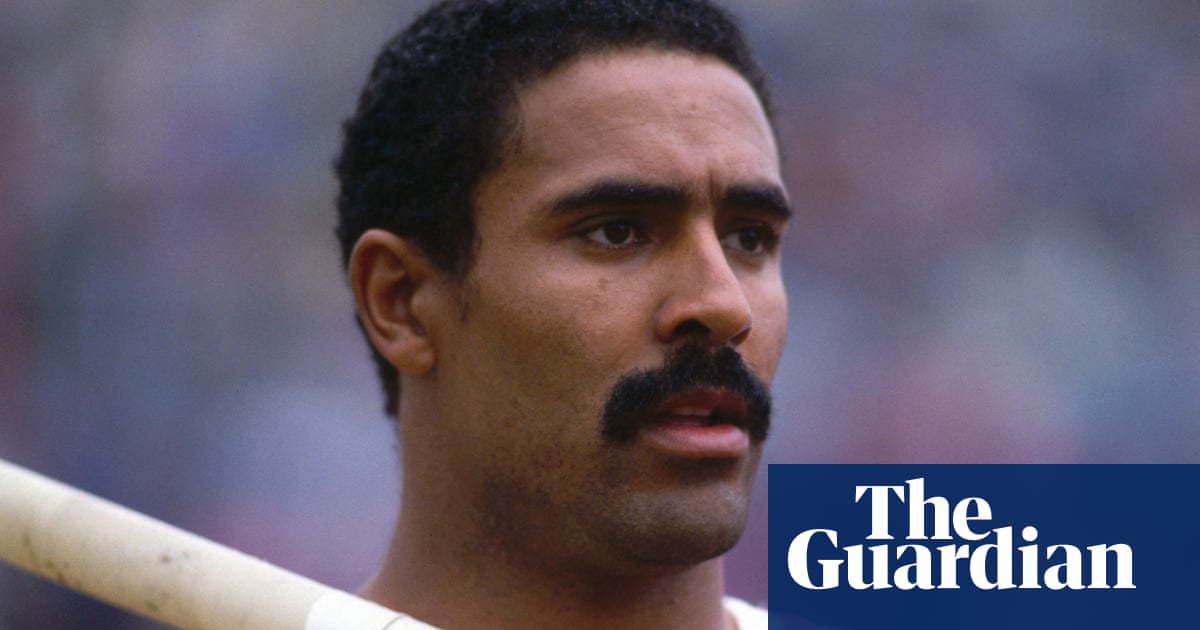

Daley Thompson: âÂÂI was happy to sleep on floors to do what I was doing. You know you have to earn itâÂÂ
The double Olympic champion insists a knighthood wouldnâÂÂt change his life, still trains on Christmas Day and explains why he got a video game and Seb Coe didnâÂÂt
âÂÂWhen youâÂÂre a kid, you think you can be Superman,â says Daley Thompson, as he gazes back to the era when he was track and fieldâÂÂs ultimate man of steel. âÂÂAs you grow up, life kind of knocks those edges off you. But that never happened to me. IâÂÂve always gone where I was aiming. IâÂÂve been the luckiest bloke in the world.âÂÂ
Luckiest? Hardly. During the 1980s, Thompson powered to two Olympic decathlon gold medals, broke the world record four times and remained unbeaten for nine extraordinary years. Along the way, self-doubt, like his opponents, was conquered and vanquished. That wasnâÂÂt luck, it was talent and unyielding willpower.
Underpinning it all was a work ethic that made Stakhanov look like a slacker. Thompson trained 20 times a week. And, famously, when he heard that his great German rival, Jürgen Hingsen trained on Christmas Day, he made sure he did two sessions.
Back then, millions of Britons regarded Thompson as the closest thing to a real-life superhero, voting him the BBCâÂÂs Sports Personality of the Year in 1982 and revelling in his triumphs. So it remains an enduring mystery that â unlike BritainâÂÂs only other three multi-event Olympic track and field champions â Dame Mary Peters, Dame Denise Lewis and Dame Jessica Ennis-Hill - ThompsonâÂÂs achievements were not rewarded with a knighthood.
Does he ever wish he was Sir Daley? âÂÂNot really,â Thompson says. âÂÂI mean, it would be lovely, and great for all the people that have helped me. But itâÂÂs not going to change my life, honestly.âÂÂ
Why do you think you havenâÂÂt got one? âÂÂAbsolutely no idea,â he replies. âÂÂThose things for me are really nice to have but if theyâÂÂre not within your control, then why bother about them?âÂÂ
That is an admirably phlegmatic reaction. But the long-standing suspicion is that the controversy that followed ThompsonâÂÂs brilliant second Olympic gold medal in 1984 is to blame. For having whistled to the national anthem, he then wore a T-shirt to the press conference afterwards which asked âÂÂIs the worldâÂÂs second greatest athlete gay?â â an apparent reference to Carl Lewis - before joking that he would like to have Princess AnneâÂÂs babies.
Writing for the Guardian from Los Angeles, Charlie Burgess began his report with seven words that proved prescient. âÂÂBang goes Daley ThompsonâÂÂs chance of a knighthood.â The backlash was such that the Royal Family even released an official statement saying that it was âÂÂabsurdâ to think Princess Anne, then the president of the British Olympic Association, had been upset.

These were different times, we suggest to Thompson, as he mulls over his decision to wear that T-shirt. He nods. âÂÂWould I do it now? That is the question,â he replies, before answering it himself. âÂÂNo, of course I wouldnâÂÂt. But youâÂÂre right, absolutely different times.âÂÂ
Thompson also reiterates that Princess Anne didnâÂÂt mind his joke either. âÂÂThe thing was she wasnâÂÂt offended. She was fine with it. ItâÂÂs a faux outrage.âÂÂ
Yet there is still time for the honoursâ committee to think again, given ThompsonâÂÂs remarkable accomplishments and love of his country. And, as a powerful documentary of his life made clear two years ago, it came despite a tough upbringing.
His Scottish mum raised him while she held down two and sometimes three jobs, with help from food banks. His dad, from Nigeria, was shot and killed when he was just 13. Yet Thompson was never one to let adversity, however extreme, knock him off his stride.
Even now, at 68, he is still notching up fresh milestones. Because last month Thompson became the first British athlete to have held a national record for 50 years.
That record was set in September 1976 in Talence, France, when he eclipsed Peter GabbettâÂÂs old record by four points. So was that the moment Thompson knew he was going to be great?
âÂÂTruthfully, no,â he replies. âÂÂIt was before that, when I did my first decathlon in Cwmbran in 1975. I was 17 years old. I did my first five events and I literally remember waking up on the second day thinking: âÂÂOh man, youâÂÂre going to be really good at this.â And that was it.âÂÂ

Not that there was much financial help for talented youngsters then. âÂÂThere was a guy called Tom McNab, who asked Adidas to send me some shoes because I couldnâÂÂt afford all of them,â he says. âÂÂThat was one of the things that made me think IâÂÂm going to be really good. Because nobody I knew ever got shoes. I just thought to myself: âÂÂOh, they believe in me.âÂÂâÂÂ
A year later, after achieving two Bs and a C in A-Level biology, geography and general science, Thompson was making believers out of everybody. First he went to the Montreal Olympics where he finished 18th, then two months later came the British record.
But for years Thompson made very little money, with decathletes seen as far down the pecking order. Indeed, the cash really only started to come in after Daley ThompsonâÂÂs Decathlon, the computer game that sold more than a million copies, and wrecked nearly as many joysticks and keyboards, was released.
âÂÂYouâÂÂre the first to mention today,â he says, laughing, when the damage and destruction he inadvertently wrought is pointed out to him. âÂÂLiterally there hasnâÂÂt been a day since 1984 when somebody hasnâÂÂt come up and said: âÂÂYou owe me a keyboardâÂÂ. Honestly, I can be on a train and somebody will walk all the way through the carriage and say: âÂÂI had your game, you owe meâÂÂ. All the time.âÂÂ
He also smiles when reminded that there was never a video game about his great friend, Sebastian Coe, who he believes has done a superb job reviving his sport since being elected president of World Athletics in 2015. âÂÂAbsolutely, very true,â he laughs. âÂÂThatâÂÂs because they knew how boring he was. And thereâÂÂs something else IâÂÂd like you to put in there, that he never had a statue in Madame Tussauds â I did!âÂÂ

Thompson reckons he made about ã20,000 from the game, which spawned two sequels and gave him a much-needed payday during a time where he never earned megabucks.
âÂÂDonâÂÂt forget, the first six or seven years I was doing it, you werenâÂÂt allowed anything,â he says, alluding to how athletes were officially permitted to get money from sponsors and meeting organisers only in 1982. âÂÂWe were earning literally nothing.âÂÂ
âÂÂBut I was happy to sleep on floors to do what I was doing. Even at the beginning of the 1980s, when I was already Olympic champion, I would go on warm weather training to California and I would sleep on peopleâÂÂs floors or sofas. But honestly, it forges you, it makes you. Because you donâÂÂt expect anything, you know you have to earn it.âÂÂ
Even now, he doesnâÂÂt enjoy a life of luxury. âÂÂNo, I live in a little flat,â he says. âÂÂIt would be great to earn 100 grand a week, or 500, or whatever it is, but you are a person of your times.âÂÂ
If there is one image that encapsulates ThompsonâÂÂs dominance, it is Steve PowellâÂÂs Last Man Standing photograph from the 1982 European Championships when he stands triumphant as his vanquished competitors lie slumped on the track.
It is one of the most iconic sports photographs in history, but Thompson says he would never hang it on his wall. âÂÂIâÂÂm not like that,â he says. âÂÂOnce IâÂÂve done it, itâÂÂs over. IâÂÂm looking for the next thing.âÂÂ
That thinking, it turns out, applies to his gold medals and trophies too. âÂÂTheyâÂÂve all gone to friends and training partners,â he says. âÂÂIâÂÂve got two families, and my younger kids, who are 24 and 19, theyâÂÂve never seen any of my stuff.âÂÂ
What explains ThompsonâÂÂs approach? âÂÂSo many people who I used to know really well, they live so much in the past,â he says. âÂÂAnd they miss all the great stuff thatâÂÂs either going on now or might go on tomorrow. Because they always think: âÂÂOh, it was so good then.â And it was great, it was fantastic. But for me, IâÂÂm just trying to move forward.âÂÂ
Inevitably, though, he finds himself drawn back to those great battles down the years â especially as he still sees Hingsen, his great rival from the 80s, a couple of times a year.
When they meet Thompson likes to wind his German friend up, but there is clearly a deep mutual respect. As he points out, when you tally up their personal best scores over the 10 decathlon events they come to exactly the same. Yet Hingsen, who broke the world record twice himself, was never able to beat Thompson when it mattered.

âÂÂPhysically, we are kind of the same, but I think I competed better,â he says. âÂÂI enjoyed the test more.âÂÂ
Thompson also used mind games to persuade Hingsen into thinking he was unbeatable. âÂÂIf I knew he was going to the track at 11am, at 10.45am I would put the high jump bar really high and I would just sit on the bed and wait for him to come,â he says. âÂÂAnd so then he thinks IâÂÂve been jumping. Or you throw the shot put into the ground 10 feet further than youâÂÂve ever thrown before.
âÂÂI used to do that kind of stuff. ItâÂÂs just one of those stupid things you do when youâÂÂve got nothing better to do.âÂÂ
Sometimes Coe would do his bit too. During the 1984 Olympics, when Thompson had gained the upper hand in another epic decathlon battle, the 1500m champion approached Hingsen, who was sitting on a wooden bench with a towel around his neck.â HeâÂÂs an animal, isnâÂÂt he?â Coe told him. Hingsen responded by pulling the towel up, nodding and pulling the towel back down.
âÂÂI do feel a bit bad for him,â admits Thompson. âÂÂBecause, if it wasnâÂÂt for me, he would be one of GermanyâÂÂs best ever athletes. Instead, they give him a hard time, which they shouldnâÂÂt.âÂÂ
They were great days, werenâÂÂt they. âÂÂYeah, of course. But thereâÂÂs been a couple of fun days since.âÂÂ
And Thompson, who is engaging and fun company, admits that his enduring friendships with Coe and Hingsen means at least as much to him as the medals ever did.
âÂÂThis is going to sound really simple, but I think as you get older, you get a much better perspective. And while that, at the time, was the greatest thing that ever happened to me, having long-term friends brings a different kind of joy. And itâÂÂs deeper.âÂÂ
Some believe that ThompsonâÂÂs decathlon personal best score of 8,847 points could have been even higher given that he often used the 1500m, the decathlonâÂÂs final event, as a victory procession. But his time of 4 mins and 20 minutes is far from shabby, as WimbledonâÂÂs Crazy Gang found out when he was their fitness coach during the mid-1990s.
âÂÂThis was the era of Robbie Earle and Mick Harford,â he says. âÂÂAnd they were all giving me a hard time. And I said: âÂÂLetâÂÂs go down the track one day and try itâÂÂ. No one got within 20 seconds of my 1500m time.âÂÂ
Even now, ThompsonâÂÂs competitive instincts remain undimmed. He still works out four or five times a week and could easily pass for 15 years younger, while on Saturday mornings he can be found training a group of 40-, 50- and 60-somethings in Battersea Park.
âÂÂWe go out in all weather,â he says. âÂÂWe do sit-ups and press-ups and run up little hills. But basically itâÂÂs just all us mates getting together every Saturday. We do a little session, we go to the greasiest spoon in the world.âÂÂ
And does he still train on Christmas Day? You bet he does. Only now he has company. âÂÂTheyâÂÂre all there on Christmas Day â they climb over the fence,â he says. âÂÂBut I donâÂÂt do that, before anybody says anything. I just shout through the bars,â he adds, with a mischievous smile.