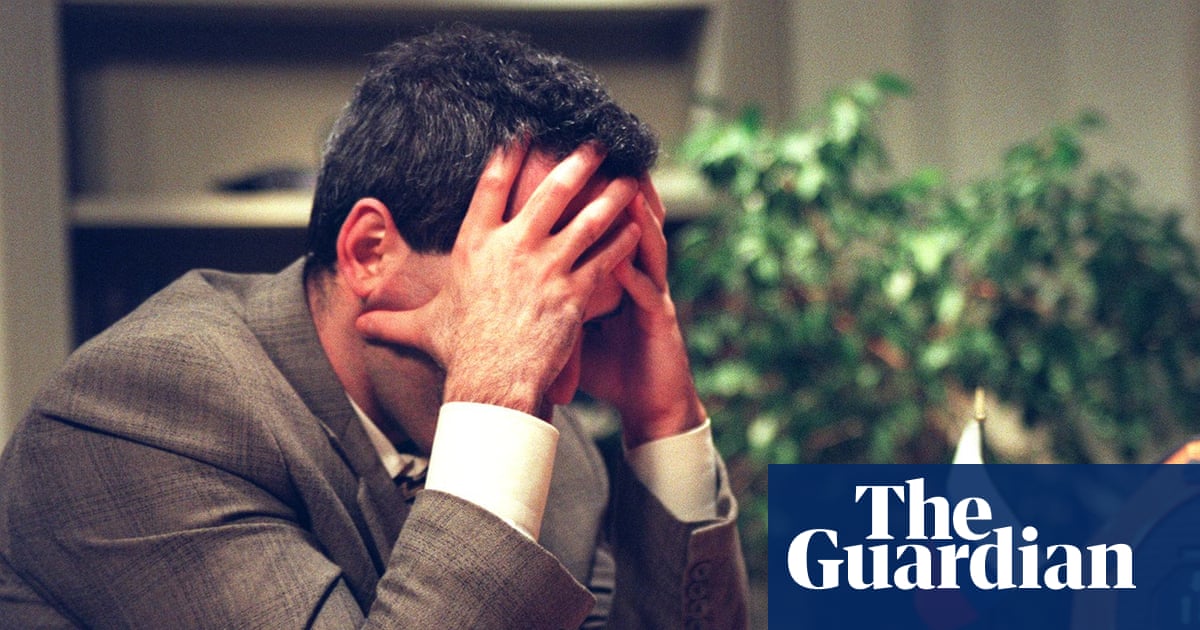

Could this be a Deep Blue moment for the cryptic crossword?
When the IBM supercomputer Deep Blue beat Garry Kasparov at chess in 1997, it was an early victory for artificial intelligence over the human mind, and the culmination of decades of attempts. Almost 30 years later, a computer program has finally outdone humans at solving cryptic crosswords.
Earlier this month, a model called Darmok solved the final puzzle of the TimesâÂÂs annual cryptic crossword competition about three minutes faster than Liam Hughes, 29, who became the contestâÂÂs youngest (human) winner.
After Deep BlueâÂÂs victory, the New York TimesâÂÂs puzzle editor, Will Shortz, set engineers a challenge. âÂÂIs the computer going to be able to solve the clues involving puns and wordplay? I donâÂÂt think so,â he wrote. âÂÂIn a much more wide-ranging and, frankly, complex game like crosswords, we humans still rate just fine.âÂÂ
Less than a decade later, a computer named WebCrow beat 75 human crossworders at an AI conference, and by 2021 a program named Dr Fill âÂÂwonâ the American crossword puzzle tournament, the most prestigious of its type for American-style crosswords, which rely on a combination of general knowledge, allusion and double meanings.
But cryptics are much trickier, and as recently as 2024 my colleague Alan Connor was asking: âÂÂWill the cryptic crossword remain the last thing AI canâÂÂt conquer?âÂÂ
Dr Sid Chatterjee, a computer scientist at the University of Texas in Austin, thought not, and in 2025 set out to prove it. He began work on Darmok, named after a Star Trek episode in which the crew attempt to converse with a species that speaks only in allegories â an experience akin to solving a cryptic.

DarmokâÂÂs first tilt at the Times championship ended in failure when it gave up on the final puzzle after 18 minutes. Its triumph this year was partly as a result of successfully solving a clue that tripped up three of the five finalists, including 14-time champion Mark Goodliffe:
Wolf trap missing its lowest crosspiece? (5)âÂÂ
The letters filled in as part of other clues gave the pattern S_A_F. Both SCARF and SNARF mean âÂÂto eat greedilyâ (synonyms for âÂÂwolfâÂÂ) but the rest of the wordplay relied on a visual element.
âÂÂTrapâ indicates the synonym âÂÂSNAREâÂÂ, and when the bottom line of the E is removed â âÂÂmissing its lowest crosspieceâ â it becomes an F, making SNARF the answer.
While one might expect visual clues like these to be more difficult for an AI, Chatterjee said he couldnâÂÂt detect a pattern in the types of clues Darmok struggles most with. It does find puzzles by John Henderson (known to Guardian readers as Enigmatist) harder than most, though.
If youâÂÂd like to challenge yourself against Darmok, it solved this Fed crossword from last week in four minutes and 10 seconds. Good luck.
Darmok is based on four AI models: Gemini 3.1 Pro, Claude Fable 5, GPT-5 and GPT-6 Astra. The solving is primarily done by the first two, with the others joining in if needed. Chatterjee attributed DarmokâÂÂs improvement this year to the extra power behind these frontier models, as well as some of his refinements, such as making Darmok wait until it had attempted all the clues before inserting answers.
The next frontier for AI and cryptic crosswords â setting a satisfying puzzle â will be an even bigger jump. âÂÂIt is a very, very difficult problem because you have got to make a sentence that parses both in normal English and in cryptic English smoothly, and those two grammars are very, very different,â said Chatterjee. âÂÂIf [beating humans at cryptic crosswords] was the Mount Everest challenge, I call this next one the Olympus Mons challenge.âÂÂ
Clue of the week
Proportion of inspiration and perspiration? ItâÂÂs roughly 45% and 42% (5)
From Bluebird in the Independent. The answer, RATIO, is hidden in the clue twice, making up five of the 11 letters in âÂÂinspirationâ â or roughly 45% â and five of the 12 letters in âÂÂperspirationâ â roughly 42%.
Readersâ cluing contest
Congratulations to Tony Kelly (Montano) for winning this weekâÂÂs competition with his clue for the word DEBUT:
Kick-off leads to decisive early goal for PSG (5)
Kick-off is the definition. âÂÂLeads toâ indicates the first letters of decisive and early, ie DE, and âÂÂgoal for PSGâ refers to the football team Paris Saint-Germain, indicating BUT, the French word for goal.
This week, as a nod to the word wrongly identified by solvers in the Times championship, weâÂÂd like you to come up with a clue for the word SCARF. Please send entries to [email protected].