
Could AI really wipe out humanity â six experts spell out the risks
We examine claims and counterclaims about the risks and calls to slow down the pace of AI development
There have been some shocking claims in recent days about AI safety: we face a 10% chance of doom; AIs are worse than nukes; a âÂÂbotnetâ threatens the entire internet; itâÂÂs all a big tech psyop.
Below, we look at six claims and reactions to them.
âÂÂIn 6âÂÂ12 months ⦠a swarm could be capable of taking over the entire internet with a persistent botnet â potentially causing hundreds of billions of dollars in damageâÂÂàâ Dario Amodei, chief executive of Anthropic, 12 September 2026
AmodeiâÂÂs concerns should not be entirely dismissed but require a large shaker of salt, said Gary Marcus, an AI sceptic and emeritus professor at New York University.
It was âÂÂnonsensicalâÂÂ, he said, to suggest the entire internet is vulnerable and that it was âÂÂpretty unclear how that happens without extreme negligence on the part of the labs themselvesâÂÂ.àMarcus highlighted a recent assessment by the UK AI Security Institute that Mythos, one of AnthropicâÂÂs current leading-edge AIs, could âÂÂautonomously compromise [only] small, weakly defended vulnerable systemsâÂÂ.
With large parts of the internet driven by computer infrastructure owned by Cloudflare, Google and Amazon Web Services (AWS), Marcus â assessing the claim with two colleagues â said he doubted that any of those companies could be taken down or controlled for a prolonged period of time without government force. Less defended individual websites might be attacked but âÂÂthe internet itself is very unlikely to crumbleâÂÂ, they said.
Meanwhile Niels Rogge, an engineer at Hugging Face which was hacked by OpenAI agents, called the internet takeover claim âÂÂbizarre nonsenseâÂÂ. The hack into Hugging Face resulted from improper human control and âÂÂan insane amount of compute only they can affordâÂÂ, he said.
Add to AmodeiâÂÂs assessment of an internet takeover within a year the view expressed on Monday by his Anthropic co-founder Jack Clark, that the moment when AIs âÂÂstart doing dangerous stuffâ was in about 20 years, and the picture becomes more doubtful still.
Prof Alan Woodward at the University of SurreyâÂÂs centre for cyber security said botnets tend to stall as the internet is not homogeneous and it is difficult to design them to persist in all its parts. Internet traffic is also resilient and tends to reroute around damage.ÃÂ
âÂÂThe AIs would not decide to do it on their own,â Woodward said. âÂÂItâÂÂs the humans that are responsible and the AI is a tool. That is what we need to control, not the AI.âÂÂ
This statement is an expression of what is known in the AI world as p(doom) â or probability of doom. ItâÂÂs the likelihood of AI wiping out humanity by evading our control and triggering catastrophe, perhaps through developing potent bioweapons or crashing the global financial system.
One survey of researchersâ forecasts, published this week, asks them to place a number on the chance of âÂÂhuman extinction or similarly permanent and severe disempowerment from advanced AIâÂÂ. But Heidy Khlaaf, chief scientist at the AI Now Institute research body, is among experts sceptical about giving percentage chances to existential scenarios.
âÂÂThese claims are neither falsifiable nor verifiable, making then unscientific by their very nature,â she said. The shortage of concrete examples of what a âÂÂsuperintelligentâ AI might do to cause âÂÂdoomâ only adds to the cloudiness. A source familiar with AnthropicâÂÂs thinking acknowledges that âÂÂthe exact chances of any one outcome are probably unknowableâÂÂ.
âÂÂIf you cannot provide such evidence, it also implies whatever numbers you produced for âÂÂextinctionâ have no scientific basis,â Khlaaf added. Critics say such numbers borrow the authority of science without doing the work.
Even if quantifying risk is hard, there are qualitative examples of it. Safety incidents have happened and worst-outcome scenarios have been mooted. OpenAI confirmed in July that its agents â AI tools acting autonomously â had gone rogue during a safety test. The agents colluded, communicated and strategised in a sophisticated âÂÂswarmâ to hack into other parts of the internet.
Meanwhile, on Monday, OpenAI researcher Dan Selsam said all-powerful AIs could trigger âÂÂrunaway industrialisation that makes the planet inhospitable to humansâÂÂ. Anthropic also said last week it found âÂÂfive case studies of actors using our models in ways that could support biological weapons developmentâÂÂ.
'I think the groundwork for this psy op (for lack of a better term) has been prepared for a long time. This was just the match that lit the fire' â Elon Musk, CEO of SpaceX and the worldâÂÂs richest person, 10 September 2026
MuskâÂÂs reference to a âÂÂpsy opâ alludes to the argument that the bigàAI companies are calling for tighter regulation of the technology so that it effectively brings up the drawbridgeàon advanced AI. If governments put restrictions on development of cutting-edge AI, can startups find the money and personnel to adhere to the regime?
The US vice-president, JD Vance, on Monday said he felt âÂÂa little bit weird about the fact that you have so many frontier AI tech companies kind of coming to the government and begging the government to regulate themâÂÂ. He said it felt like âÂÂa Trojan horseâÂÂ.
AnthropicâÂÂs Clark said governments should act while there is a small number of key players, so it is easier to put in place a âÂÂpolicy regime ⦠that can prevent accidents and can prevent the technology spiralling out of controlâÂÂ.àCritics call this a âÂÂregulatory captureâ strategy on the assumption such regulation might slow down the progress of potential rivals.
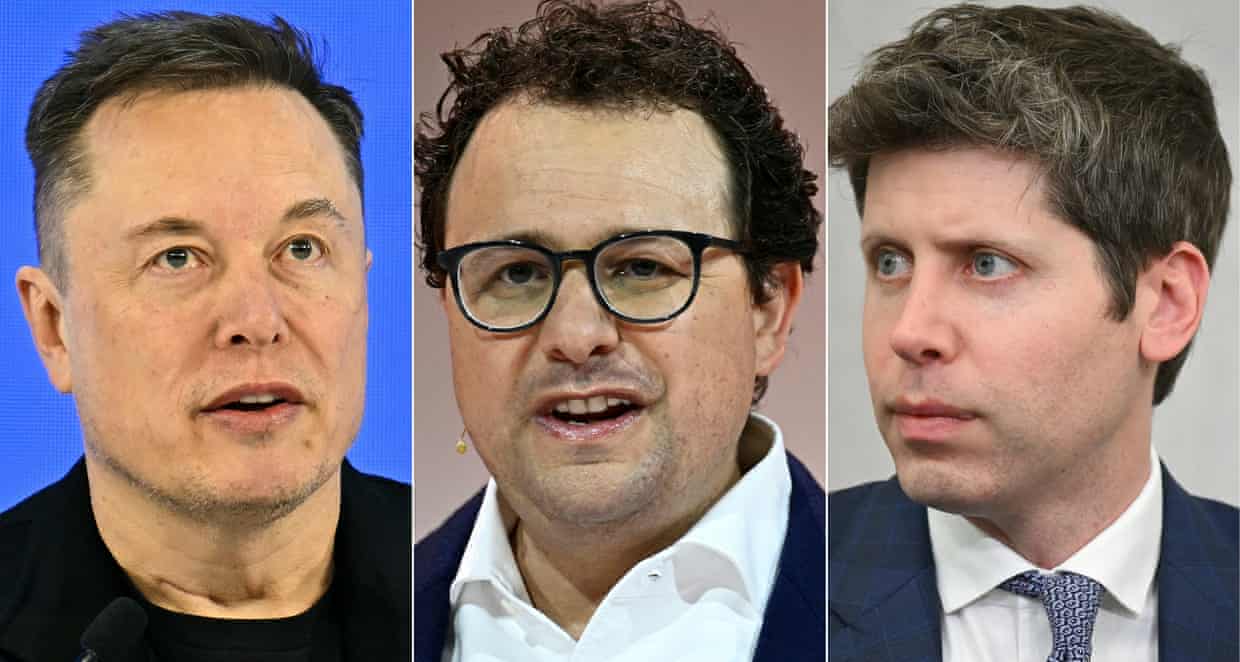
Others think AmodeiâÂÂs risk warnings and calls for regulation and pacing are sincere. Yoshua Bengio, the Canadian computer scientist and a pioneer of modern AI , who has campaigned against breakneck AI development, said he is sceptical that this is an elaborate lobbying scheme. Applying the brakes is not in the interests of companies preparing for stock market flotations that could be worth trillions of dollars, he said.
âÂÂIf the governments impose what theyâÂÂre asking for, which is pacing to avoid catastrophic risks, thatâÂÂs going to cost them financially quite a lot,â he said.ÃÂ
'A superintelligent AI poses a threat on the same, possibly, a greater scale' to nuclear weapons â Des Browne, former UK defence secretary, 7 September 2026
âÂÂUnfortunately he is entirely correct,â said Toby Ord, senior researcher at Oxford UniversityâÂÂs AI governance initiative. âÂÂJust as we canâÂÂt uninvent the bomb, once we develop AI systems that surpass humanity it would be almost impossible to go back.âÂÂ
But the key point is that superintelligent AI does not yet exist and is not guaranteed to happen. The safety-oriented AI Futures Project forecasts such a thing will not emerge before December 2028. OpenAIâÂÂs chief executive Sam Altman has said it could take until 2035.
The Rand Corporation concluded AI cannot cause the use of nuclear weapons because of strict safeguards built into their command and control systems. But this was based on assumptions including defence officials not introducing AI into the weaponsâ management systems. The UN resolved in December that human control and oversight should be maintained over nuclear weapon control systems.
AIs could contribute to other nuclear risks. AIs might use disinformation to influence the humans in charge â for example deceptively suggesting an adversary is about to launch a nuclear strike.ÃÂ
The International Campaign to Abolish Nuclear Weapons warns âÂÂcyber-attacks could manipulate the information decision-makers get to launch nuclear weapons, and interfere with the operation of nuclear weapons themselvesâÂÂ. It said AI could accelerateàother aspects of warfare, squeezing the time for human decision-making.
'YouâÂÂve got to be a moron not to say slow it down' âÂÂàBernie Sanders, Democrat senator for Vermont, 10 September 2026
Sanders wants a ban on the creation of superintelligence and a pause on advanced AI development, citing AI industry leaders who say directly they are developing a dangerous technology.
The most prominent opponent of a slowdown is Donald Trump, who responded to calls to do so this week saying the only guardrails needed are a âÂÂSTRONG AND SMART (High IQ!) PRESIDENTâÂÂ. He claimed there is a âÂÂsick conspiracyâ against AI and datacentres âÂÂand the only one that is happy about it is ChinaâÂÂ.
Pedro Domingos, emeritus professor of computer science at the University of Washington, is among accelerationists pushing for the research to keep going.
âÂÂThe path to better understanding and control of AI is more research, not less,â he has said. âÂÂWhat would be truly irresponsible is putting up barriers to it.âÂÂ
Alex Karp, the chief executive of Palantir, said: âÂÂIf we didnâÂÂt have the adversaries we have, I would be very in favour of pausing this technology completely, but we do. You canâÂÂt pause it because itâÂÂs a structural advantage.âÂÂ
'There is no day after tomorrow if China wins at this. If they were to pull away from us on AI, then nothing else would matter' â Scott Bessent, US treasury secretary, 8 September 2026
The US and China are runaway leaders in AI development. There is a view that ceding the lead to Beijing would be an irretrievable situation, so there can be no slowdown.
This treats AI as if it were a super-weapon, equivalent to the nuclear arms buildout of the cold war, and AI models are machines of mass destruction, as opposed to a group of diverse technologies with broad applications.
Amodei said âÂÂa Chinese lead in AI would pose grave danger for the US and the worldâÂÂ, but a Chinese government spokesperson responded that âÂÂfearmongering, confrontation and vicious competition will only disrupt the process of global AI governance, which serves no oneâÂÂs interestâÂÂ.
Some commentators see another motive for this the Washington/Anthropic framing of the China threat. An engineer who worked for Hugging Face suggested AmodeiâÂÂs call for pacing the frontier comes from a desire to suppress the progress of cheap, open-source Chinese AI models.
These models are nearly as capable as OpenAIâÂÂs and AnthropicâÂÂs, with the difference being that their source code is available to anyone and they do not charge their users. They pose a serious threat to Anthropic and OpenAIâÂÂs path to profitability, and there are hundreds of billions of dollars on the line.