
Billionaire tax and trans rights: what are key state ballot initiatives in midterms?
Voters in 39 states will face an array of referendum issues â including AlabamaâÂÂs on the national anthem in schools
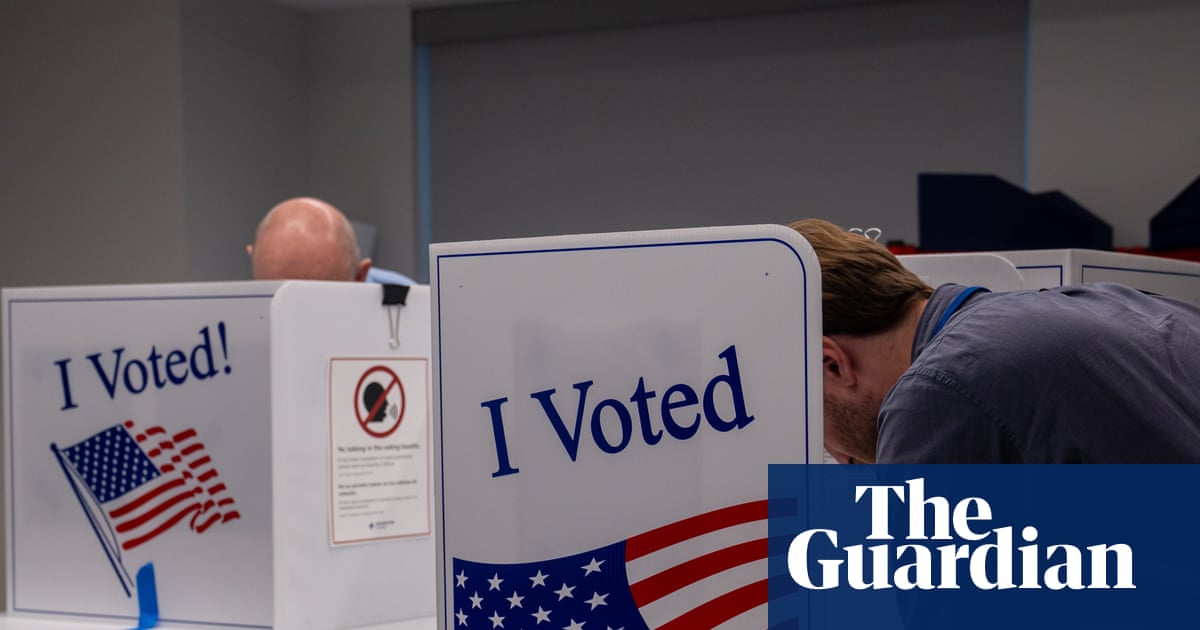
Americans heading to the polls for next monthâÂÂs midterm elections are not just choosing whom to send to Washington, or their state capitols. There are also 145 statewide measures on ballots across 39 states, polling voters on actions from a novel wealth tax on CaliforniaâÂÂs billionaires to requiring AlabamaâÂÂs public schools to broadcast or perform the first stanza of the national anthem each week.
Voters in Idaho, Nevada and Virginia are asked to protect abortion rights; voters in Missouri are asked to give those rights back. Property tax issues appear on dozens of state ballots. Several state referendums ask voters to bar trans athletes from competing in womenâÂÂs sports, or bar gender-affirming medical care for minors.
Voters like referendums, in principle, as a tool of direct democracy. âÂÂPolls in every state show at least 2-to-1 support for having an initiative process,â said John Matsusaka, a business professor at the University of Southern California (USC) and executive director of the Initiative and Referendum Institute.
In practice, however, they often do not like the measures put forward in referendums. The long-run average rate for passage is about 41%.
Here are the big topics voters are being asked to decide this year:
Billionaire tax
Voters in California are considering a measure known as Proposition 40. If approved, residents of the state with a net worth of at least $1bn would face a one-time tax equal to 5% of their net assets. Service industry workers drove the initiative to the ballot, which they estimate will raise about $100bn for the state. Ninety per cent of the revenue would fund state healthcare services and Medi-Cal; the rest would go toward public education and food assistance programs.
California will process about 21m individual tax returns this year. This tax would hit 200 of them.
Two other referendums on the ballot would play havoc with the billionaire tax if they pass. Proposition 41 requires audits of new special taxes and bars new taxes that sidestep the state spending limit, while Proposition 42 prohibits new state taxes on retirement holdings and personal savings, and limits retroactive taxes.
State taxes targeting the ultra-wealthy have gained currency in recent years, though no state has imposed a tax on capital as California may with this proposal. Last year, Massachusetts imposed an additional 4% surtax on taxable income above $1m. Washington state enacted a 9.9% state income tax on household earnings exceeding $1m per year.
WashingtonâÂÂs voters will consider Initiative 645, repealing its millionaire tax this November, courtesy of hedge fund manager Brian HeywoodâÂÂs initiative efforts. And Tennessee voters will consider Amendment 3, which would permanently bar wealth taxes like CaliforniaâÂÂs Prop 40.
Property taxes
Municipal leaders in Florida and Texas have been warning their constituents with increasing alarm that ballot initiatives proposed by conservative lawmakers would create fiscal headaches in coming years if approved.
FloridaâÂÂs Amendment 3 would reduce property taxes for resident homeowners by raising homestead exemptions. It would also cap increases in assessments for non-homestead properties to 5%, instead of the current 10%, and create new limits on property tax increases for business and commercial property.
While Florida ranks 44th among states for tax revenue per capita, property tax collections have risen sharply in recent years. Approval of this measure would cut the average homeownerâÂÂs tax bill by about $1,000 â but reduce city budgets by as much as 23% next year, which most municipalities are unprepared to manage.
Voters in Oklahoma, North Carolina and Tennessee are also looking at ballot measures limiting property taxes. Tennessee does not have a state property tax; voters are asked to enshrine that practice in the stateâÂÂs constitution.
Trans youth
Voters in five states will consider ballot measures that either bar trans athletes from competing in school sports or prohibit gender-affirming medical care for minors.
MissouriâÂÂs Amendment 3 would prohibit minors from receiving gender-transition surgeries, cross-sex hormones or puberty-blocking drugs, except when the treatment is âÂÂunrelated to the purpose of a gender transitionâÂÂ.
Arizona, Nebraska and Washington each have measures on the ballot to require student athletes to participate on male or female school and collegiate athletic teams matching their sex as defined by biological reproductive systems. In WashingtonâÂÂs case, the law would also require student athletes to provide healthcare documentation verifying their sex based on specified biological factors.
Colorado has both a trans athletics and trans medical care measure on the ballot, as well as an abortion-related measure. âÂÂBy putting both anti-abortion and anti-trans issues together ⦠they are relying on us fighting each other instead of fighting the anti-democracy machine at the national level,â said Jax Gonzalez, political director at One Colorado.
Noncitizen voting
Six states will ask voters to explicitly require US citizenship to be eligible to vote in a state election.
Voters of Arkansas, Kansas, South Dakota and West Virginia are being asked to amend their state constitutions with the referendum. AlaskaâÂÂs ballot contains a voter-initiated change to state law.
Arizona already bars noncitizen voting in its constitution. This new proposed amendment would explicitly bar registration by noncitizens. It would also prohibit foreign nationals from making campaign contributions and others from knowingly accepting those contributions, and mandate government-issued identification to cast a ballot.
Abortion rights
Voters in Idaho, Nevada and Virginia will see ballot measures in November to guarantee access to abortion services under law, either by statute or constitutional amendment.
Voters in 13 states and the District of Columbia have approved measures to protect abortion access in their state law or state constitutions following the Dobbs decision by the US supreme court ending the federal protection of Roe v Wade, according to the Guttmacher Institute.
MissouriâÂÂs successful 2024 referendum established a right to reproductive freedom in their state constitution, which ultimately overturned the stateâÂÂs total abortion ban. The stateâÂÂs conservative lawmakers placed Amendment 3 on the ballot this year to re-establish the power to ban abortion in Missouri.