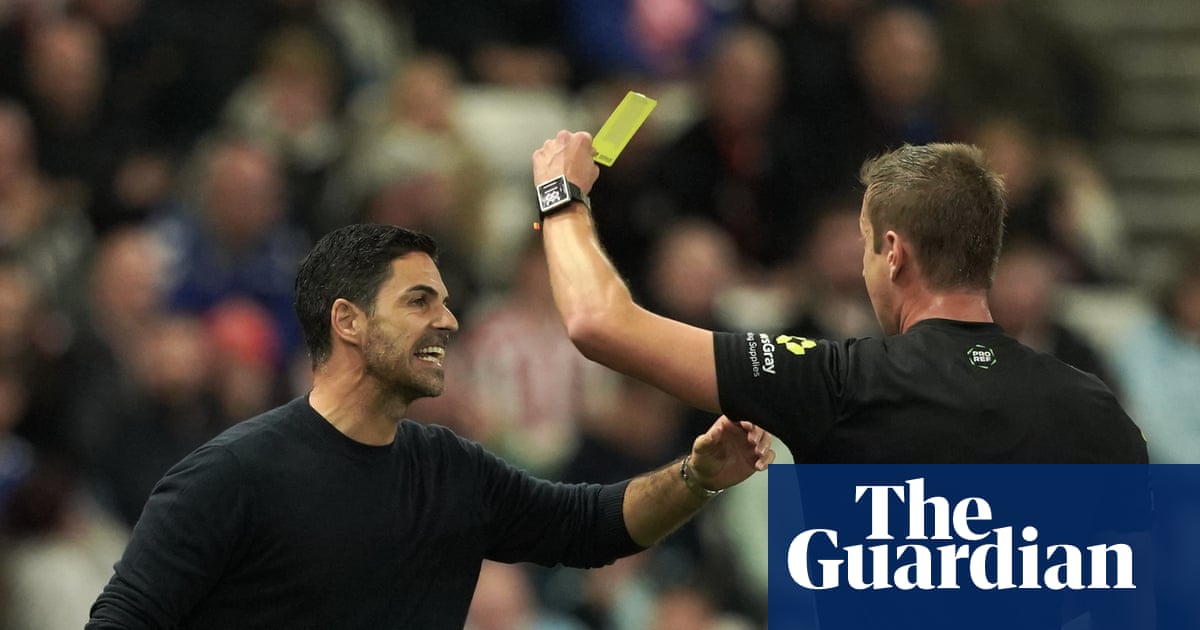

Refereeing is now an impossible job owing to the culture of micro-analysis the Arsenal manager has helped to create
A gentleman is never rude unintentionally, only by design. Nobody really knows who said this first. Butàit could easily be a line from the Elite Football ManagerâÂÂs Guide to Press Conferences (Premier League edition). Because nothing happens by accident in these spaces.
Every word spoken in front of the board covered in adverts is metered and planned. A manager isÃÂ never angry, or concerned, or even charming unintentionally. The game is the game, but so are all the other bits spilling out eitherÃÂ side of it.
It was hard not to think about this while listening to Mikel Arteta talk about the penalty awarded to Sunderland at the Stadium of Light for a perceived act of grappling on Dan Ballard by Ezri Konsa. This is said with genuine professional respect. As everyone who has ever done a podcast knows â and this is, letâÂÂs be clear, everyone â there are lost Amazonian tribes discussing Girls season three in their own dark corner of Spotify â there are moments when you just have to flip the switch, up the energy and turn on full clipâÂÂthisâÂÂbitâÂÂupâÂÂpleaseâÂÂDave sincerity mode.
Arteta did this beautifully in the moment, appearing genuinely struck by what he was saying, radiating wounded integrity, like a disappointed junior headmaster appealing for the return of the school minibus keys.
LetâÂÂs be clear though. Arteta is not âÂÂvery worriedâ about all this. HeâÂÂs not âÂÂsadâ or indeed, as he lateràemphasised for good measure,àâÂÂreally sadâÂÂ. HeâÂÂs not concerned solely with âÂÂprotecting the gameâÂÂ, speaking here for all of us, just a fan of football.
Come off it. This is a manager we know to be obsessed with the most marginal of gains, to micro-plan the micro-details. As is all elite sport now. There has been talk of rowing coaches installing fibreglass toilet seats at their training hubs having calculated the average athlete spends 20 minutes in there and this is all key glute management time. Arteta loves this stuff. ThereâÂÂs no way BenàWhite isnâÂÂt sat fiddling with his phone at the training ground on a gold-standard EasyâÂÂCup Mega-Soft Evacu-Throne.
So it is with his public statements. This will have all been gamed and contingencyâÂÂplanned in advance. And for hard, rational, tactical reasons, because this is how the game is played and run now. So what does it mean?

There are three things we know for sure. First, Arteta was right. This was a bad refereeing decision. Most obviously it was factually wrong. Ballard very skilfully pulled Konsa down on top of him, while simultaneously feigning shock that such a thing could happen.
It was doubly bad because the refereeâÂÂs response was pre-planned, flagged by the early-season chat about refereeing in a more interventionist fashion. Go into any situation with a voice in your head, a vaguely worded mission to fulfil: this will skew youràjudgment.
The second thing is that referees are not biased. TheyâÂÂre just not very good. Two things have happened to them. First, the barrage of information to be absorbed in real time during a game is now utterly mind-boggling.
Most referees are not from a high-pressure data-processing background. These are not military pilots or traders on a currency floor. Less than a quarter have an academic degree. The task is beyond them. This is not a slur or an insult. ItâÂÂs a simple description of what is happening, as supportedàby the evidence.
This is doubly annoying because referees have become fundamentally confused about their role. Referees are not ringmasters, or curators of the spectacle. They donâÂÂt get to decide what our sport should look like. Pro Ref is a private company with no locus standi to rule on the aesthetics of football. A referee should exist at the very edge of the spectacle. YouâÂÂre not a local government planning officer with a mandate to decide which double-glazed French doors are or arenâÂÂt in character with the neighbourhood. Stop getting football not just wrong, but wrong.

But Arteta was also ready for this. ArsenalâÂÂs coaches will have known this would happen at some point. That press conference response was already in the chamber. Arteta may even have practised his sad-not-angry face, his key lines.
And this would be the correct thing to do. None of this is breaking the rules, just as Arsenal are not a dirty team or a bunch of cheats. They play the game that is being presented to us, a sport that is beingàmade to operate at the edge of its own ludicrously microâÂÂanalysed rules on small issues of physical contact.
ArtetaâÂÂs Arsenal have been masterful at finding advantages in this. Defenders are very good at playing with the ball at their feet now. Defenders are not selected for their ability to resist physical challenges. It is logical to exploit this, just as it is logical to seek to protect your ability to do so by speaking in public about how the rules are applied. This is why Arteta is good, and why he wins.
It is also true that this has created a strange environment. The tone of the wider Arsenal fanbase is another element here. There is no one type of football fan. All human life is here. But the fact remains, the loudest voices in the online Arsenal hive mind, even the atmosphere in the stadium is unique in its absolute conviction of victimhood, of conspiracy, of a galvanising sense of adversity.
There is no other ground where every single refereeing decision, even the who-knows 50-50s, is so violently and eloquently disputed. There are supporters who seem to spend most of the game up on their feet in a state of performative, weaponised indignation, whose entire interaction with the spectacle is an attitude of aggrieved injustice.
This makes sense, too. It speaks directly to the game we have created. Aggrieved middle-aged rule pedantry. This is the new cauldron of hate.

Is it based in reality? Not perhaps on the outline numbers. Arsenal have been awarded more fouls than any other team this season. Only six teams last season had more fouls awarded against them, and the same the year before. They had the fewest yellow cards last season. They havenâÂÂt had a single red since they had six of them in 2024âÂÂ25.
Still, certain key incidents continue to grate and fester. There was the incorrectly denied penalty claim for Bruno Guimarães at Aston Villa. The balls-up with VAR lines against Brentford in 2023, which, if it really was deliberate conspiracy-cheating, was the worst, most public attempt at deliberate conspiracy-cheating ever conceived.
There is discontent at the way some rules seem to be applied moreàseverely to Arsenal, the silly little stuff like delaying or fiddling about with restarts. But then again, if you make the game about that, if you plan to play on the margins, and successfully so, more stuff might happen in that place while youâÂÂre doing it.
Arteta has also played the role of arms-length rage conjurer expertly, has gone from rarely commenting on referees to heartfelt and carefully targeted critic. The Sunderland penalty award was a first opportunity to unload on the refereeing backlash to ArsenalâÂÂs tactics, to launch his pre-prepared defence; and to point out something demonstrably true. Referees have lost control of this, because the game has got beyond them.
In many ways this was a perfect storm for Arteta. Not just a decision that didnâÂÂt matter, because the penalty was saved. But a decision that was clearly incorrect too, a chance to get your lobbying in while very obviously in the right.
There will be more of this as the season plays out, as Arsenal work to preserve the advantages they have made for themselves in close quarters, tactical attack and defence. Factor in that masterful turn at a press conference jâÂÂaccuse, and Saturday was a significant win in more ways than one.