
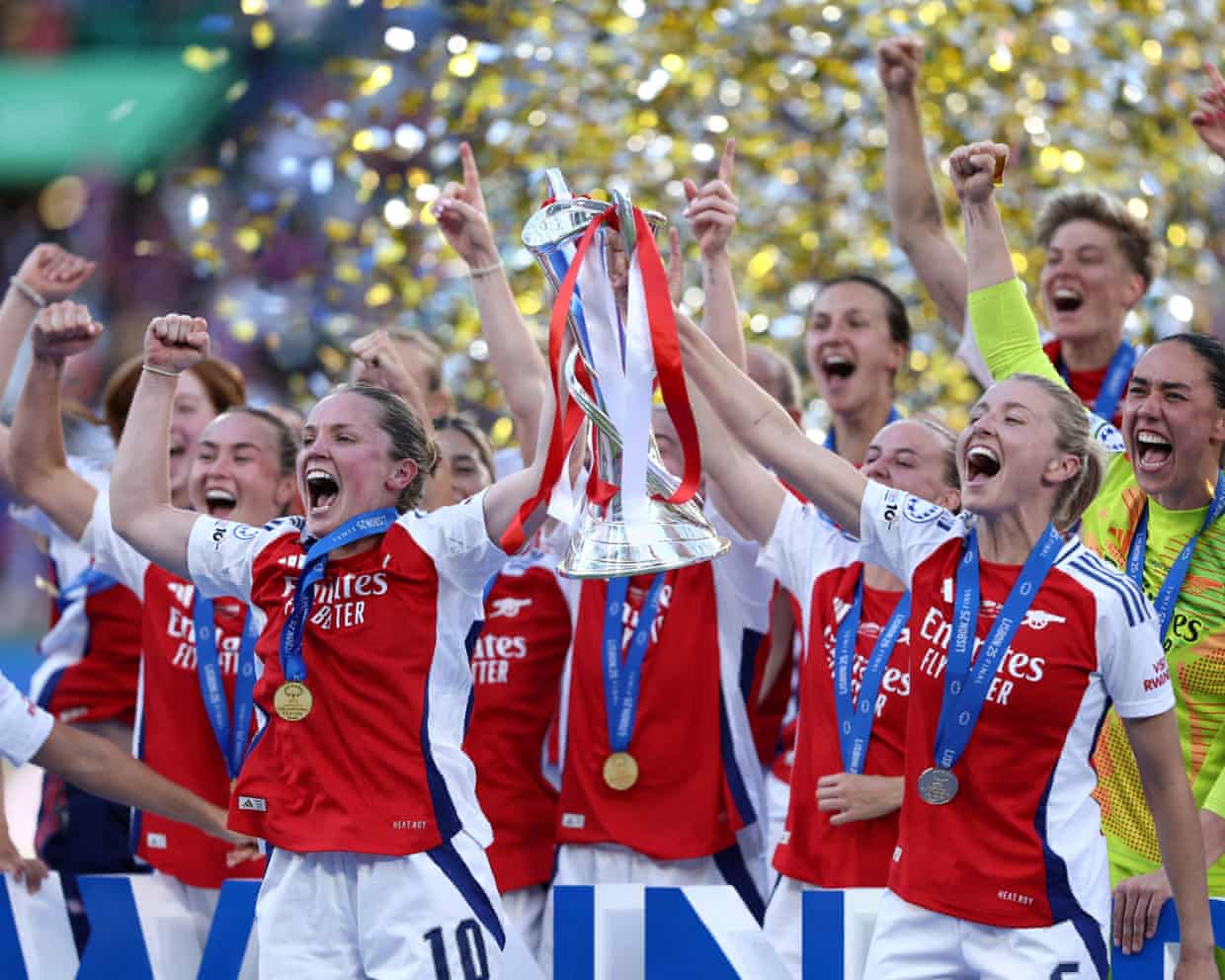
Arsenal and Chelsea set to miss a month of next WSL season due to Club World Cup
Back end of 2027-28 season likely to be âÂÂchallengingâÂÂ
Fixture contestion a growing area of concern
The WomenâÂÂs Super League will face major disruption next season due to by the Club World Cup, with Arsenal and Chelsea likely to be absent from domestic competition for up to a month.
The Guardian revealed last week that the inaugural WomenâÂÂs Club World Cup is set to be awarded to the United States, with transatlantic travel to cause additional problems for European sides, while the proposed dates of 5-30 January will clash directly with the WSL.
Fifa has yet to confirm the qualification criteria for the Club World Cup but the Guardian has learned Arsenal are guaranteed to be involved as 2025 Champions League winners with Chelsea likely to join them, although they would lose their place if Manchester City win this seasonâÂÂs Champions League. Based on this seasonâÂÂs schedule, an extended run in the Club World Cup would see the two English clubs miss up to four WSL match rounds plus the fourth round of the FA Cup, playing havoc with the fixture list and causing major congestion at the end of the season.
Uefa will be granted places for six clubs â five to qualify automatically and one to take part in a six-team play-in tournament before the tournament, with the three highest-ranked clubs joining 13 automatic qualifiers to form a 16-team competition. While the process has still to be ratified by Fifa Council, it is understood UefaâÂÂs spots will be given to the Champions League winners between 2023 and 2027 â currently double champions Barcelona and Arsenal, with this seasonâÂÂs title still up for grabs â topped up by the highest-ranked clubs in UefaâÂÂs Champions League coefficient table.
Chelsea are currently third in UefaâÂÂs coefficient table for the current four-year cycle, behind Barcelona and Lyon with a 17-point lead over fourth-placed Bayern Munich, and cannot be caught. Based on the current rankings, Bayern and Wolfsburg are next in line to qualify, although the latter have not qualified for this seasonâÂÂs Champions League and will not accumulate additional points, so are likely to be overhauled by Real Madrid or Paris Saint-Germain. Fifa plans to cap the number of participants from each country at two, so City winning the Champions League would cost Chelsea their place.
The WSL declined to comment on the issue as they have yet to be told of FifaâÂÂs plans for the tournament, but sources conceded its impact is likely to prove challenging and impact on a number of match rounds. The WSL has a winter break, which is scheduled for 21 December to 10 January this season, and although that could be pushed back slightly, aligning it with the Club World Cup is not viewed as practical due to the congested calendar.
As well as creating a lopsided season, moving the winter break would result in a backlog of WSL fixtures during the period when the Champions League knockout stage begins at the beginning of February. The issue of fixture congestion is a growing area of concern in the womenâÂÂs game and 2028 will be particularly problematic due to the Olympic football tournament taking place in Los Angeles in August, just before the start of the European domestic season.
The International Olympic Committee (IOC) has expanded womenâÂÂs football to 16 nations at the 2028 Games, and unlike the menâÂÂs version which is restricted to players under 23 with three overage exceptions, senior internationals are permitted to take part.
FifaâÂÂs imposition of the Club World Cup in the middle of the European season has exacerbated the problem, and earlier this year European Leagues, a lobby group, extended their legal complaint to the European Commission about the world governing bodyâÂÂs alleged âÂÂabuse of power and dominant positionâ to include the womenâÂÂs game.