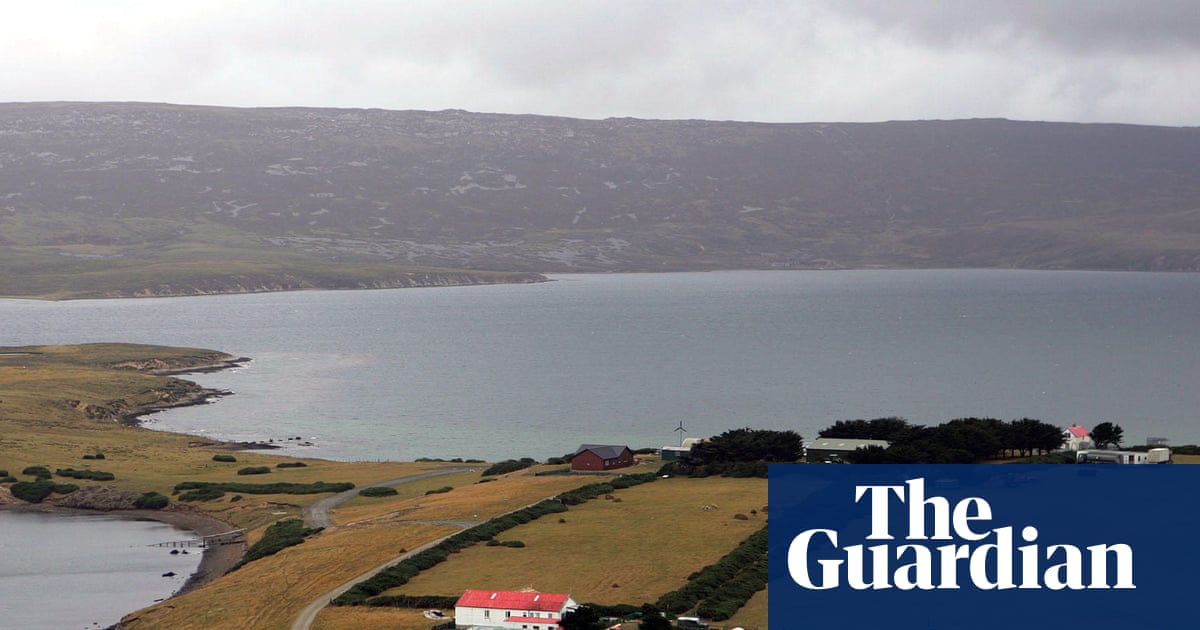

Argentina to stop Falklands exploiting offshore oilfields, countryâÂÂs foreign minister says
Pablo Quirno says move is part of governmentâÂÂs strategy to peacefully assert sovereignty over the islands
ArgentinaâÂÂs foreign minister has told an audience that included the British ambassador that his government would stop the Falkland Islands from exploiting its offshore oilfields as part of a strategy to take sovereignty.
During a speech at a thinktank event in the Argentinian capital, Pablo Quirno condemned the British government for failing to open negotiations over the islands and facilitating a significant offshore oil project in its waters.
Among those in the audience was David Cairns, the UKâÂÂs ambassador to Argentina. Cairns, who was photographed listening to Quirno, left the event shortly after the foreign minister returned to his seat.
Quirno told the audience at the event organised by the Argentine Council for International Relations that his countryâÂÂs president, Javier Milei, had a strategy for the âÂÂpeacefulâ assertion of Argentinian sovereignty.
He said: âÂÂThe British government not only refuses to enter into negotiations to resolve the sovereignty dispute, but is also taking unilateral measures regarding the exploitation of natural resources in the maritime areas that are part of the controversy.
âÂÂPreventing the exploitation of our resources from consolidating the British occupation is part of a strategy to recover, through peaceful means, the full exercise of our sovereignty.âÂÂ

Last month, Milei told the UN general assembly in New York that the international organisation had failed his country as he condemned the Sea Lion project, an oil development in the North Falkland Basin, as an âÂÂunlawful actâÂÂ.
Argentina has accused the UK of flouting a 1976 UN resolution ordering both parties to desist from unilateral action on the islands.
On 28 September, Milei gave the UK a two-week deadline stop the oil project or face arbitration and a binding decision under annex VII of the UN convention on the law of the sea (UNCLOS) at the international tribunal for the law of the sea.
The UN does not officially recognise British or Argentine sovereignty and maintains that the archipelagoâÂÂs status remains a disputed matter that must be resolved through bilateral negotiations. It has repeatedly invited both governments to find a peaceful solution to the dispute that erupted into conflict in 1982 after an invasion by Argentinian forces.

The 74-day war ended with the surrender of the Argentine forces. It cost the lives of 649 Argentine military personnel, 255 British military personnel and three Falkland islanders.
The UK government has said that the islands, known as Las Malvinas in Argentina and which are home to approximately 3,600 people, will remain a British overseas territory for as long as it is the wish of those who live there. In a referendum in 2013, on a turnout of 92%, 99.8% voted to remain a British territory, with only three votes against.
In a statement issued last week, the Argentinian govenment rejected âÂÂthe manipulation of the principle of self-determination of peoples that the United Kingdom seeks to impose upon itâÂÂ.
In his speech on Monday night, Quirno also warned third parties that they should not assist Falkland islanders in the exploitation of the natural resources.
A new shipping link is due to be opened between Chile and the Falkland Islands by the end of the year.
Quirno said: âÂÂWhoever contributes, directly or indirectly, to the illegitimate exploration or exploitation of resources that belong to all Argentinians will hardly be able to aspire to share in the benefits of our countryâÂÂs growth.âÂÂ