
Anatomy of a lie: how misinformation is spreading through US midterm campaigns
Claims that James Talarico suffered a mental health crisis spread across rightwing media, offering a warning about disinformation ahead of the US midterm election
Where is James Talarico? The question ricocheted around rightwing echo chambers before metastasising into a conspiracy theory â and a reminder of the persistent danger of disinformation in the US midterm elections.
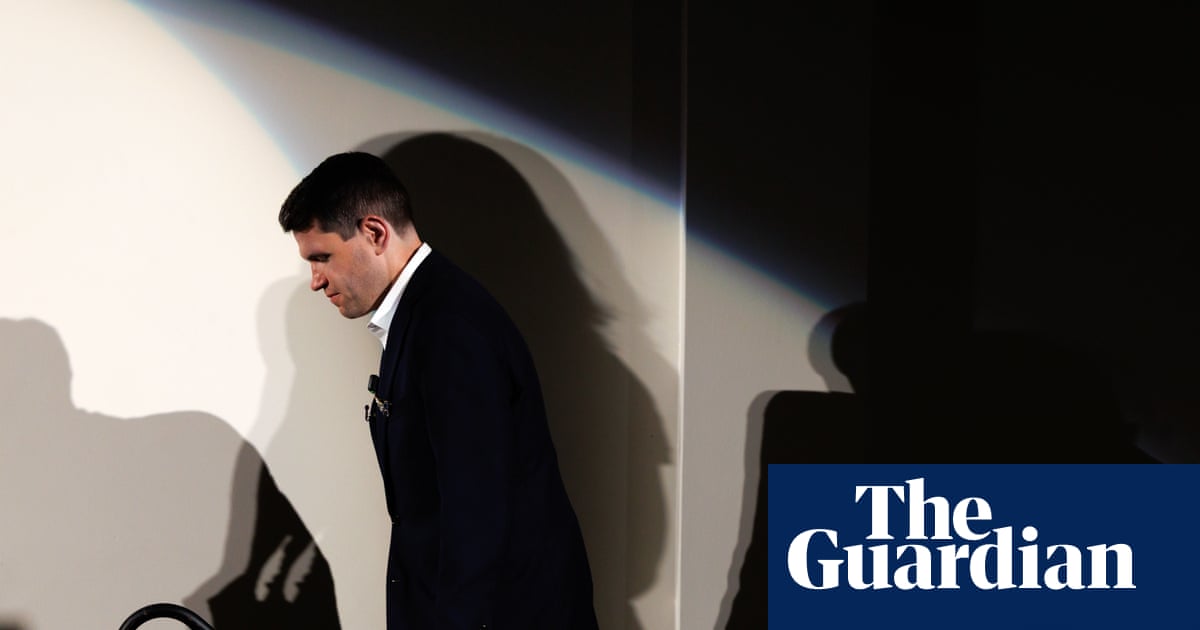
The smear campaign began when Talarico, the Democratic candidate for the US Senate in Texas, was not seen in public for nine days. His campaign was slow to explain why. While nature abhors a vacuum, Donald Trump and social media seize on one and weaponise it.
On 30 September, Talarico spoke at a Hispanic Business Council event by video. He had been diagnosed with the flu at an urgent care facility in Dallas after âÂÂstarting to feel kind of under the weather a few days agoâÂÂ, he said, and would not appear in person because he had a fever and was still contagious.
On 7 October, the president held a rally in San Antonio, Texas, and claimed without evidence that âÂÂTala-freakoâÂÂ, as he nicknames the Democrat, is vegan. Trump asserted: âÂÂHeâÂÂs sick because heâÂÂs been forced to eat meat for political reasons and heâÂÂs throwing up all over the place.âÂÂ
On the same day, an X account with the username âÂÂDan The Man, Always with a Planâ and a photo of âÂÂTrump 2028â cap tweeted without evidence: âÂÂHe had a mental health crisis. That is what I heard from someone who would know inside information.âÂÂ
On 8 October, Steve Bannon, a former White House chief strategist, stirred the pot further on his influential War Room podcast in an interview with former Trump fundraiser Caroline Wren, who baselessly claimed: âÂÂIâÂÂm hearing that he checked himself into a mental institution â that he had a full-blown, like, mental breakdown.âÂÂ
On the same day, Ken Paxton, the Republican running against Talarico, weighed in with a social media post that showed Talarico on a âÂÂWantedâ poster and said: âÂÂJimmy appears to be having a full-blown mental Tala-freak-out on the national stage. My campaign has a simple request: proof of life.âÂÂ
On 9 October, Spencer Pratt, a former candidate for mayor of Los Angeles, offered his take: âÂÂMy sources are telling me Talarico is in a mental health facility. His campaign has stopped actively planning events in the vital homestretch of the campaign.âÂÂ

Right media sites swung into action. RedState, the Daily Wire, the Right Scoop, Twitchy and PJ Media all amplified the false claims. Elon Musk, the worldâÂÂs richest man, put more toxins in the bloodstream with posts such as: âÂÂThe Talarico campaign is hiding something big that voters ought to know about.âÂÂ
Then, on 11 October, came the supposed coup de grâce. Conservative social media influencer Nick Sortor posted a 47-second audio clip on X that he said proved that Talarico had been discharged earlier in the week from Lindner Center of Hope, a mental health treatment centre in Mason, Ohio.
The call was placed by Rhein Amacher, a self-described âÂÂright-wing provocateurâÂÂ. In the clip, a woman whom Sorter claimed was an employee there says it looked like Talarico âÂÂwas just discharged this eveningâÂÂ. The online Maga faithful were jubilant.
But not for long. The Bulwark obtained the full phone call showing the purported employee had repeatedly denied any record of Talarico being at the centre. The timeline also did not add up. Amacher said he made the call to the mental health centre on Saturday evening, but Talarico was seen at the Austin City Limits music festival on Friday. On Saturday, he made an appearance at a Kacey Musgraves concert in Dallas.
The Lindner Center of Hope wrote in an X post on Sunday that Talarico âÂÂhas never received treatmentâ from the facility. Talarico replied to the post, saying, âÂÂIâÂÂve never even been to Ohio.â He included a tears of joy emoji.
JT Ennis, a spokesperson for Talarico, called SorterâÂÂs claim âÂÂa lie designed to promote a pathetic conspiracy theoryâ in an X post and wrote that Talarico had been recovering from the flu at his home in Austin. Talarico has type 1 diabetes, placing him at higher risk for flu-related complications.
Even Maga followers began to acknowledge that the claim had collapsed. But if the episode appeared absurd, its implications for the midterms were serious.
Reed Galen, a former Republican strategist and cofounder of the Lincoln Project, an anti-Trump group, said: âÂÂIt was a bit wild but a good reminder to all of us how sophisticated, effective and efficient the rightwing/ bot/ Russian generated misinformation-disinformation machine is.
âÂÂThis story came from some weirdos in Ohio or whatever but the point is that someone or something picked it up and amplified it to a point where â despite no evidence of reality â it became something that was an issue in the Texas Senate campaign.âÂÂ
Galen added: âÂÂEven if Talarico wins, that in and of itself was a win for the tactic. If you have the ability and the willingness to do this stuff, itâÂÂs not gonna work every time, but if you do it a lot, sometimes youâÂÂre gonna have success, and sometimes those successes might be strategic in nature, not just tactical.âÂÂ
Disinformation has been rampant in elections for at least a decade and 2026 is no different. NewsGuard, a company that tracks online misinformation, says it has identified and debunked 25 false claims about the midterms that have gone viral on social media platforms.
Its list of false claims includes Abdul El-Sayed, the Democratic candidate for US Senate in Michigan, having called for sharia law in the US during a 2022 speech; a Dominion Voting Systems whistleblower accusing US politicians of taking millions of dollars in bribes to rig the 2026 midterm elections; and Ken PaxtonâÂÂs Senate campaign paying for a Texas billboard that says âÂÂPedos AinâÂÂt That BadâÂÂ.
Another example related to an image that purportedly showed Rob Sand, a centrist Democratic candidate for governor of Iowa, campaigning with the progressives Ilhan Omar and Tim Walz. NewsGuard found it was generated by artificial intelligence (AI).
Even as AI gives new tools to nefarious actors, defences have been weakened. Last year, US secretary Marco Rubio shut down the state departmentâÂÂs Counter Foreign Information Manipulation and Interference office, accusing it of censorship and wasting US taxpayer money.
Major tech platforms â notably MuskâÂÂs X and Mark ZuckerbergâÂÂs Meta â have gutted trust, safety and factchecking teams, turning online spaces into a lawless wild west. Musk has spent a record $366m in â the election cycle so far to help Republicans retain control of Congress.
Richard Hasen, a professor at UCLA School of Law and election law expert, said: âÂÂWhen youâÂÂve got Elon Musk owning one of the important social media platforms and being a vector for spreading the misinformation, and also when youâÂÂve got the companies like Meta no longer doing the same kind of trust and safety work, itâÂÂs just an atmosphere where this kind of stuff can spread.âÂÂ
But there is another, more optimistic perspective. While the Talarico rumours spread like wildfire in corners of the internet, they did not penetrate the mainstream media, and fizzled out once the reality became clear.
Hasen added: âÂÂThe Talarico case shows the limits of being able to do this. This was something that was easily disproven and could have potentially even backfired, showing that the anti-Talarico forces are so desperate that they have to make up a false claim to try to boost a weak candidate.
âÂÂEvery election now weâÂÂre hearing itâÂÂs going to be âÂÂthe AI electionâ and voters are going to be tricked. What I think is happening in part is that everyoneâÂÂs on their guard. We all know that we canâÂÂt necessarily believe our eyes or our ears and things that a politician might appear to say or do might not necessarily be true, so thatâÂÂs a little bit of a natural check.âÂÂ
Hasen points out that candidates are better equipped to dismantle digital lies. To debunk the rumour, Talarico shared home security camera footage with the New York Times, establishing his presence at home. âÂÂBecause weâÂÂre leaving digital footprints everywhere, that sometimes could be another way to debunk a rumour.âÂÂ
Tara Setmayer, a former Republican communications director on Capitol Hill, also believes that the conspiracy theories have lost their novelty value. âÂÂThe voters have become hip to this game,â she said. âÂÂThere are too many other negative things going on in everyday American lives, so I donâÂÂt think these types of cheap attacks are going to resonate at this point.
âÂÂThe difference between this election cycle and past election cycles is that, because it seems like weâÂÂve been here before and we know how batshit crazy Maga can be, that mainstream media isnâÂÂt platforming the crazy as often,â said Setmayer. âÂÂTheyâÂÂre actually reporting it in a way with the healthy amount of scepticism that it deserves, so itâÂÂs dismissed off the top whereas in the past it was so novel.âÂÂ
Setmayer added: âÂÂAt this point now it feels like Donald Trump and MagaâÂÂs greatest hits: weâÂÂre really in the fat Elvis period of the Maga election campaign tactics and itâÂÂs obvious to everyone. The absurdity is finally breaking through even with some Republican voters, evidenced by how terrible Donald TrumpâÂÂs numbers are and Republicans writ large.âÂÂ