
American kids keep getting shot. Now theyâÂÂre also increasingly competing for help
In Memphis, programs to help at-risk youths work overtime to make sure they donâÂÂt get lost in the criminal justice system
One Friday afternoon in late July, at the Shelby county juvenile court in Memphis, a 14-year-old boy waited to learn whether he would be allowed out of detention before his birthday.
The teenager had been accused of assault. His birthday was Monday. If his case was not resolved that afternoon, he would turn 15 in custody.
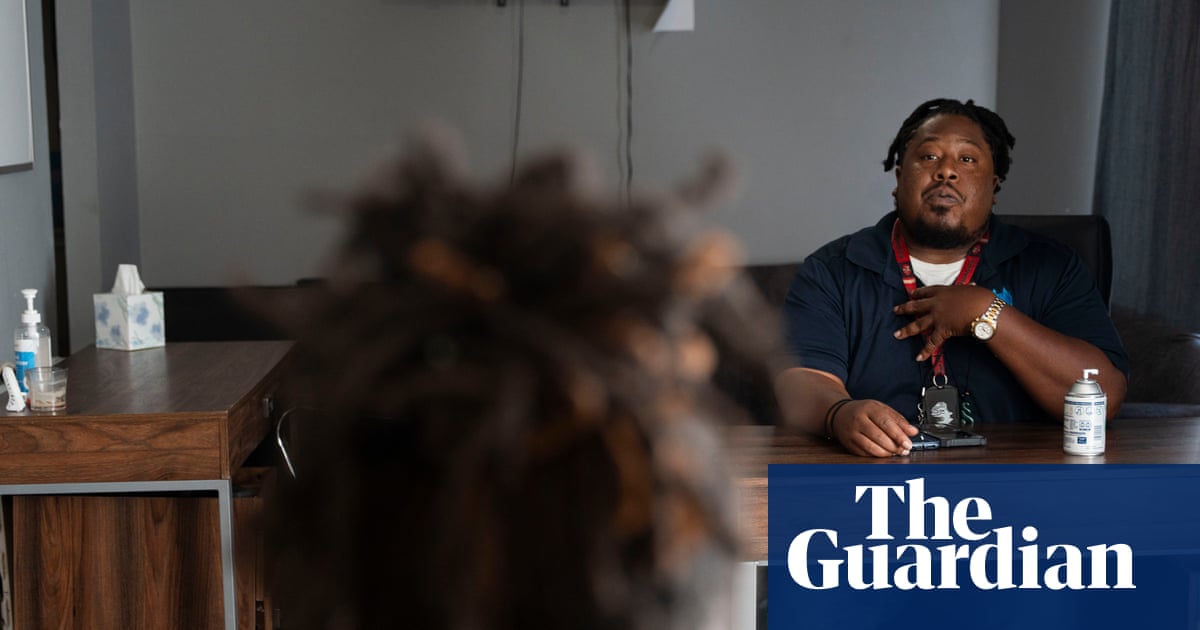
At his side was Alexx Brent, a community public safety specialist at the violence-prevention program Heal 901, where the teenager was enrolled. His goal: to make sure this young man did not get lost in the criminal justice system.
Over the course of the afternoon, as they waited, several attorneys approached Brent, asking if Heal 901 could take on their teenage clients. Brent wanted to say yes, but the non-profit employs only three staffers who do violence-intervention work, and the requests were arriving faster than they could responsibly accept them.

BrentâÂÂs dilemma at Heal 901 reflects a broader tension in the USâÂÂs recovery from the pandemic surge in gun violence. Fatal shootings have fallen to historic lows across the US, but teenagers have not shared equally in that progress. According to an analysis by the Trace and the Guardian of the most recent data from the Centers for Disease Control and Prevention (CDC), the gun homicide rate among 15-to-19-year-olds has declined from its peak in 2022, but itâÂÂs still roughly the same or higher today than it was before Covid. Most other age groups are better off now than they were before the pandemic.
At the same time, the violence-prevention programs designed to work with young people most at risk of being shot or becoming involved in violence are losing federal support, including Heal 901. In 2025, the Trump administration canceled more than $1bn in funding for public safety and violence prevention. Millions more in funding from the Biden-era American Rescue Plan, which many cities have used to expand anti-violence programs, is also set to dry up this year.
Rather than replace that federal assistance, the Trump administration has amplified enforcement. Memphis has been a ground zero for both funding cuts and force.
With the support of the Tennessee governor, Bill Lee, the administration deployed the national guard in September 2025, increased the presence of immigration officers and created a federal taskforce to intensify law enforcement in Memphis. Since the taskforceâÂÂs deployment, its officers and guardsmen have shot at least five people, killing four of them. The most recent case, in July, saw national guard members shoot 20-year-old Tyrin Johnson in the back in downtown Memphis. The Tennessee bureau of investigation is investigating and has said that Johnson was armed.

The guardâÂÂs deployment in Memphis alone is estimated to cost more than $300m by the end of the year â more than 166 times the total cost of Heal 901âÂÂs canceled three-year grant of $1.8m.
Meanwhile, the young people who suffer the highest rates of gun violence are increasingly forced to compete for access to the diminished programs designed to reach them.
The work is never done
When the 14-year-oldâÂÂs case was finally called, his mother appeared remotely on a screen in the courtroom. She was staying at a womenâÂÂs shelter with her daughter and couldnâÂÂt make it in person, so she agreed to let the attorney sign her name on her sonâÂÂs agreement. She promised to notify the court if he violated it.
The judge went carefully through the terms, with Brent standing beside the boy and his public defender. The teenager would be placed on probation, but he was also obliged to continue working with Heal 901.
Founded in 2018, Heal 901 â which uses MemphisâÂÂs area code in its name â started its work with teenagers in local schools. As gun violence surged in 2020, the non-profit shifted its focus to violence intervention, working with young people on the ground. Heal 901âÂÂs goal, like many similar programs around the US, is to stop retaliatory shootings and mediate community conflicts â between individuals and between street groups or crews â before things escalate. Day to day, that takes the shape of helping people at an elevated risk of being shot or arrested navigate the court and parole, find housing and a job, and seek mental health care.

There is a great need for the work, says K Durell Cowan, the founder of Heal 901, especially in a southern city like Memphis, where unfettered access to guns, poverty, and historic disinvestment and racism intersect. âÂÂThis community, theyâÂÂre resilient,â Cowan said. âÂÂTheyâÂÂre living under some of the most difficult circumstances. YouâÂÂre talking about one of the most impoverished cities in this entire country.âÂÂ
Violence began to drop nationwide in 2022 and 2023, but Memphis moved in the opposite direction for much of 2023. That January, Memphis police officers fatally beat 29-year-old Tyre Nichols, a killing that prompted widespread protests and further strained trust between police and residents. Memphis experienced another increase in killings in the months following Nicholsâ death.
Memphis faces many of the same challenges that plague the region around it. The south has the countryâÂÂs highest gun homicide rate, and a rate for teens nearly twice that of the west and three times that of the north-east, which has the nationâÂÂs lowest rate.
In Tennessee, the gun homicide rate among teenagers ages 15 to 19 is nearly twice the national average, according to the Trace and the GuardianâÂÂs analysis of the latest CDC data. Shelby county had the third most teen gun homicides of any county in the US, even though itâÂÂs not even in the 50 most populous counties.
The age patterns complicate years of rhetoric casting teenagers as the engine of violence, both in Memphis and nationally. Teens still donâÂÂt make up a majority of perpetrators or victims â that distinction belongs to people in their 20s. But with that age group, there has been significant progress: people in their 20s and early 30s are safer today than in the years leading up to the pandemic. Yet for the first time since at least 1999, teenagers suffer a gun homicide rate nearly matching the highest-risk age group of 20-24 and higher than people in their late 20s and early 30s.
Finding safety
In 2024, Memphis and Shelby county created a joint office to coordinate and help fund violence prevention. Memphis began to feel some relief from its pandemic surge of violence that year â months before the Trump administration deployed the national guard and flooded the city with federal law enforcement. By 2025, MemphisâÂÂs homicide rate fell to about where it was before the pandemic.
The 14-year-old Brent was helping in court was referred to Heal 901 from the joint office, and he was already deeply entangled in the legal system when they met. HeâÂÂd faced multiple assault charges, and he picked up his latest, Brent said, when a woman tried to pull a gun on his mother. Brent said the boy grabbed a stick to defend her. He was no âÂÂmenace to societyâ â his temper surfaced when people threatened him, Brent said, and his unstable home life was the larger problem.
Brent, 41, was still worried about where the teenager would go after the court hearing because his mother was in the womenâÂÂs shelter. He ended up picking him up from the juvenile detention center. The boy got to spend his birthday with his friends. He is now living with his godmother and complying with his probation, and he has recently joined his high school football team.

Brent sees himself in the teenagers and young adults he works with. Like many of them, he grew up in Memphis with parents who struggled with addiction, and he served time at one of the southâÂÂs most notorious prisons: the Mississippi state penitentiary at Parchman, just across the state line.
After Brent returned home in 2020, Cowan helped him redirect his experience toward violence intervention. His history gives him some credibility with young people who distrust systems that have repeatedly failed them and pushed them toward violence.
Brent has used that credibility to reach young people. He said the most rewarding result is when they tell him theyâÂÂre no longer carrying a gun around. âÂÂThatâÂÂs what we want to hear,â he said. âÂÂBecause weâÂÂve turned a guy who could be a potential killer, and we took that out. No one is born a killer.âÂÂ
Because he works for a non-profit, not the state, heâÂÂs allowed â and willing â to do things for those participants that others in the legal system are not.
Bill Adkins III, a juvenile probation officer in Memphis, said the teens he supervises are often asked to meet court requirements while facing hurdles that make it hard to comply. Some have no birth certificate, social security card or any form of ID needed to get a job. Some live in overcrowded apartments, like a family of eight people sharing two bedrooms and one bathroom, he said.

Adkins once arrived at what was supposed to be a familyâÂÂs home and found it abandoned. The family was living in a car outside. The child in that family was still on probation. The court expected him to complete its orders. âÂÂHow is he supposed to do that?â Adkins asked.
Court officers such as Adkins face restrictions that limit how much they can get involved, even though they may know a young person needs more support. âÂÂBut when you have something like Heal 901, I know theyâÂÂre going to give them the support they need,â Adkins said. âÂÂCoupled with what IâÂÂm doing, it works 10 times more than if they did not exist.âÂÂ
Heal 901âÂÂs workers can take a teen to an interview, or pick him up from a part of town he probably shouldnâÂÂt be in. They can send some money in an emergency or meet with a participant away from an intimidating government or law enforcement office. They can keep calling after he stops answering.
Brent said he sometimes goes to court on his days off because a kid, frightened of jail, may be ready, briefly, to try something different. âÂÂWhatâÂÂs the best thing to do for him besides give him hope?â he asked. âÂÂShow him that somebodyâÂÂs going to be there for him, but going to be on his ass at the same time.âÂÂ
In early 2026, the joint office referred two teenage brothers to Heal 901. Their father was no longer in the picture, and their mother had recently died, Brent said. The older brother wore an ankle monitor, and both risked becoming more deeply entangled in the legal system.
Brent and other Heal 901 workers kept on the brothers. They asked the court not to give up while the relationship took hold. Within about four months, the older brother stopped leaving home without permission, attended prom and graduated high school. The younger brother stopped getting into fights and made plans to live with an aunt.
The older brother, who goes by the nickname CEO K5, just turned 18. On a Friday evening in Martin Luther King Jr Park in South Memphis, CEO K5 sat under a tent while a painter airbrushed âÂÂ901â in blue across his forearm. Around him, Heal 901 workers wore bright orange shirts with âÂÂEND COMMUNITY VIOLENCEâ printed in big white letters. Police officers and national guard members walked the grounds, too.

At first, the workers from Heal 901 were strangers, he said. But over time, their consistency convinced him. âÂÂAnything I need, they got me,â he said. They had assisted him with court dates and were helping him look for a job. He was also pursuing a music career.
Brent stopped to check on the young man he had spent months calling and encouraging. To Brent, CEO K5 was a success. The teenager still has goals heâÂÂs working to accomplish, like getting a job at Amazon and growing his YouTube channel.
CEO K5 said Memphis should keep working toward its goals, too. Despite its declining gun violence, he said there are more young people who still need help.
Shoestring funding
Memphis native Arieale Munson, the CEO and founder of the organization Operation Taking Back 901, works closely with Heal 901 and other violence-intervention programs in the city through the joint office. She helps young people with financial literacy and job skills to mitigate the underlying circumstances that can push someone toward violence. She counsels young people who range in age from 16 to 30 â most of whom have been victims or perpetrators of gun violence, she said.
âÂÂYouâÂÂre going to need some sense of support, and weâÂÂre the village that you need to lean on,â Munson said. Without work like hers, young people could get stuck in a cycle of financial insecurity, legal trouble and often violence, she said.
Limited funding has limited anti-violence work. The number of people who need help has outpaced the capacity to serve them. The city, county and state government have all supported violence-prevention work at one point or another, but that funding is still only a fraction of what providers say they need â and itâÂÂs far from stable.

MunsonâÂÂs organization and Heal 901 arenâÂÂt alone. Workers at 901 Bloc Squad, MemphisâÂÂs oldest violence-intervention group, have worked through furloughs and periods without pay or benefits. Carmen Coleman, the Bloc SquadâÂÂs program director, said the instability takes a toll, both on the workers personally and on their ability to work effectively. âÂÂIf a mentee calls, theyâÂÂre gonna get up and see whatâÂÂs going on,â she said. âÂÂBut they are only valuable when their own health and welfare is in check.âÂÂ
In 2024, during the tail end of the Biden administration, the justice department awarded Heal 901 a $1.8m grant to expand its violence-prevention work. A year later, in April 2025, the Trump administration terminated it, long before it was supposed to end. âÂÂWe had to take it bare bones,â Cowan, the Heal 901 founder, said. âÂÂIn that one year, we lost a lot.âÂÂ
Cowan said Heal 901 was also in the process of receiving local funding when their federal funds were cut. But grants are not an immediate cash infusion. Heal 901 signed its local agreement in November 2024, Cowan said, but couldnâÂÂt start submitting expenses for reimbursement until months later. âÂÂWe didnâÂÂt have anything coming in for almost a year,â he said. âÂÂWe literally survived off foundations. ThatâÂÂs why the team is low.âÂÂ

At one point, Heal 901 was spending approximately $60,000 a month while receiving about $20,000 back. Foundations and emergency fundraising kept its doors open but did not give Cowan enough certainty to hire new staff or expand. âÂÂMoney has to pass through so many hands to get to the community,â Cowan said.
Last year, Cowan said Heal 901 operated on a budget of less than $1m, not even half of what he says the organization needs to operate effectively. Heal 901âÂÂs three violence interrupters serve 30 to 50 participants at a time and prioritize the highest-risk referrals, which most often means young adults in their early 20s.
âÂÂItâÂÂs amazing that my city is labeled as one of the most violent in America, but we see that the solution to that violence is actually part of the community,â Cowan said. âÂÂIt takes individuals who come from the community, who look like the community, to go back in and change it. âÂÂ

They would like to help more young people. But intensive violence intervention can mean months of calls and home visits, rides to court and job interviews, meetings with relatives, help obtaining an ID or finding a missing birth certificate, and urgent conversations at night or on weekends. Without more funding and staff, Cowan said, increasing Heal 901âÂÂs caseload would be irresponsible â and unfair to his employees.
But Brent said that despite the instability and challenges that come with his job, he wouldnâÂÂt trade it for anything because heâÂÂs not in it for the paycheck. âÂÂWe canâÂÂt slack off,â he said. âÂÂSome organizations, they see these guys as numbers. We see these guys as people.âÂÂ