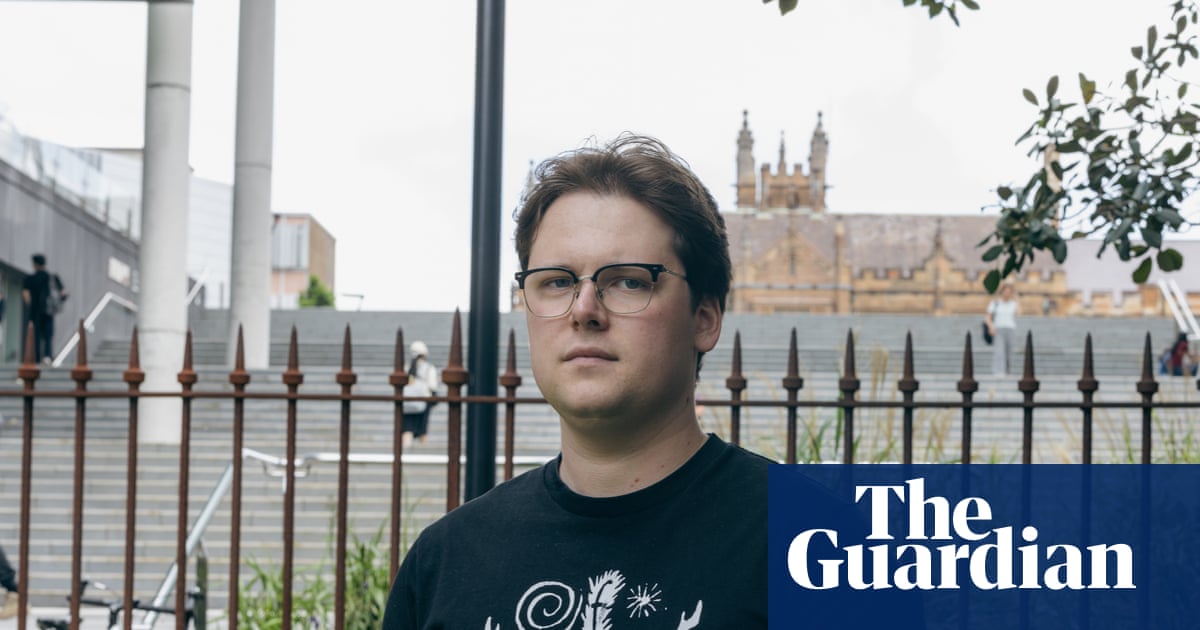

Aidan is one of thousands of students forced to verbally defend his honours thesis as universities take on AI
Honours students are increasingly being asked to sit oral assessments â but at the University of Sydney itâÂÂs become a requirement for all
-
Get our breaking news email, free app or daily news podcast
When Aidan Elwig Pollock signed up for an honours program at the University of Sydney, he did not expect his 20,000-word thesis to be accompanied by a spoken component.
But, as AI increasingly makes written research an unreliable form of assessment, the university has demanded all students taking the one-year program defend their arguments in conversation with professors.
Top Australian universities are increasingly asking honours students to sit oral assessments, with Sydney the first known to require it across honours programs.
Exams have moved from computers back to paper or interviews in the four years since the release of ChatGPT made AI plagiarism a concern. Some educators have adopted the debate-focused tutorials traditional at Oxbridge colleges or the viva voce assessments typical of PhDs.
But honours programs â a year of intensive research for dedicated students after their bachelorâÂÂs degree â have been slower to adapt as theyâÂÂre typically focused on a single project, which accounts for most of their grade.
Elwig Pollock, a history student, said he had not used AI at all on his work on how the commemoration of Captain Cook has evolved over time, and that the new demand was âÂÂinsultingâ to students and the professors who supervise them.
âÂÂIf youâÂÂve used AI to do your honours thesis and your supervisor has not figured it out throughout your regular meetings, then whatâÂÂs stopping you from communicating that material successfully in a 15-minute conversation,â Elwig Pollock said.

Since 2024, Sydney bachelorâÂÂs degrees have included a mix of assessments that are vulnerable or secure to AI tools. This year, the university has formally extended that to honours programs, though the format is different for every faculty.
On Wednesday, Elwig Pollock had a short conversation which was a pass or fail hurdle task but was worth nothing towards his final grade. In his case most of his marks are coming from his thesis but his degree will not be awarded if he fails the conversation.
Engineering student Isabelle* had an entirely different experience.
Last week, the University of Sydney student had an hour of interviews with professors in a single room with five classmates, as the school rushed through assessing 250 students in two days. It accounted for 50% of her grade.
Her 20,000-word thesis was worth just 20%.
âÂÂThere were people coming in and out of the room while we were being assessed so it was distracting,â said Isabelle, who asked for a pseudonym to avoid being penalised.
âÂÂ[We had to] move to the other side of the room so my marker could hear me.âÂÂ
The change has stressed students who arenâÂÂt used to speaking up in class, donâÂÂt speak English as a first language or need their honours to become qualified in their field â including engineers like Isabelle.
âÂÂI think itâÂÂs particularly bad in engineering because writing skills are poor, but I think itâÂÂs a Band-Aid solution,â she said of the verbal component.
Adam Bridgeman, the universityâÂÂs acting deputy vice-chancellor for education, said honours degrees needed to change.
âÂÂWe necessarily treat honours theses as open assessments as we canâÂÂt reliably restrict AI use,â Bridgeman said.
Staff and students were offered guidance and practice to manage the transformation and ensure English fluency and speaking ability were not âÂÂinadvertently rewardedâÂÂ, he said.
âÂÂWe appreciate some students might be nervous about the experience, especially if itâÂÂs their first time,â Bridgeman said. âÂÂWeâÂÂll take feedback on board as we plan for 2027 assessments.âÂÂ
While Sydney is the only major institution to mandate interviews for honours programs, schools at the University of Melbourne, Monash University and Australian Catholic University are bringing them in.
Adelaide University, which was previously among the first in Australia to reintroduce viva voce tasks, is using âÂÂinteractive oral assessmentsâ in which students and teachers role-play real-world professional situations.
There are no public reports of Australian honours students cheating with AI. Kurt Iveson, an honours coordinator for SydneyâÂÂs School of Geosciences, said the change was still needed to respond to AIâÂÂs growing role in education.
âÂÂTheyâÂÂre not the kind of people that I would personally be worried about getting Claude to write their honours thesis for them,â Iveson said.
âÂÂBut ⦠[management] want to be able to demonstrate to the world, as part of their social licence and external accreditation, that things are being assessed securely.âÂÂ
The interviews are a heavy addition to professorsâ workloads â and no casuals have been brought on to help. Staff and students contacted by Guardian Australia said the new rules had left supervisors feeling rushed and overworked.
But, Iveson said, interviews are a valuable way of helping students learn and understand the significance of their research.
âÂÂAssuming that you have actually written it, you know your shit, youâÂÂll be fine, and youâÂÂll have a good conversation.âÂÂ
*Name has been changed