
AI, trade, Taiwan and climate: what will and wonâÂÂt be on agenda at Trump-Xi summit
Two leaders could discuss tech safety issues and US-China trade ties but may skip over climate emergency
The leaders of the worldâÂÂs two superpowers are meeting in the US this week. It is Xi JinpingâÂÂs first state visit to the US in more than a decade. The last time the Chinese president was hosted in Washington (by Barack Obama in 2015), the issues on the agenda included cybercrime, technology, the climate crisis and human rights. The star of the day was Ne-Yo, who serenaded Xi and his wife, Peng Liyuan, with Peng reportedly singing along at the state dinner.
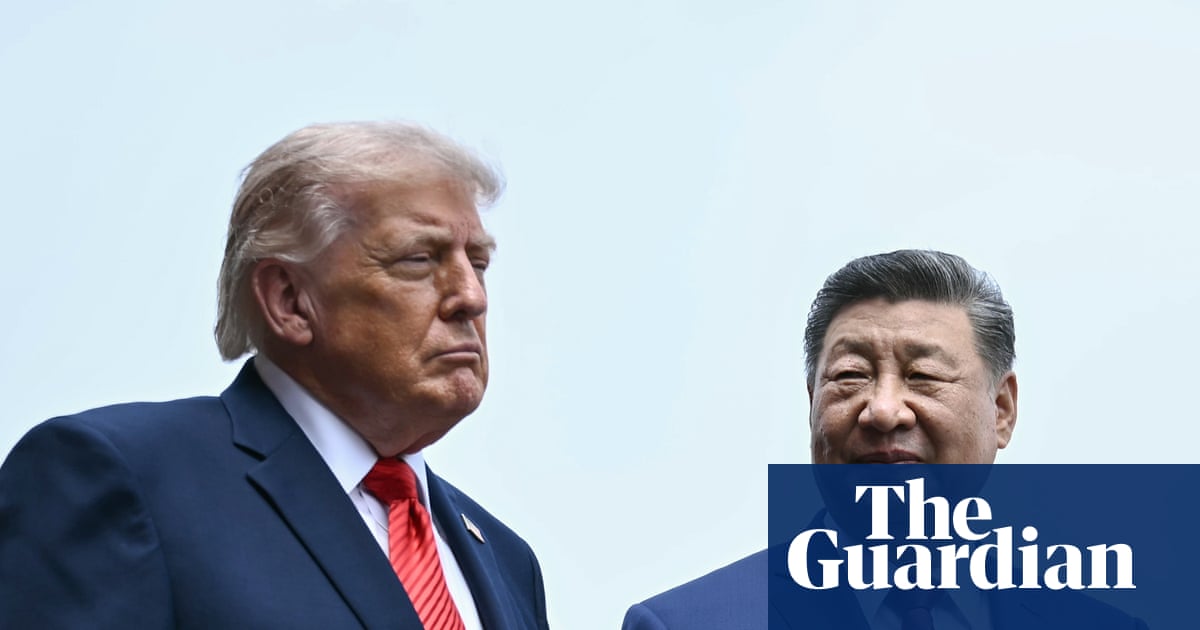
This time, Xi is meeting Donald Trump, who has overhauled the world order and recalibrated the US-China relationship. Trump is contending with a China that is in a much stronger position than it was 10 years ago. Here are five things to look out for at this weekâÂÂs US-China summit.
Artificial intelligence
Although AI was surprisingly absent from talks the last time Xi and Trump met, in Beijing in May, it is expected to be high on the agenda this week. There are calls for the two leaders to agree some sort of AI safety framework to prevent the technology â about which there have been dire warnings in recent weeks â from spinning out of human control. But Trump has called warnings about safety a âÂÂhoaxâÂÂ, and although Xi has called for âÂÂsafety and security in AI developmentâÂÂ, China sees AI as the key to unlocking its own national potential and bristles at US efforts to contain its progress.
The US treasury secretary, Scott Bessent, recently suggested that the two countries establish a mechanism to communicate on major AI safety issues. Xi and Trump may discuss further details. But Amanda Hsiao, the China director at the Eurasia Group, says: âÂÂThe question thatâÂÂs going to raise is just how is it going to be operationalised, and will it be effective. Because the US and China have had a long history of having crisis hotlines, and they havenâÂÂt always been effective.âÂÂ
Trade

The biggest thorn in the US-China relationship is trade. When Trump launched a global trade war last year, with the biggest target being China, it risked bringing the world economy to its knees. China reciprocated with tariffs on US goods approaching 150% and unveiled a host of other retaliatory measures, most notably restricting the export of rare earths that are vital for US manufacturing.
Since then, a temporary truce in the trade war, and TrumpâÂÂs war in Iran, have stabilised the US-China trading relationship, with the source of global economic pain coming from the Middle East rather than China. But the truce is set to expire in November. With Trump and Xi expected to meet two further times this year, there may not be a trade deal announced at this weekâÂÂs summit. But although China has weathered the trade war better than expected, with exports to other countries booming, finding a longer-term agreement to restore the flow of goods to ChinaâÂÂs biggest market will be a high priority for Xi.
Taiwan
ChinaâÂÂs ambassador to the US, Xie Feng, published an article on Wednesday outlining âÂÂfour red linesâ for the summit. First on the list was Taiwan.
Taiwan, a self-governing island that China claims as part of its territory, has become an increasingly sensitive topic for Beijing. China wants to isolate Taiwan on the world stage and put pressure on the US to reduce its support for TaiwanâÂÂs defences, both of which would make it easier for it to annex the island. After the May Xi-Trump summit, Trump agreed to delay a $14bn package of weapons sales to Taiwan, calling it âÂÂvery good negotiating chipâÂÂ.
Beijing rejects the idea of bargaining over Taiwan, describing it as a domestic Chinese issue. Nevertheless, says William Yang, a senior analyst at the International Crisis Group, âÂÂthe Chinese side definitely feels that Trump is a rare US president that might offer a rare window of opportunity for them to influence American policy on Taiwan, specifically on defence supportâÂÂ.
The leaders may discuss conflicts in Ukraine and the Middle East, but China has been unwilling to get meaningfully involved in peace negotiations.
Human rights

Second on XieâÂÂs list was democracy and human rights. In Trump, Beijing has found a US president who is less interested than any of his predecessors in lecturing China about its human rights record. In 2015, Hillary Clinton, the former secretary of state, called Xi âÂÂshamelessâ for hosting a UN summit on women while âÂÂpersecuting feministsâ at home. Barack Obama, then the US president, skipped XiâÂÂs session.
Trump is unlikely to echo such sentiments, even though some in his inner circle, most notably his secretary of state, Marco Rubio, are sharply critical of ChinaâÂÂs policies.
But Trump may raise individual cases. In May he raised the case of Ezra Jin, a detained Christian pastor, which seemed to contribute to JinâÂÂs release from prison weeks later. Yufang Rong, the wife of a US nuclear scientist who has been imprisoned in China since late 2024, said this week that the White House had assured her that Trump would ask Xi to free her husband. Trump may also raise the case of Min Zin, a US expert on Myanmar, who was arrested in China in June.
The most difficult and high-profile case, however, is that of Jimmy Lai, a British pro-democracy activist who was jailed in Hong Kong on national security charges. Despite promising to secure LaiâÂÂs release during his presidential campaign in 2024, Trump conceded in May that Beijing was unwilling to budge on LaiâÂÂs case, calling it âÂÂa tough oneâÂÂ.
Climate crisis
Notably absent from this weekâÂÂs talks will be any meaningful discussion about the climate crisis. Tackling the climate emergency used to be described as one of the few areas where the US and China could meaningfully cooperate, with ChinaâÂÂs huge strides in decarbonising its economy seen as an area where it could show leadership on US-endorsed goals. But Yang says: âÂÂThe climate conversation is just not really a topic that Trump is interested in talking about.â Not only has Trump withdrawn the US from the Paris agreement but Beijing and Washington are too divided on a host of issues to talk about cooperation. âÂÂThey are coming into this summit with very little agreement or consensus in common,â says Yang.
Additional research by Yu-chen Li