
âÂÂA persistent crisisâÂÂ: the 16 children removed from an Ohio family are part of a statewide issue
The case of the Siders family illustrates major shortcomings among OhioâÂÂs political and administrative authorities
In June 2025, Jody Walker stood in front of Ohio lawmakers at a senate finance committee meeting in Columbus. As the head of South Central Ohio Job and Family Services, he was desperate for help.
âÂÂI have been a county director since 1999, yet I have not seen such a challenging time in the child welfare system as I do today,â he said, âÂÂspecifically in terms of the needs of our children.âÂÂ
His agency, which oversees three rural counties in southern Ohio, frequently saw children sleeping at the organizationâÂÂs office because they had no other safe place to go.
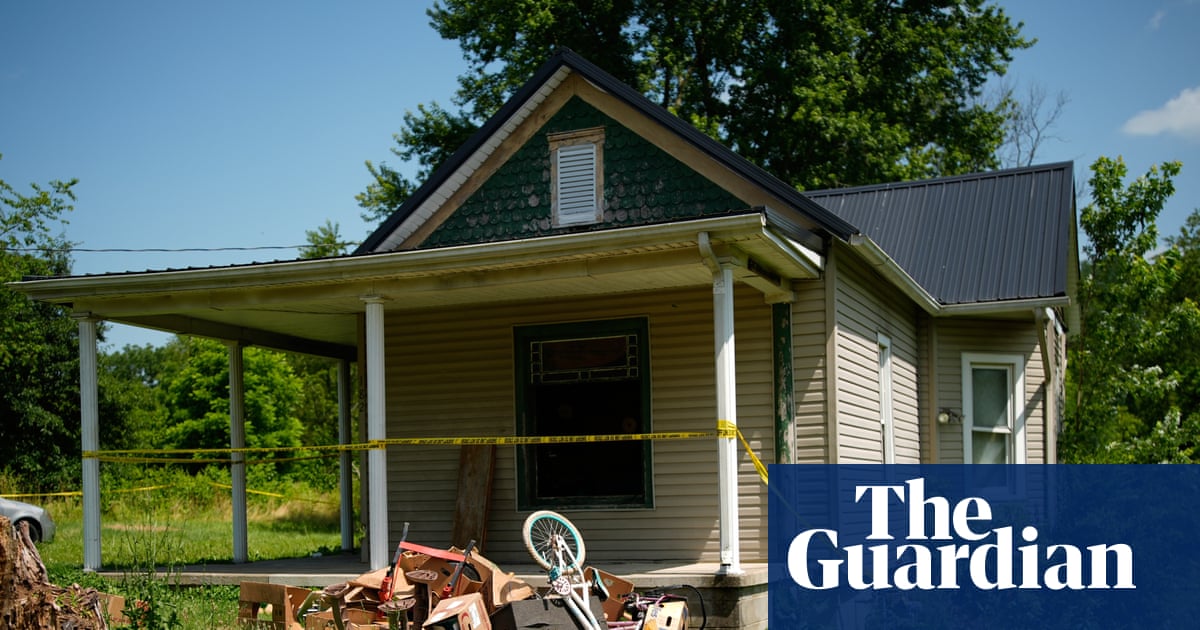
Twelve months later, WalkerâÂÂs fears were realized right in his own backyard. On 30 June, 16 children were found in a dilapidated home in Hamden, a short drive from where Walker works. Several were found near death; two children were flown to a level one trauma medical facility, where one was placed in an intensive care unit, according to reports.
Gary Siders and Christina Siders, the childrenâÂÂs grandparents, and Gary Siders II and Elizabeth Siders, their parents, were charged with 16 counts of child endangerment. In August, Gary Siders II and Elizabeth Siders were additionally charged on separate counts of sexual battery and unlawful sexual conduct with a minor, who was not their own child. All four have pleaded not guilty to the charges.

The Siders case illustrates major shortcomings among OhioâÂÂs political and administrative authorities when it comes to supporting the most at-risk in society, say experts.
âÂÂOur biggest challenge is a persistent crisis in identifying appropriate, affordable and accessible placements ⦠Paid placement costs have increased 41% since 2020, far outpacing inflation, with the cost for residential and group home care skyrocketing by more than 65%,â said Angela Sausser of the Public Children Services Association of Ohio, which represents public children services agencies in the state.
âÂÂWhile the state share [of spending on children services] has been rising over the last eight years, from 10% to 20%, it still falls below the national average of 42%.âÂÂ
Today, the family services department in Vinton county is drowning in the estimated $200 per child per day expense of caring for the 16 Siders children, who are now in foster care; six of the children are twins aged four or younger.
A rural region with fewer than 13,000 residents, Vinton county is the least populous county in Ohio. Property tax levies in the area fail to come close to covering the costs of caring for at-risk children, which for South Central Ohio Job and Family Services rose from less than $4m in 2015 to more than $10m in 2024.
In fact, the conditions facing the children were discovered by accident. Law enforcement went to the property to serve arrest warrants on Gary Siders II and Elizabeth Siders on charges unrelated to the neglect of their children.
âÂÂCounty leaders should not have to choose among services for vulnerable children, public safety, seniors and those with behavioral health needs or developmental disabilities,â said Sausser.
For more than 30 years, Republicans have broadly controlled governing and lawmaking in Ohio, regularly holding a supermajority in the state legislature. According to the Annie E Casey Foundation, a private philanthropic organization focusing on childrenâÂÂs needs, while the percentage of children in Ohio living in high-poverty areas has fallen in recent years, figures for child deaths, children without health insurance and children aged three and four who are not in school all have risen.
Financial disclosure information from the Siders family published by Los Angeles magazine found that Elizabeth Siders had no income and her husbandâÂÂs salary amounted to $1,500 per month in 2021.
Ohio isnâÂÂt alone in struggling to fund care for vulnerable children.
Nationally, a swathe of cuts including supports such as food benefits for 1 million children are under way. For the 2027 federal budget, the Trump administration is proposing cuts to nutrition programs for women and children, home energy assistance for low-income families, a $6bn cut to the budget of the National Institutes of Health and the elimination of a federal preschool development grant program.
Data and research overwhelmingly show that children in states governed by Republican leadership face higher risk factors than those run by Democrats or members of both parties. The infant mortality rates in Tennessee, Mississippi and Arkansas are more than 50% higher than in states such as New York and California.
In Ohio, a case worker reported in 2020 that the Siders children suffered from high levels of lead; last year, Republican lawmakers in Ohio cut funding for a lead abatement program from $7.5m to $250,000 a year.
The office of Andy Wilson, OhioâÂÂs Republican attorney general, declined to comment on questions from the Guardian asking, among other things, whether he believed the state of Ohio had failed the Siders children. Search warrant materials have been sealed by a judge, and a gag order has been issued by another, meaning attorneys for the accused and others involved, including law enforcement, cannot speak publicly on the matter.

Wilson has claimed that the adults in the Siders household âÂÂ[w]ere pretty adept at keeping these kids out of sight and out of the eyes of investigatorsâ and called the family members responsible for the abuse âÂÂpure evilâÂÂ.
State authorities through the Ohio department of children and youth have initiated a review of the Siders case, âÂÂto determine how the county public children services agency followed federal and state requirements and to provide technical assistance on best practiceâÂÂ, said Jodi Norton Trimble of the Ohio DCY.
However, reports show that child and family services at the county and regional levels made significant efforts to highlight the conditions the Siders children faced.
When the family lived in neighboring Gallia county in 2020, a staff member from its department of jobs and family services visiting the children reported finding them living in desperate conditions, prompting court-ordered protective supervision for the children. But by May 2021, the supervision requirement was terminated and the family moved out of Gallia county.
The same year, school officials in Gallia county filed a complaint in a juvenile court reporting that several of the Siders children had become habitually truant.
But local authorities were unable to keep up with the familyâÂÂs movements.
âÂÂI believe the school made contact with the appropriate school district where the family was living in West Virginia. However, before authorities could take action, the family moved again,â a representative of Gallia juvenile court said.
At 34 years old, Elizabeth Siders, the mother of all 16 children, was pregnant every 15 months. She was 15 years old when she was married in West Virginia, (before 2023, a child of any age in the state could legally be married with permission of a judge) and, shortly after, gave birth to her first child at the Holzer health system outside Gallipolis, Ohio. She would give birth to nine children at the facility, according to reports.
Her attorneys have called for a mental health evaluation to see whether she is competent to stand trial.
The Ohio department of children and youth report on the incident is expected to be completed by the end of the year, âÂÂbut it must be conducted without interfering with the criminal investigations that are ongoingâÂÂ, said Norton Trimble.