
A child of Japanese incarcerationâÂÂs call to arms: âÂÂThe lessons of Manzanar have never been more urgentâÂÂ
How a rebuilt, historic California baseball diamond embodies âÂÂthe contradictions in AmericaâÂÂs legacyâÂÂ
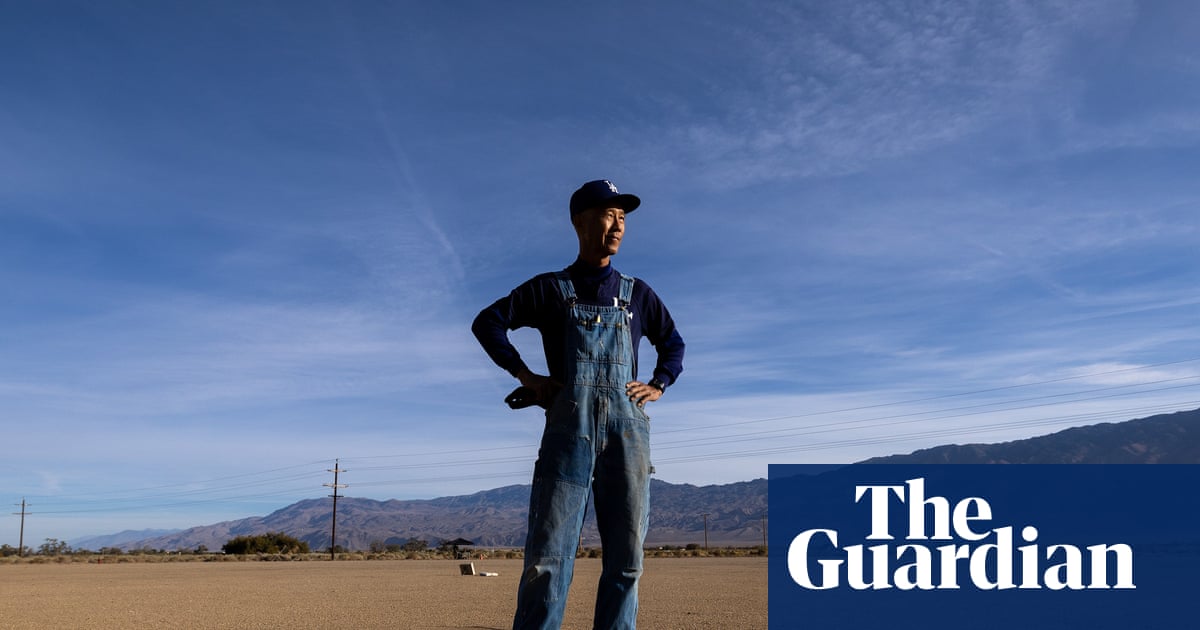
When Dan Kwong first dreamed of staging baseball games at the Japanese American concentration camp where his family was held captive during the second world war, he thought of it as an exercise in living history, an eye-catching way to convey the trauma of 120,000 men, women and children who were locked up in the wake of the Japanese attack on Pearl Harbor.
Baseball was a passion for Kwong, a 71-year-old performance artist from Los Angeles. He knew that the wartime internees had played the game not just as a distraction from their predicament, but as a quiet expression of their loyalty to the United States. He wanted to stage an event that would cast the game as an act of resistance, and teach new generations about the damage governments do when they strip a whole segment of the population of their constitutional rights.
That, though, was before the second Trump administration brought its own wave of detention camps and mass arrests and made the treatment of Japanese Americans in the 1940s relevant in ways Kwong found both shocking and impossible to ignore.
âÂÂItâÂÂs not a cautionary tale any more,â Kwong said. âÂÂNow itâÂÂs a call to arms.âÂÂ
That rebellious spirit was on full display last weekend as KwongâÂÂs project came to fruition. After years of painstaking work to restore the old dirt field at Manzanar, the camp in CaliforniaâÂÂs eastern Sierra mountains where his mother and aunt were once confined, hundreds of people watched a double-header featuring players from CaliforniaâÂÂs Japanese American baseball league.

The players donned 1940s-era baseball uniforms, gloves and catcherâÂÂs helmets, smashed balls into the sagebrush beyond the outfield, and struggled all day with the unusual way the ball bounced and skittered across the grassless field. Kwong, who moves with the athleticism of a much younger man, took the field himself, first for the LiâÂÂl Tokio Giants, his team for the past 54 years, and then in an all-star game pitting southern California against the north.
The crowd, many of them holding up Japanese-style paper parasols as protection against the unforgiving high desert sun, cheered his every appearance.
Kwong also made sure that the racial animus of the 1940s and its modern-day revival stayed uppermost in peopleâÂÂs minds. In a speech delivered between the two games, he connected Donald TrumpâÂÂs âÂÂMake America Great Againâ movement with what he called the âÂÂpremise of domination and supremacyâ that had made different groups of immigrants and citizens of color vulnerable to scapegoating and criminalization in the past.
âÂÂIt is a version of America frozen in time within ManzanarâÂÂs fences and here on its baseball field,â he said, still in his team uniform. âÂÂWhen we run its dusty base paths and sit in its sunbaked bleachers, for a few hours the past is unfrozen. And in that thaw, we may face the contradictions embedded in AmericaâÂÂs legacy: our welcoming arms and our bigoted rejections, our highest aspirations and our lowest debasements, our cruelty and our kindness, our generosity and our greed.âÂÂ
His was far from the only outspoken voice. âÂÂWe gather at a time when the lessons of Manzanar have never been more urgent,â the chief executive of the Japanese American National Museum in Los Angeles, Ann Burroughs, said. âÂÂThe racism, xenophobia and cruelty that made what happened here possible are once again unfolding before our eyes. So many of the laws that were used to discriminate against your families and people of color over hundreds of years of history in this country are now being used again.âÂÂ

As the ceremonial portion of the day reached its climax, actors in 1940s clothing appeared on the field carrying suitcases, symbolizing the arrival of hundreds of families, most from LA, in the spring of 1942.
The plaintive voice of Nobuko Miyamoto, a celebrated Japanese American singer with a lifelong commitment to civil rights, sang of the Manzanar prisonersâ despair at being behind bars when they had done nothing wrong. âÂÂWhen will it ever stop?â she sang, to audible sobs from the spectators, many of whom grew up with stories about the camp from their parents and grandparents.
At least five men in their 90s or older had been in Manzanar themselves. Among them was Masayoshi Morioka, who first arrived as a nine-year-old and whose grandson Mason was now playing for southern California in the all-star game.
âÂÂGramps, IâÂÂm going to Manzanar,â Morioka remembered his grandson announcing.
âÂÂWhatever for?â he asked. When Mason told him it was for a game, he vowed: âÂÂI have to go, for the last time in my lifetime.âÂÂ
A charmingly impossible dream
For years, KwongâÂÂs baseball project seemed like a charmingly impossible dream. The field was neglected and overgrown, the work promised to be time-consuming and expensive, and the National Park Service, which maintains the site as a historical monument, had reservations about allowing an outsider to oversee it and bring in large crowds once he was done.
Kwong, though, never wavered. He raised the funds and won over the park rangers. For the past three years, he has made the 225-mile (360km) drive from LA as often as possible â sometimes accompanied by volunteers, sometimes alone â to clear the foliage and tumbleweeds, smooth out the rough terrain, excavate the outfield posts, erect a fence and bleachers, and build an announcerâÂÂs booth.

He first staged a game at Manzanar in 2024, but the public was not allowed in and he called it his âÂÂsoft openingâÂÂ. A year later, a federal government shutdown scuppered his plans to roll out a grander event. Then, this spring, a powerful windstorm knocked down the fence and forced him to build a new, stronger one.
The park service imposed a flurry of restrictions. He had to arrange offsite parking and a shuttle bus for his spectators, and was told after the announcerâÂÂs booth was already half-built that it did not meet government building safety standards. At the games, the announcers â now seated at a simple table beneath an awning â read a lengthy legal disclaimer and warned players theyâÂÂd have to pause every time a car passed the field, which happened every few minutes.
The outspoken politics of the event also appeared to cause official nervousness â understandable, perhaps, since the National Park Service has itself been in the Trump administrationâÂÂs crosshairs, losing 25% of its workforce as a result of sweeping cuts. The site superintendent, Jeremy Scheier, was not present during the speeches, and Kwong said heâÂÂd been told to be careful about what he said as a volunteer at a government site.
A baseball obsession
Manzanar was the first of 10 camps set up to house the Japanese American population of the western United States â the largest mass incarceration in US history, according to the Manzanar Baseball Project website. The site had once been thriving farmland, filled with apple and pear trees, only to turn arid after the city of LA bought up vast tracts of farmland across the Owens valley and drained the water to spur its own development in the early years of the 20th century.
By the time the government requisitioned the site and erected barracks-like structures to house arriving families, the area was best known as a filming location for B-movie westerns and the occasional blockbuster, including Gunga Din, for which the producers â three years before the internment â built a vast military encampment in the shadow of Mount Whitney, a few miles south of Manzanar.

Baseball and softball had been a big part of Japanese American life in California, and they continued in the camps, with some teams surviving intact and continuing to play each other as they had before the war, while others sprang up fresh with names like the ManzaKnights and, among the womenâÂÂs teams, the Dusty Chicks.
The leagues became so strong that the authorities allowed teams to travel from concentration camp to concentration camp to play each other. As one Manzanar prisoner, Takeo Suo, put it: âÂÂPutting on a baseball uniform was like wearing the American flag.âÂÂ
Kwong, who was born 10 years after the war, developed his own baseball obsession through his father, who came to the US from China. He also grew up with a mother who told him stories about Manzanar, including her experience making camouflage netting for the war effort, which inspired a later career as a tapestry artist. In homage to her, Kwong set up a do-it-yourself camouflage netting project behind the bleachers of the restored baseball field.

Throughout his project, he has managed to count on many others â volunteers, teammates, a Hollywood prop shop that provided the vintage equipment, a seamstress from Connecticut who specializes in vintage sportswear, a veteran of the farm-workersâ movement and the 1960s student protests at Berkeley who donated the labor and material to finish the fence, and several professional baseball teams who kicked in financial contributions.
Still, it has remained essentially a one-man operation. In the days leading up to the grand opening, KwongâÂÂs modest rooms at the 18th Street Arts Center in Santa Monica, where he is an artist-in-residence, were crammed with Manzanar-themed baseball hats, vintage baseball uniforms and piles of paperwork relating to insurance, security, legal waivers and other unglamorous aspects of staging an unorthodox event. One night, he stayed up until 2am just to steam the creases out of the team jerseys.
âÂÂItâÂÂs been pretty hectic and IâÂÂm a little run down,â he said four days before the event. âÂÂAnd now IâÂÂm supposed to play baseball? IâÂÂm so not ready.âÂÂ
The games themselves turned out to be the least of his worries. The crowd greeted him like a superstar: âÂÂNo 12 on the field, but No 1 in our heartsâÂÂ, the announcer called him. He played a tight first base, brought in a run with a single, and came around to score with the grace of a man half his age.

As the day wound down, Kwong was still flitting on and off the field, taking care of everything from the live stream and his elderly guests to water supplies and a bout of obon folk dancing that closed out the day. He didnâÂÂt want to talk about how he was feeling, but he did allude to the âÂÂindestructible nature of the human spiritâ that the Manzanar experience inspired in its prisoners.
âÂÂThey created beautiful gardens, exquisite art and music,â he said, âÂÂand, oh yeah, they played some hellified good baseball ⦠We still do.âÂÂ