For years, the bounce back in restaurants, hotels, and other in-person services was one of the big engines of the job market.
Those days may be over.
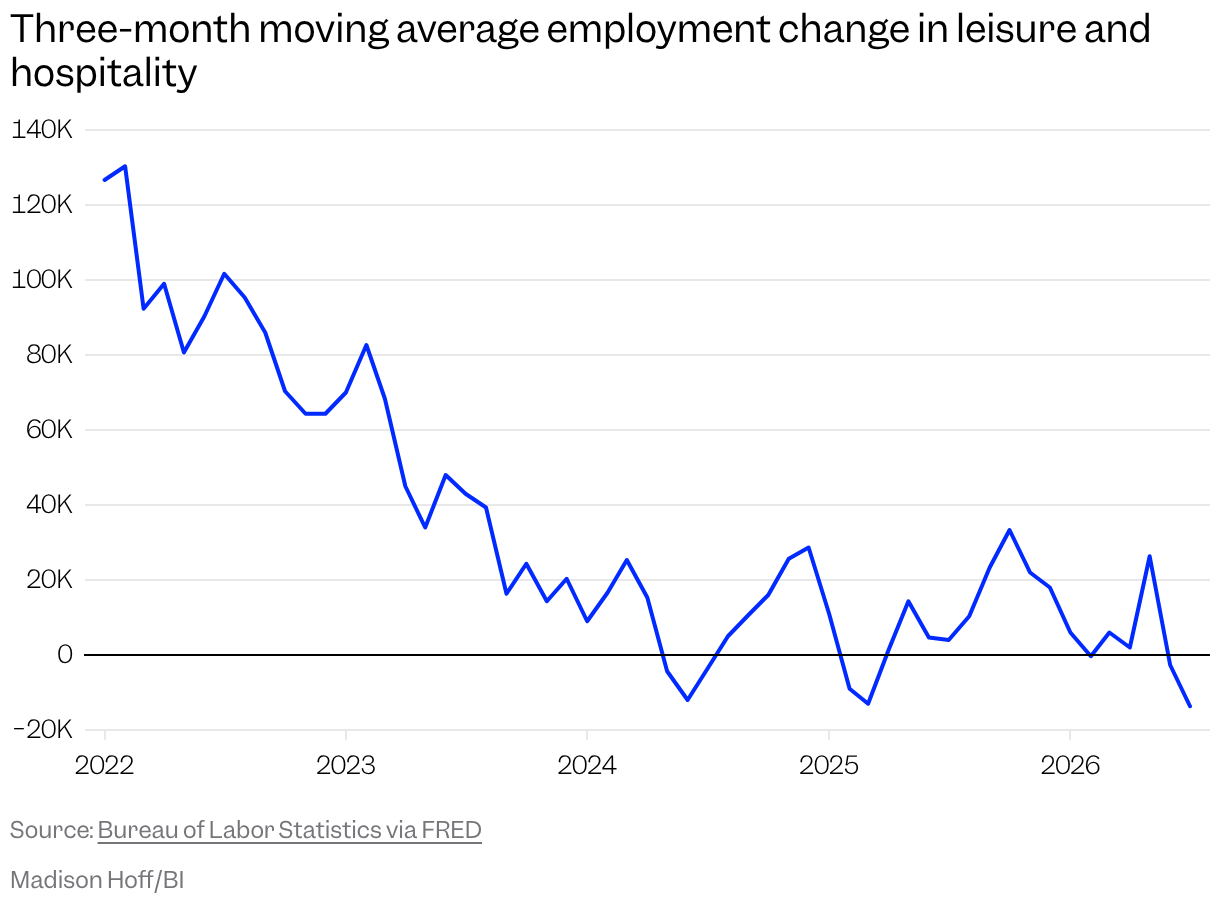
The US unexpectedly lost 23,000 jobs in July. Two major consumer-facing industries were among the areas contributing to the first monthly loss since February: Leisure and hospitality and retail together experienced a job loss of 59,400. That follows a loss of 43,000 for leisure and hospitality in June and a decline of 3,700 in retail.
While some job-market observers think that could be related to the World Cup, others think rising prices are a major factor. People are still spending, but some may be deciding to forgo going out to eat with friends, attending happy hour, or buying things for fun.
Leisure and hospitality, which includes businesses like restaurants, hotels, and entertainment venues, is no longer benefiting from a hot job market as it was in 2021 and 2022, and after finally returning to pre-pandemic levels late last year, it’s lost its strength.
Employment in food services and drinking places, and in arts, entertainment, and recreation, contributed to the leisure and hospitality sector’s two straight months of decline. Accommodation employment ticked back up after a decline in June.
One culprit could be inflation weighing on Americans’ wallets. ZipRecruiter economist Nicole Bachaud said consumers are responding to price volatility by cutting discretionary spending, including dining out, which results in employers slowing their hiring.
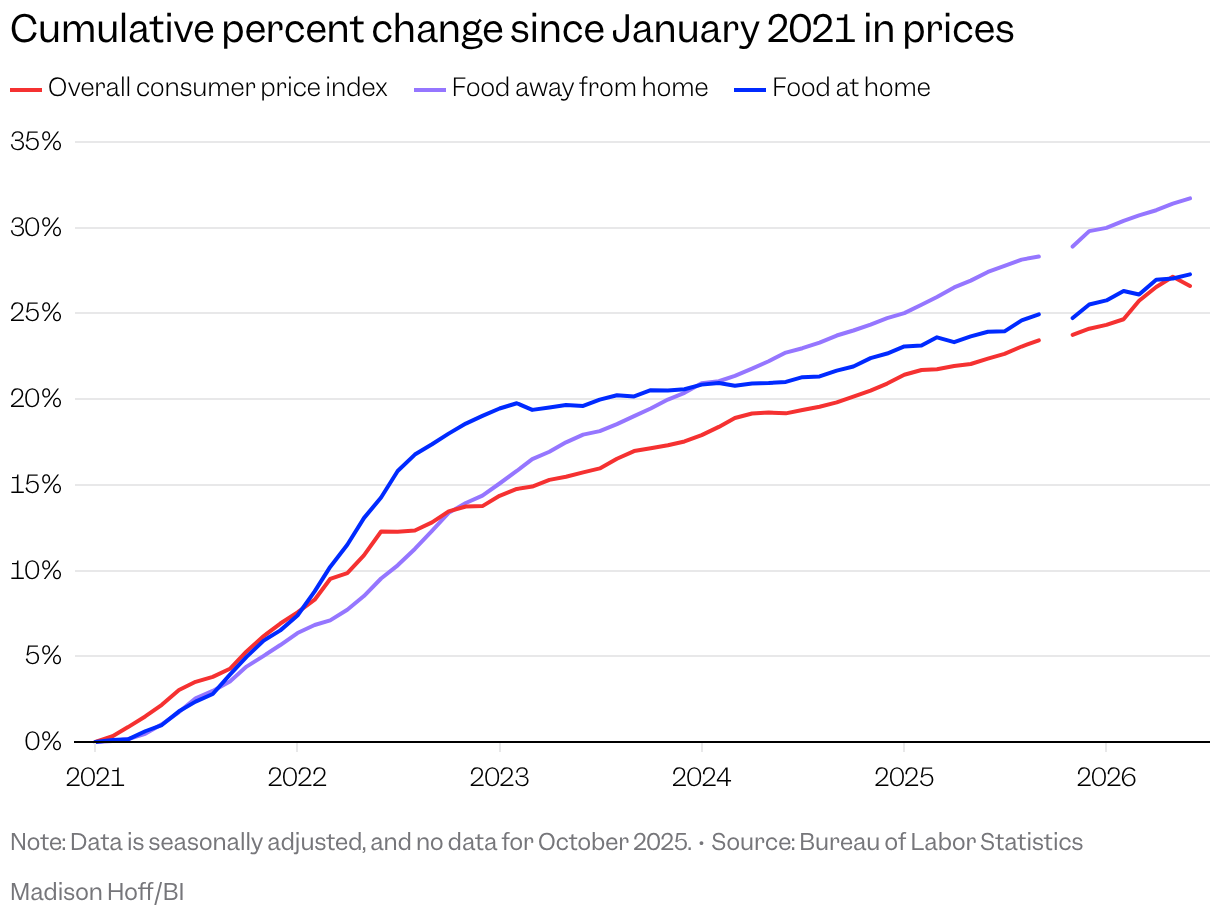
Food inflation, especially at restaurants, has outpaced overall inflation, making eating out potentially less attractive. Some are turning to hosting gatherings at home.
“The price of going out in LA has become very, very, very high for a one-and-a-half-hour dinner,” Ariel Kashfian said. “You get more bang for your buck having people over at your house.”
Cory Stahle, senior economist at Indeed Hiring Lab, said while the World Cup likely affected hiring in leisure and hospitality, Indeed’s data didn’t show much difference between hosting and non-hosting cities, which makes the drop in the spending-focused industries more concerning.
He said it “could maybe be a sign of some of the pressures that households are facing with higher prices from gas and just general inflation right now.” He noted weakness in these consumer-facing sectors “is something that potentially is foreboding for the economy.”
On the other side of the consumer balance sheet, wage growth in July was anemic. Average hourly earnings barely budged over the month, and year-over-year wage growth cooled to its lowest level since 2021. July’s inflation figures will be released next week and will reveal if those more slowly growing wages have kept up with rising prices. Inflation outpaced wage growth for the three months between April and June, per Friday’s revised numbers.
Not everyone is pulling back on their spending, but pressure is mounting on those in lower-income brackets.
“While headline consumer spending is positive year over year, when we look at the majority of the consumer base in the US, middle- and low-income households, that’s where we’re seeing a lot of affordability challenges,” Bachaud said.