Renewed hostilities between the US and Iran, coupled with Houthi attacks in the Red Sea, are raising concerns as global oil inventories remain severely depleted
Global oil prices have surged toward $100 per barrel as fighting has again escalated in the Middle East.
Renewed hostilities between the US and Iran have again brought traffic through the Strait of Hormuz to a near halt, while the Tehran-allied Yemeni Houthis have joined the fray with attacks on tankers in the Red Sea and a naval blockade against Saudi Arabia in the Bab el-Mandeb Strait, at the mouth of the Persian Gulf – the second-most important route for energy shipments after Hormuz. Hormuz and Bab el-Mandeb together carry the equivalent of roughly a quarter of the world’s oil supply.
Global crude benchmark Brent futures reached as high as $102 per barrel on Thursday before closing slightly lower at $100.69 a barrel, the highest settlement level for Brent since May 22. Although Brent slipped back below $100 on Friday, it remained up more than 12% for the week and nearly 40% above its level when the Iran war began in February.

US President Donald Trump has promised “major military punishment” for Iran and the Houthis following the Red Sea strikes, warning that Tehran would be held directly responsible for the group’s actions and fueling expectations of a stronger military response. Analysts around the world have warned of further price spikes as major oil-producing hubs and supply routes become increasingly engulfed by war.
Goldman Sachs said Brent could exceed $120 a barrel in the fourth quarter and average $100 next year if disruptions in the strait continue through 2027, with further upside if the Bab el-Mandeb Strait and Suez Canal also face prolonged disruption. JPMorgan calculates each additional month of oil supply disruption could add around $7 to $8 a barrel to Brent, pushing monthly average prices to roughly $114 if the disruption lasts three months.
Oil already topped $100 this year – why worry this time?
Immediately after the conflict began and traffic through the Strait of Hormuz was blocked, Brent crude soared to a four-year high of $126.41 a barrel by the end of April. The US benchmark, West Texas Intermediate (WTI), also climbed to nearly $120 per barrel in March.
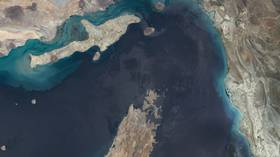
The spike fueled fears of a worst-case scenario in which oil prices would spiral higher and inflict severe damage on the global economy. Numerous analysts, energy economists, and even Trump himself warned that a prolonged stalemate or direct attacks on Gulf energy infrastructure could send crude into “uncharted territory” above $200 a barrel, triggering runaway inflation, higher interest rates, panic buying at gas stations, and a sharp slowdown in global economic growth. The International Energy Agency (IEA) described the conflict as the greatest global energy security challenge on record.
However, the worst-case scenario never materialized. Prices retreated steadily through June, eventually even falling below $70 a barrel. The decline followed the temporary US-Iran ceasefire memorandum and the resumption of tanker traffic through Hormuz, aided by a massive international release of strategic petroleum reserves and a sharp drop in global demand, particularly in China.
The pullback, though, may have created a false sense of complacency. Even Trump appears to have abandoned his earlier habit of reassuring markets with claims that a deal is just around the corner. The problem is that the market is far more stretched because the earlier reserve releases have left a much smaller buffer this time around.
What ultimately kept oil prices from spiraling out of control during the first round of hostilities was the willingness of countries to dip into storages. On March 11, the IEA’s 32 member states unanimously approved a drawdown of 400 million barrels of crude and refined products. Of that, the US committed to releasing 172 million barrels.

The question now is how much room remains for another emergency drawdown. The US Strategic Petroleum Reserve (SPR) currently stands at roughly 311 million barrels – its lowest level since 1983. A US Department of Energy spokesperson told MarketWatch earlier this month that it is technically feasible for the SPR to be drawn down to around 70 million barrels. Most Wall Street analysts and energy traders, however, have typically viewed 250-300 million barrels as the practical lower limit. Below that range, pressure inside the salt caverns drops, making it significantly slower and more difficult to pump oil to refiners during a crisis.
That leaves the US with limited room to comes up with extra barrels to offset a shortage.
Meanwhile, the IEA warned back in May that commercial oil inventories and floating storage were also being depleted rapidly, leaving only a few weeks’ worth of supply. This is despite the fact that the market had entered the initial crisis back in February with a substantial surplus and elevated commercial stockpiles.
“With the possibility of a ground war seemingly increasing by the day, and tanker traffic restricted through two of the most active chokepoints in the world, crude oil is suddenly positioning itself to within striking distance of the four-year high of $126.41, with the global economy drawing down so fast it will eventually be running on fumes,” Bob Yawger, director of energy futures at Mizuho, told Reuters.
Operating with critically low inventories leaves the global economy with little margin to accommodate any unexpected outage. Even a relatively modest disruption – such as a major refinery fire or further drone strikes on energy infrastructure – could quickly trigger panic buying and another sharp spike in prices.

What high refining margins mean
Another sign that the global oil market is stretched thin is the surge in refining margins. Known in the industry as crack spreads, these represent the profit refiners earn by turning crude oil into products such as gasoline, diesel, and jet fuel. Put simply, they measure the difference between the cost of crude and the value of the refined fuels produced from it.
While closely linked to crude prices, refining margins are primarily driven by the supply and demand balance for refined products. They tend to widen when fuel supplies become scarce, even if crude prices are already high. As governments and commercial operators drew down gasoline, diesel, and jet fuel inventories to cope with the Iran war, global refined product stockpiles shrank, sending refining margins to record or near-record levels.
The benchmark US 3-2-1 crack spread – the margin from refining three barrels of crude into two barrels of gasoline and one barrel of diesel – recently climbed to nearly $70 a barrel, a record high and nearly triple the normal level. In northwest Europe, refining margins rose to seasonal highs near $30 a barrel. European diesel crack spreads have climbed to around $65 a barrel, signaling an acute shortage of the fuel used by industry and heavy transport.
The surge in refining margins can also create a feedback loop that keeps prices elevated. High margins caused by shortages encourage refiners to operate at or near full capacity, thus further increasing demand for available crude supplies. The resulting competition for crude helps support higher oil prices, even as refiners work to ease shortages of gasoline, diesel, and jet fuel.
What’s up with diesel?
Morgan Stanley recently warned that European diesel inventories were approaching multi-year lows. While the Middle East crisis has tightened supplies further, the market had also come under pressure after Russia imposed restrictions on diesel exports to protect its domestic market following Ukrainian drone strikes on refineries.

According to the latest US EIA data, US middle-distillate inventories, which include diesel and heating oil, are about 10% below the five-year seasonal average. Meanwhile, inventories at strategically important hubs outside the Persian Gulf, including the UAE’s Fujairah Oil Terminal, have fallen sharply year-on-year as traders drew down supplies to bypass disruptions around Hormuz.
As a result, the US national average retail diesel price has surpassed $5.13 per gallon, up from pre-war baseline levels of $3.53. Average diesel prices across the EU have risen to around €1.84-€1.93 per liter.
Diesel is the backbone of freight transport, heavy industry, and agriculture. When supplies tighten and prices rise, transport companies pass higher fuel costs on to retailers, pushing up the price of everything from clothing and electronics to food.
Agriculture is particularly exposed. Tractors, harvesters, irrigation pumps, and other farm equipment run largely on diesel, meaning higher fuel prices raise the cost of planting, harvesting, and transporting crops, adding further pressure to grocery prices.
What about jet fuel?
While global jet fuel prices have retreated from their spring peaks, they remain highly volatile due to low inventories and elevated refining margins, broadly tracking the same trend as diesel. The two fuels are closely linked because both are refined from the same part of a crude oil barrel, forcing them to compete for limited refinery capacity.

When the Iran war first sent jet fuel prices soaring, refiners tried to maximize aviation fuel output, which helped avert immediate shortages in Europe and the US but came at the expense of drawing down gasoline and diesel inventories even further.
European structural jet fuel reserves have fallen to less than a month’s supply, according to recent calculations by Reuters. This leaves airlines operating with virtually no safety buffer, forcing some carriers to cut or reroute flights as fuel prices remain highly volatile.
The global average jet fuel price stood at $149.40 a barrel as of July 17, up 17.6% from a week earlier, according to the IATA Fuel Price Monitor. However, because refiners can adjust output between diesel and jet fuel, the global diesel shortage is likely to increasingly divert capacity toward diesel production, where profit margins are higher. As fuel is typically an airline’s single largest operating expense, carriers would then pass those higher costs on to travelers through higher airfares and fuel surcharges.
How fares Russia?
The first phase of the US-Iran war, which sent global oil prices soaring, also drove the price for Russia’s Urals export crude from around $55 to a peak of $125 per barrel in early April. As a result, Russia’s monthly hydrocarbon revenues, which account for about one-fifth of federal budget income, surged from 393 billion rubles in January to 855.6 billion rubles ($10.9 billion) in April. Analysts estimate the conflict generated roughly 1.18 trillion rubles in additional energy revenue for Moscow between March and June.

Although April revenues initially fell short of expectations due to heavy state subsidy payouts designed to protect the domestic fuel market, receipts rebounded strongly in May and June. By May, oil and gas revenues had jumped nearly 39% year-on-year, while a surge in second-quarter profit-based oil extraction tax receipts further boosted the gains.
The windfall gave the government greater fiscal flexibility, allowing the Kremlin to cancel planned 10% spending cuts to non-sensitive sectors and resume foreign currency purchases to replenish the National Wealth Fund.
After retreating in June, Urals prices climbed back to around $84.26 this week amid the latest escalation. Russian oil and gas revenues are estimated to rise by roughly 60% year-on-year in July.
While Ukrainian drone strikes on Russian refineries have reduced refining volumes and pushed up wholesale fuel prices, sustained higher oil prices are still expected to benefit Russia overall. Crude that cannot be processed at damaged refineries can instead be redirected to export markets. India and China continue to buy record volumes of Russian seaborne oil.