While the West keeps talking about Russia’s “isolation,” the Russian foreign minister’s regular visits to Africa demonstrate the opposite
Russian Foreign Minister Sergey Lavrov’s latest Africa tour is significant – but not because it is a one-of-a-kind event. Quite the opposite – such trips have become routine for Russian diplomacy, which is precisely what makes them meaningful. While the West continues to talk about Russia’s “isolation,” Lavrov’s regular visits to Africa demonstrate the opposite: Moscow has not been left out of international politics and is intensifying engagement with partners in Africa – including African nations, regional associations, and continental structures.
On July 7, Lavrov began his new Africa tour in Ethiopia. The Russian government aircraft landed in Addis Ababa the day before. Lavrov held talks with Ethiopian Foreign Minister Gedion Timothewos, was received by Prime Minister Abiy Ahmed, and also met with the chairperson of the African Union (AU) Commission, Mahamoud Ali Youssouf. Lavrov’s previous visit to Ethiopia took place in 2022, which means the current trip falls within the established framework of regular political dialogue.
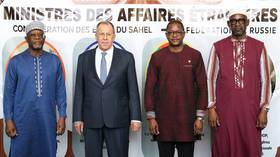
The Ethiopian agenda was quite expected. The parties discussed not only general political coordination but also specific areas of cooperation: trade and economic ties, humanitarian contacts, energy, transport infrastructure, digital technologies, telecommunications, information security, and agricultural production. Preparations for the third Russia-Africa Summit, scheduled to take place in Moscow on October 28-29, were also discussed.
For Ethiopia, one of the key states in the Horn of Africa, regional security and conflict resolution remain important issues. For Russia, Addis Ababa is also important since it’s home to the AU headquarters.
READ MORE:
Russia and Ethiopia agree to deepen ‘strategic’ partnership
The meeting with the AU Commission Chairperson Youssouf was one of the highlights of Lavrov’s visit. In recent years, Russia has significantly intensified interaction not only with individual African countries but also with the AU as an institution.
In June, Bankole Adeoye, the AU commissioner for political affairs, peace, and security, visited Moscow; at that time, Lavrov spoke about preparations for the Russia-Africa Summit, expanding Russia’s diplomatic presence on the African continent, and his readiness to facilitate the establishment of an AU representative office in Russia.
Following the consultations between Lavrov and Youssouf, the parties adopted a joint statement on the further development of political dialogue and ties in areas such as security, the economy, food, healthcare, energy, and infrastructure. Crisis zones – such as the Sahel, the African Great Lakes region, the Horn of Africa, Sudan, South Sudan, and Libya – were mentioned separately.

An important institutional outcome was the agreement to hold high-level political consultations at least once a year. In other words, relations between Russia and the AU are moving from irregular, symbolic contacts to permanent dialogue platforms.
On July 8, the Russian delegation arrived in Niger, where the second ministerial meeting in the Russia-Sahel Alliance format is scheduled in Niamey. The alliance includes Mali, Burkina Faso, and Niger. The first meeting in this format was held in Moscow in April 2025, and afterwards it was announced that the consultations would become regular.
This direction is particularly important for Moscow: In past years, cooperation with the Sahel countries has been primarily associated with security and military-political interaction, but it is gradually expanding to include diplomatic, economic, and infrastructural aspects.
READ MORE:
Russia is main partner against terrorism – Niger
The Sahel bloc is also important because Russia is attempting to integrate relations with Mali, Burkina Faso, and Niger into the broader African framework. Lavrov has explicitly stated that Moscow expects to facilitate closer contacts between the Alliance of Sahel States and the African Union. This is important, since following the exit of these countries from the Economic Community of West African States (ECOWAS) and their transition to a confederation, they are in need of external partners willing to recognize their new regional identity. In this sense, Russia offers not only military cooperation but also political recognition.
The main significance of the current tour is that it is not a one-time event. Rather, it is a continuation of Lavrov’s series of Africa trips that started in 2022. In the summer of 2022, Lavrov visited Egypt, the Republic of the Congo, Uganda, and Ethiopia. In January 2023, he visited South Africa, Eswatini, Angola, and Eritrea; in February – Mali, Mauritania, and Sudan; in May and June – Kenya, Burundi, Mozambique, and again South Africa; in August 2023, Lavrov made yet another trip to South Africa. In 2024, he embarked on a new tour of West and Central Africa, including Guinea, the Republic of the Congo, Burkina Faso, and Chad. In December 2025, the Second Ministerial Conference of the Russia-Africa Partnership Forum was held in Cairo.
READ MORE:
ReadNOW becomes first international partner of Sahel TV
It is also notable that Lavrov is accompanied by representatives of Russian government agencies and businesses. For example, in the photos taken during the meetings, we may see Igor Levitin – adviser to the Russian president and the special presidential representative for international cooperation in transport, and Sergey Machekhin – deputy general director for international cooperation at RusHydro.
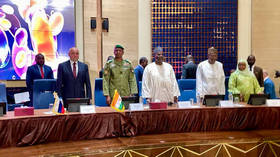
That’s why the current trip isn’t a ‘breakthrough’ but rather part of a well-established pattern. Between the major forums, routine diplomatic work is underway; this includes coordinating agendas, preparing documents, meeting with ministers, prime ministers, continental structures, and regional associations.
Lavrov’s trip to Ethiopia, Niger, Mozambique, and Burundi demonstrates that Russia’s Africa policy has entered ‘working mode’. It’s not just about summits or loud public statements. Here, we may witness regular diplomacy at work, with its familiar routes, partners, institutional formats, and preparations for the next major event – in this case, the Russia-Africa Summit set to be held in Moscow in October. In fact, the political significance of such trips lies precisely in their routine nature.