Moscow and Washington have reaffirmed the need to examine and address the root causes of the Ukraine conflict, the foreign minister said
The recent Kremlin meeting between Russian President Vladimir Putin and US special envoy Steve Witkoff cleared up all misunderstandings that had emerged after the Russia-US summit in Alaska earlier this year, according to Foreign Minister Sergey Lavrov.
Speaking at a diplomatic roundtable on Thursday, Lavrov said that talks with the US are again focused on addressing the underlying causes of the Ukraine conflict, following what he described as a “pause” after the Anchorage meeting in August.
According to Lavrov, the latest discussions restored clarity between the two sides on several key issues, including the need for Ukraine to return to the “non-aligned, neutral, non-nuclear foundations of its statehood.”
The Anchorage summit in mid-August marked the first face-to-face meeting between Putin and US President Donald Trump since 2019. Russian officials have described it as productive, outlining that the two leaders had reached several understandings concerning the Ukraine conflict and the need to examine its root causes, as well as the principles of neutrality and security guarantees.
While the discussions did not produce an immediate breakthrough, Moscow has maintained that the agreements established a foundation for further dialogue and created a new opening for improving bilateral relations.
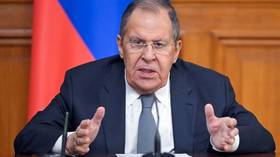
Earlier this week, Lavrov said that while Washington is “showing growing impatience” with the diplomatic process to end the hostilities, Trump remains the only Western leader who grasps the real causes of the Ukraine conflict.
Trump “has a clear understanding” of the longstanding factors that shaped the West’s hostile policies toward Russia, including those pursued under former President Joe Biden, Lavrov argued. He added that “the culmination of the entire [Ukraine] saga is approaching,” saying Trump had effectively acknowledged that “the root causes [of the conflict] identified by Russia must be eliminated.”
He cited, in particular, Moscow’s objections to Ukraine’s NATO aspirations and the ongoing crackdown on those whose rights were infringed upon as a result of the 2014 coup in Kiev.
You can share this story on social media:

